

Did you know that, according to Standard Chartered, the total crypto market cap is predicted to grow over $10 trillion by the end of 2026. This underlines that choosing the right tools is no longer an option but the only way to succeed. Ledgering multiple wallets, tracking NFTs, and monitoring DeFi positions across chains is important for any serious crypto player.
This makes crypto portfolio trackers an essential tools for managing complex holdings, providing real-time value, performance analytics, risk visibility, and tax-ready reporting all in a single place.
What Is a Crypto Portfolio Tracker?
A crypto portfolio tracker is a digital tool that consolidates all your owned cryptocurrency, DeFi, and NFT holdings into a single, organized dashboard. Instead of checking multiple wallets, exchanges, and apps, a tracker displays your entire portfolio in a single place, making it easier to understand what you own and how those assets are performing.
Its core functions focus on simplifying portfolio management. Trackers display asset distribution, balances, and historical growth, allowing users to monitor overall performance without manual calculations. Real-time pricing updates ensure that every asset valuation remains accurate, regardless of the blockchain or exchange involved.
Most trackers connect directly to wallets, centralization exchanges, and DeFi protocols through APIs, public addresses, or Web3 integrations. These connections allow automated syncing of transactions, token balances, liquidity positions, and rewards. Performance insights such as profit and loss, cost basis, ROI, and allocation trends help users make informed decisions as markets shift.
Many trackers include tax-related features, organise transaction histories, calculate gains and losses, and prepare exportable reports that comply with regional tax requirements. This combination of automation, live data, and analytics makes a crypto portfolio tracker a practical tool for anyone managing assets across multiple platforms.
What to Look For in a Good Tracker?
Choosing a crypto portfolio tracker involves assessing how well each tool aligns with your trading habits, data privacy expectations, and long-term portfolio goals. The ideal platform should streamline management across crypto wallets and exchanges, convert visibility into performance, and maintain strong security safeguards. Key areas to evaluate include:
- Ease of Integration: Compatibility with major wallets, centralized exchanges, decentralized protocols, and multi-chain environments. Automated syncing, API support, and Web3 connectivity for smooth, consolidated tracking without manual inputs.
- Security: Robust protection methods such as advanced encryption, non-custodial architecture, and privacy-focused data handling. Read-only API keys, secure authentication, and transparent security practices for safeguarding sensitive financial information.
- Analytics: Comprehensive real-time valuation, performance metrics, asset allocation breakdowns, and historical charts. Detailed insights into realized and unrealized gains, portfolio trends, and market movements across multiple chains and asset classes.
- Tax Tools: Built-in calculation engines for capital gains, losses, and cost basis. Region-specific tax formats, automated transaction capture, and exportable reports for simplified filing and regulatory alignment.
- User Experience: Clean, intuitive dashboard design with logical navigation, fast loading, and reliable data synchronization. Mobile apps, multi-device accessibility, customizable views, and user-friendly workflows are suited for both beginners and advanced traders.
- Pricing: Flexible plans varying from free tiers with essential features to premium subscriptions offering unlimited integrations, advanced analytics, and complete tax automation. Value assessment based on portfolio size, trading frequency, and reporting needs.
8 Best Crypto Portfolio Trackers for DeFi, and Multi-Asset Management
Crypto portfolio trackers help users bring together tokens across multiple chains, manage liquidity in DeFi protocols, collect NFTs, and maintain exchange accounts. These platforms are responsible for managing multi-chain assets, providing real-time insights, and streamlining tax workflows, allowing portfolio performance to be visible and manageable. They support strategic decision-making through clear tracking, historical analytics, and wallet integrations.
With all these features, it’s essential to note that only the right tracker can effectively handle complex on-chain activity or diversified investments. The list below highlights the eight best crypto portfolio trackers in 2025 to help users find one to match their trading style and long-term goals.
1. CoinTracker

- Overview: CoinTracker is a leading cryptocurrency tax software and portfolio tracking application designed to automate the complex process of crypto tax compliance and provide a clear overview of investment performance.
It includes over 500 integrations with various wallets and exchanges, allowing users to automatically sync all their cryptocurrency activity into a single, secure place. It’s highly valued for its ability to file taxes in minutes by generating IRS-ready tax reports and offering direct integration with major tax software, such as TurboTax and H&R Block. These platforms ensure accurate crypto tax calculations by automatically categorizing complex transactions, such as DeFi activity, removing spam transactions, and supporting over 10,000 crypto assets. Moreover, it supports specialised tools, such as tax-loss harvesting, to help users maximize their tax savings, and it provides a real-time, consolidated view of their portfolio’s value, performance, gains, and losses.
- Pros:
- Powerful tax calculation tools that handle complex transactions like DeFi and automatically remove spam.
- Deep and wide integration with over 500 exchanges and wallets for comprehensive data syncing.
- It generates IRS-ready tax forms and integrates directly with popular tax software.
- Features like tax-loss harvesting help maximize tax savings.
- Cons:
- It is expensive for users who require the complete feature set or have high transaction volumes.
- It may not be as beginner-friendly as tracking-only portfolio apps.
- Best for: Tax reporting and compliance, primarily for tax-focused investors with complex transaction histories, including those in DeFi, who require automated, powerful tools to calculate obligations and maximize tax savings.
2. CoinLedger
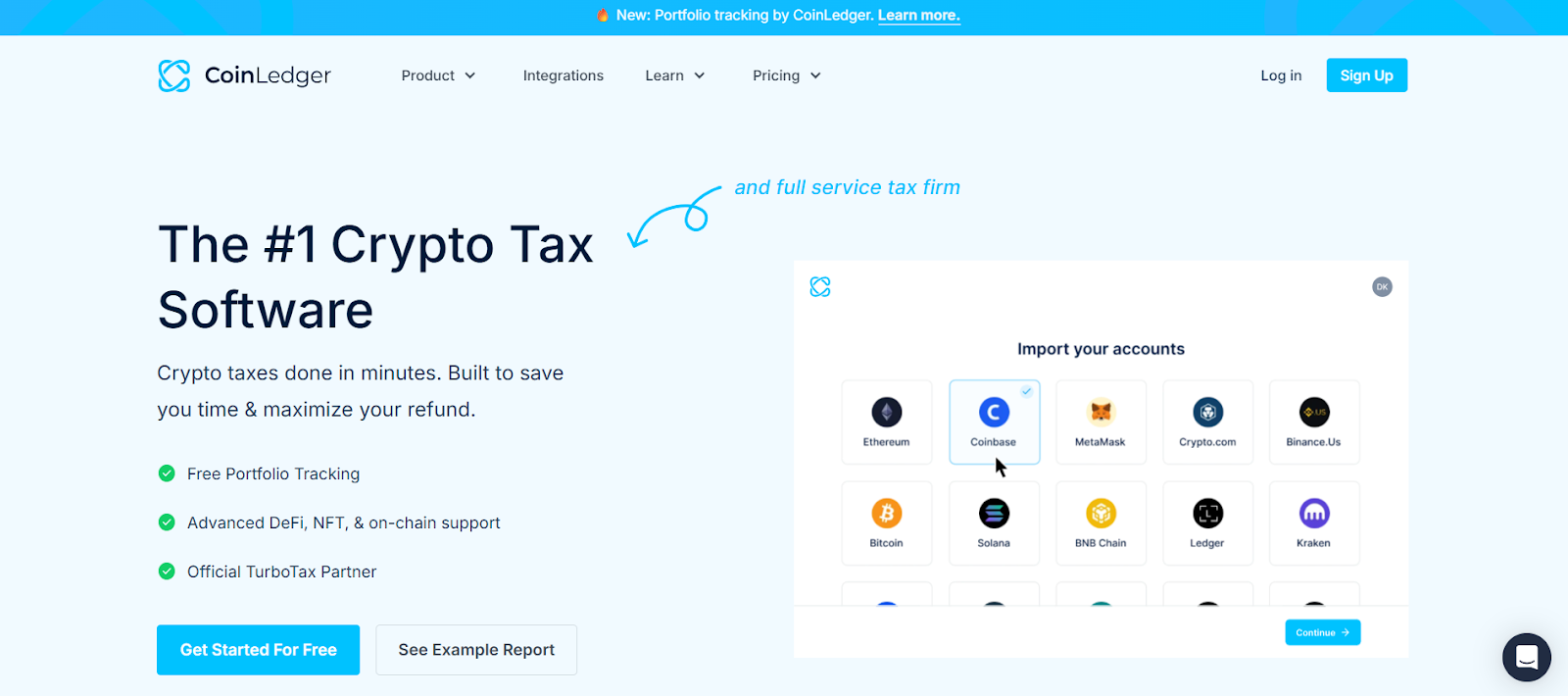
- Overview: CoinLedger is recognized as the premier crypto tax software, enabling investors to calculate and report their crypto, NFT, and DeFi taxes efficiently and accurately, thereby saving users time and maximizing their refunds. Over 700,000 crypto investors trust the platform as it is an official partner of TurboTax. A noticeable addition to the software is a free portfolio tracker.
CoinLedger supports detailed transaction tracking across hundreds of exchanges, wallets, and blockchains, and provides advanced support for complex transactions, including DeFi, NFTs, and on-chain activity. Moreover, the software allows users to automatically import transactions, view reports calculate gains and losses, and generate official tax forms easily. - Pros:
- It offers advanced support for DeFi, NFT, and all on-chain transactions.
- It automatically calculates capital gains, losses, and income.
- The portfolio tracker features tax optimization tools that instantly identify tax-loss harvesting opportunities.
- The portfolio tracker is available for free use.
- It offers a simple interface, making it user-friendly.
- It supports automatic imports from different exchanges and wallets.
- Cons:
- Users need to pay to download the official tax reports.
- The company admits to bias in its reviews.
- Best For: Tax reporting and automated crypto tax calculation. It’s also positioned as the best option for investors seeking a platform that combines portfolio tracking with comprehensive end-to-end crypto tax compliance.
3. Delta

- Overview: Delta functions as a comprehensive multi-asset portfolio manager, enabling investors to track their various assets on a single, centralized platform. This makes the tool preferred for active traders and serious investors.
Delta offers deep insights and key features, including automatic syncing, a customizable watchlist, advanced charts, and unique portfolio simulation tools. The platform provides investors with a clear view of asset values denominated in local fiat currency, Bitcoin, or Ethereum, along with detailed trade analysis, asset split information, and profit/loss calculations. Note that while the software’s app is free to download, it still offers a Pro version for advanced functionality. - Pros:
- Provides in-depth analytics on asset splits, trade history, locations, and service usage.
- Excellent for investors with diverse holdings, as it tracks multiple asset classes (crypto, stocks, ETFs, and NFTs).
- Easily syncs transactions with other exchanges, dozens of exchanges, and wallets through APIs.
- Cons:
- A limited free version is available; accessing the full functionality requires a paid Pro subscription.
- The interface is complex.
- Best For: Recommended for tracking both crypto and stocks. It can also be used for gaining detailed trade insights.
4. Kubera
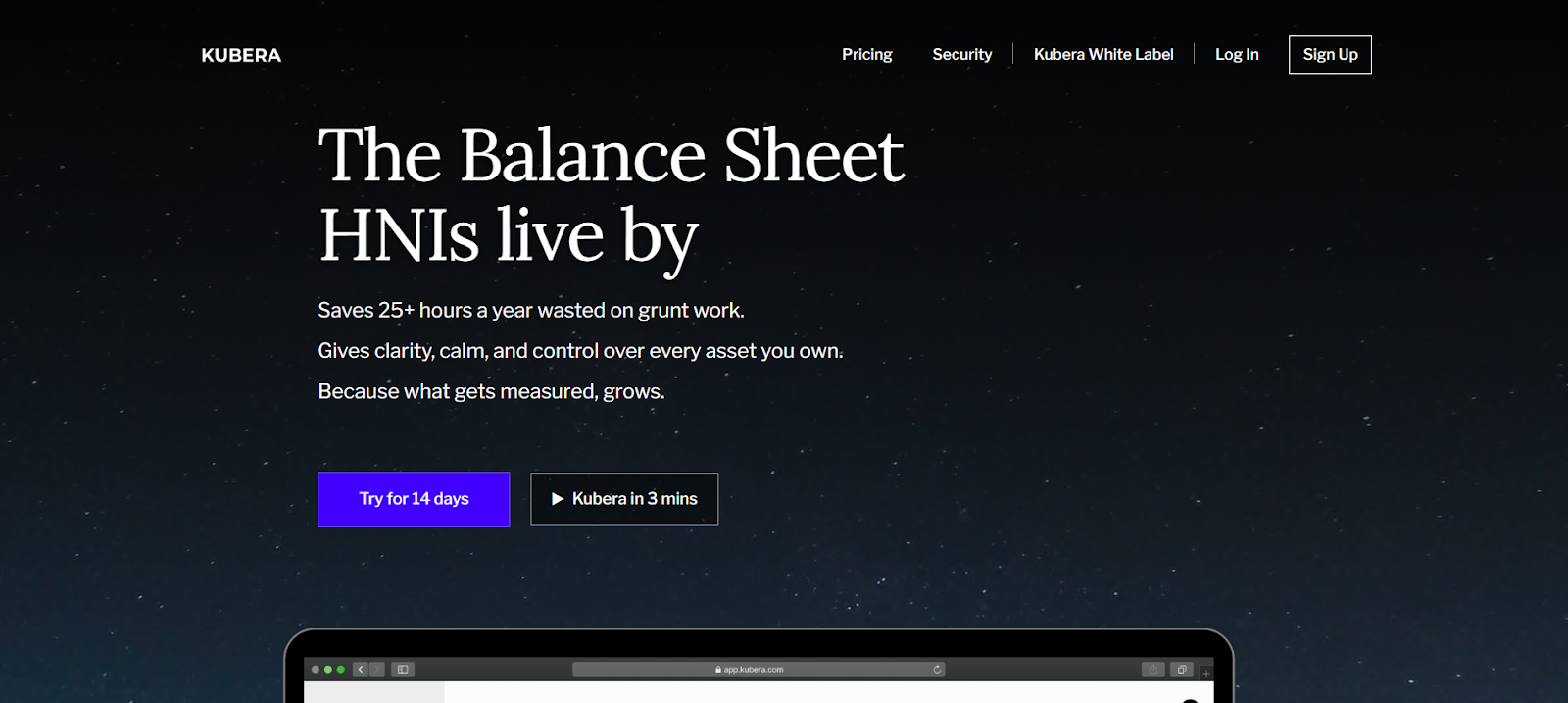
- Overview: Kubera provides diversified investors with a comprehensive view of their entire net worth in a single, customizable dashboard. While it tracks crypto, its core strength lies in monitoring both traditional and digital assets.
Its primary function is to track a wide range of assets while integrating with over 20,000 financial institutions worldwide, providing automatic, real-time updates. Moreover, it places a strong emphasis on security and privacy to protect user data. - Pros:
- It tracks all asset classes in one centralized view.
- It placed a strong emphasis on privacy and security.
- It supports both automatic syncing and manual entry.
- It provides in-depth performance analytics, including IRR and summaries of the highest-performing assets.
- Cons:
- It operates on a paid subscription model.
- It is complex to set up.
- Best For: Investors with diverse portfolios (crypto, stocks, real estate, etc.) who are looking for an all-in-one wealth tracker to monitor their complete net worth.
5. CoinStats
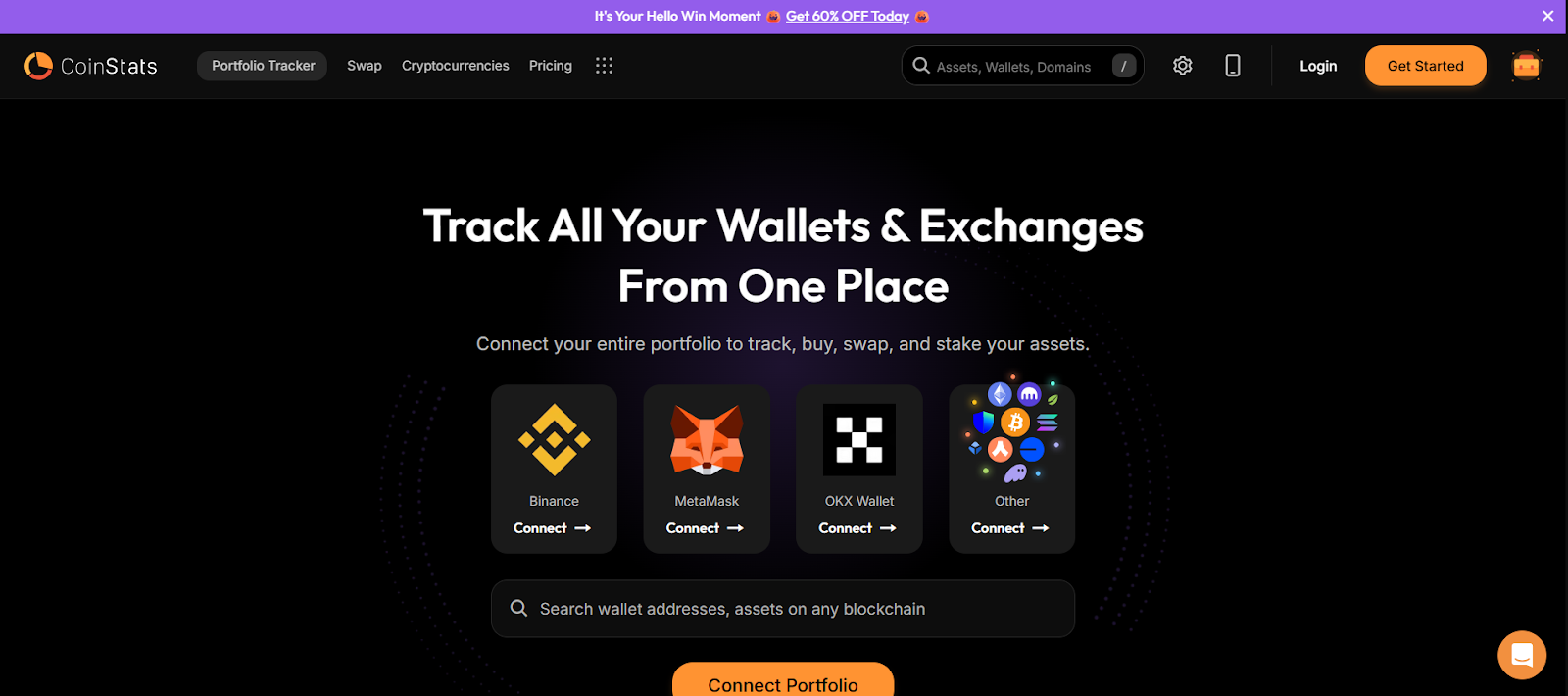
- Overview: CoinStats is a user-friendly crypto portfolio tracker to help beginner and experienced investors monitor and manage their digital assets from a single, centralized platform.
The platform excels in multi-asset tracking, including cryptocurrencies, DeFi assets, and NFTs. It supports over 300 exchanges and wallets, and tracks more than 20,000 cryptocurrencies. Its key features include automatic syncing of transaction data, real-time price alerts, and an integrated news aggregator. Moreover, the platform offers an integrated DeFi wallet that allows users to buy, swap, and earn yield directly from the dashboard. - Pros:
- Highly user-friendly and easy to navigate for investors at all levels.
- It offers wide asset coverage, including major cryptocurrencies, DeFi, and NFTs.
- It integrates a DeFi wallet within the platform.
- It features a robust mobile app compatible with both iOS and Android.
- Cons:
- It offers some advanced features.
- Higher-tier plans can be expensive, especially for high-volume active traders.
- Best For: Ideal for overall functionality, ease of use, and multi-asset tracking.
6. Zerion

- Overview: Zerion is a Web3 portfolio tracker that positions itself as a professional trading interface and data aggregator, with a focus on the DeFi ecosystem. It’s designed to help users track and manage complex crypto holdings to spread across numerous wallets, protocols, and multiple blockchains. Moreover, the platform offers high accuracy for DeFi tracking, often cited as being 99% accurate in recognizing and displaying decentralized asset allocation. Its key features include advanced trading integration, comprehensive protocol support, institutional-quality analytics, social and NFT tracking, and developer tools.
- Pros:
- High accuracy in DeFi.
- Professional trading interface for direct management and execution of trades.
- Supports multi-chain and a large number of protocols.
- Free to use for its portfolio tracking functionality.
- Cons:
- Lacks Centralized Exchange integration, making it less useful for users holding funds on platforms like Kraken and Binance.
- It has a steep learning curve and can be overwhelming for casual and newcomer investors.
- Checking transaction history and certain advanced NFT support is restricted to the Ethereum network.
- Best For: DeFi power users, professional crypto traders, and advanced Web3 investors looking for institutional-grade analytics and direct trading integration.
7. CoinMarketCap
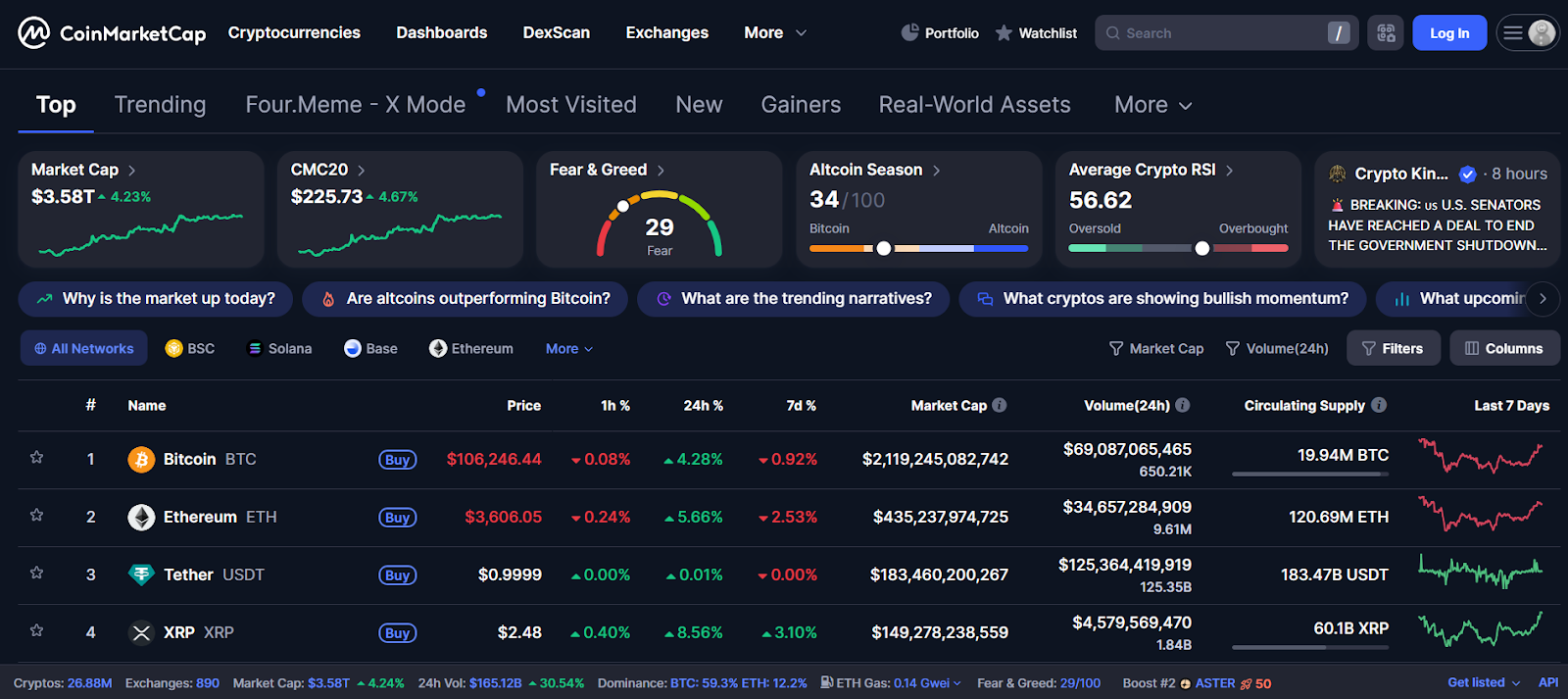
- Overview: CoinMarketCap offers a free, integrated portfolio-tracking product. The tracker is designed for simplicity and convenience, enabling users to monitor the value and performance of their digital assets, along with extensive market data. The platform’s key features include manual entry focus, asset support, accessibility, and data integration.
- Pros:
- It is completely free to use.
- It tracks NFTs alongside standard cryptocurrency assets.
- It is simple and user-friendly for basic tracking.
- Cons:
- It requires manual transaction entry.
- It offers limited functionality and basic features.
- The mobile app sometimes lags and is less responsive.
- It lacks advanced features, such as integrated tax reporting tools or in-depth DeFi analytics.
- Best For: Manual entry and basic portfolio tracking for users who use CoinMarketCap for general market data and price research.
8. Crypto Pro
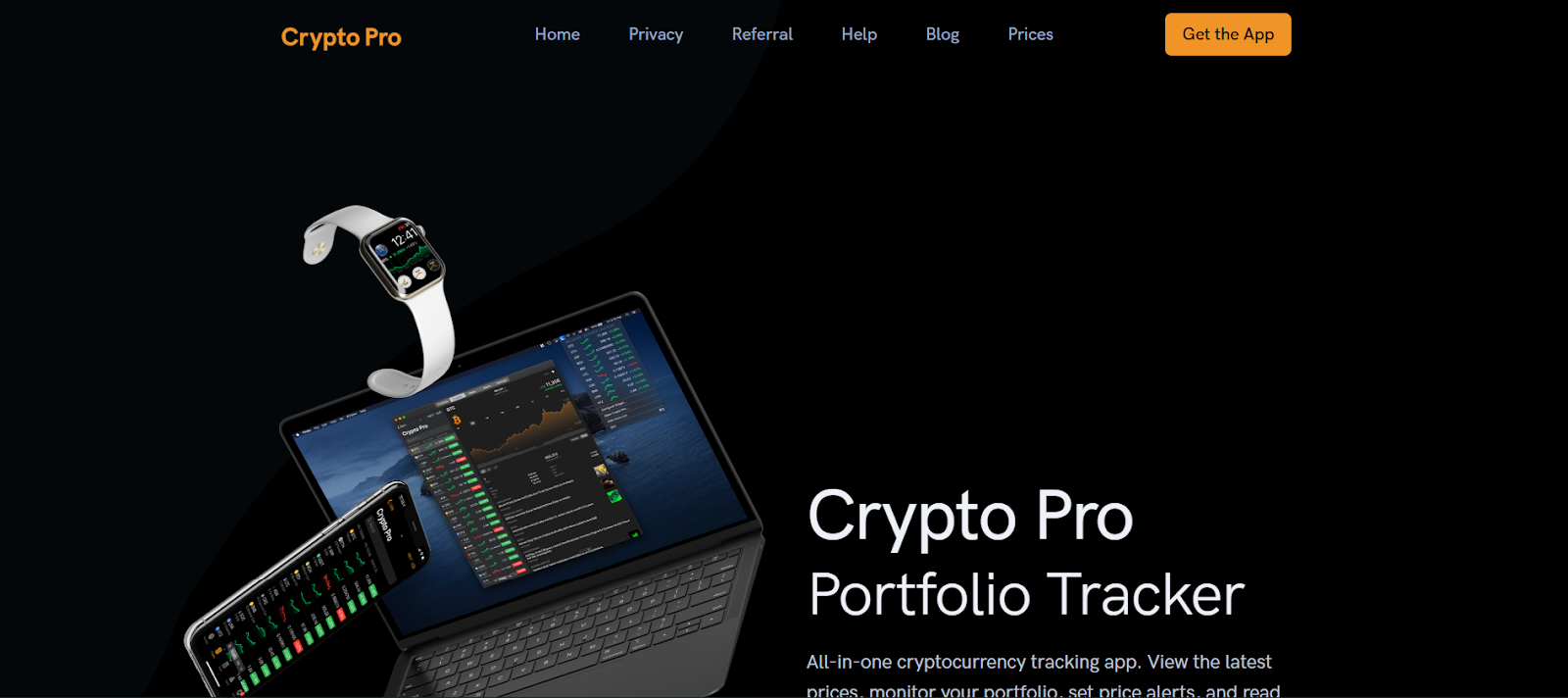
- Overview: Crypto Pro is primarily designed for the Apple ecosystem, launched in 2015 as a Bitcoin ticker for the Apple Watch. It functions as a complete tool for market information and analysis, merging portfolio management with news, customizable alerts, and real-time price tracking. Its notable features include seamless support across all Apple devices, a privacy-focused approach that keeps data encrypted, and flexible tracking to support both manual entry and automatic synchronization.
- Pros:
- Excellent integration and support for the entire Apple ecosystem.
- It prioritizes a privacy-first approach to make sure data is encrypted and stored locally.
- It supports both automatic syncing and manual entry.
- It combines real-time price tracking, customizable alerts, and market news in one place.
- Cons:
- Limited functionality for Android and general web users.
- Some users find the interface cluttered.
- Advanced features require a paid subscription.
- Best For: Apple users and those who prioritize data privacy.
Choosing the Right Crypto Portfolio Tracker for Your Needs
Selecting a portfolio tracker becomes easier when the decision is based on how well a tool matches your habits, asset types, and trading environment. Each platform mixes integrations, analytics, security standards, and pricing tiers, so the ideal choice depends on the level of visibility and control you want over your crypto activity.
A good starting point is wallet and exchange support. Broad integration coverage ensures your assets sync automatically across CEXs, self-custodial wallets, and multi-chain networks. Trackers with strong DeFi and NFT compatibility provide deeper Web3 visibility, while more traditional platforms focus on exchange-based activity. Security is also a crucial factor because API keys, wallet addresses, and connected platforms store sensitive data. Trackers that offer encryption, read-only API access, and non-custodial architecture provide a safer environment for long-term use.
Performance analytics also influence the decision. Tools with real-time price feeds, PnL insights, multi-chain visibility, and clear asset allocation summaries create a stronger foundation for informed decisions. Exportable tax documents and region-specific reporting standards simplify compliance and reduce errors during filing.
User experience significantly influences daily operations, so a clean interface, a reliable mobile app, and fast syncing all improve efficiency for various types of traders. Pricing is another factor; free tiers are well-suited for simple tracking, while premium options offer deeper analytics, unlimited integrations, and automated tax features for more advanced users.
- Long-term investor → focus on strong security standards and tax reporting tools.
- Active trader → preference for real-time analytics, alerts, and accurate PnL tracking
- DeFi/NFT user → multi-chain Web3 integrations, on-chain visibility, and NFT support
- Beginner → simple interface with reliable free features and easy wallet/exchange syncing
Free vs Paid Portfolio Trackers: Is the Premium Worth It?
Free crypto portfolio trackers provide basic features, including wallet imports, exchange syncing, real-time price updates, and simple performance charts. They work well for new or casual traders, as well as for anyone managing a small number of assets across a limited set of platforms. Most free plans also include manual transaction entry, basic alerts, and access to a standard dashboard.
Paid portfolio trackers, on the other hand, expand this foundation with deeper analytics, broader integrations, advanced automation, and enhanced tax capabilities. These upgrades become vital once a portfolio spreads across multiple chains, DeFi protocols, and NFT marketplaces. Premium tiers typically unlock unlimited connections, faster data refresh rates, multi-chain dashboards, dedicated DeFi support, historical performance insights, and complete tax reporting with cost-based calculations.
Choosing between free and paid options depends on the complexity of your portfolio and your long-term goals. A premium tracker gives value while dealing with high-volume trading, multi-wallet management, or detailed tax requirements. It also becomes useful for investors who rely on granular analytics, cross-chain visibility, and automated tracking rather than manual updates. A free plan is typically sufficient for newcomers learning new crypto concepts or managing a simple, exchange-based portfolio, whereas a paid plan is best suited for active traders and Web3 users who require reliable, compliance-ready reports throughout the year.
Can a Crypto Portfolio Tracker Help with Taxes?
Crypto portfolio trackers streamline tax preparation by consolidating transaction data from exchanges, wallets, and blockchains into a single dashboard. They record every trade, transfer, swap, and on-chain interaction, creating a complete transaction history that can be exported whenever required. These tools calculate costs, track capital gains and losses, and automatically categorize taxable events, reducing manual work and the risk of inaccuracies.
Most trackers include features for generating tax-ready reports that align with regional filing requirements. These include detailed CSV exports, end-of-year summaries, profit-and-loss reports, and documentation compatible with accounting platforms. Some tools also integrate with government-approved tax formats, providing a smoother experience when declaring crypto-related activity.
Users with high transaction volumes, active DeFi participation, or multi-chain activity tend to gain the most value, as manual tracking becomes overwhelming in these situations. NFT traders, liquidity providers, and frequent arbitrage traders also benefit from automated calculations, as their tax obligations often involve complex events such as stake rewards, yield income, and token swaps. A portfolio tracker streamlines the process by consolidating all necessary information for accurate and compliant tax reporting.
Still Unsure Which Tracker to Choose? Join the Dypto Crypto Community for Further Assistance
Moving crypto tools alone can feel overwhelming, and Dypto Crypto helps with that. The community at Dypto empowers you with peer-driven insights, live Q&A sessions, and real-world use cases shared by other traders and investors. From wallet compatibility to DeFi integrations, you’ll further strengthen your concepts without depending on trial and error.
By joining the Dypto Crypto community, you’ll gain access to regular discussions about tracking tools, portfolio management tactics, tax-ready workflows, and Web3 integration tips from experienced traders, known educators, and fellow community members. Join the Dypto community today for productive conversations, practical advice, and the support you need to confidently choose the correct portfolio tracker.
FAQs (Frequently Asked Questions)
Q: Do I really need a crypto portfolio tracker if I only trade on one exchange?
Not necessarily, but even a single-exchange trade benefits from better analytics and automated tax reporting.
Q: Are crypto portfolio trackers safe to connect to my wallets and exchanges?
Yes, reputable trackers are very safe. They use read-only API keys for exchanges, which means they can view your balance and transaction history but cannot withdraw or trade your funds. For wallets, they often only require your public address, which poses no security risk.
Q: Can I use one tracker for multiple wallets and exchanges?
Most trackers support multi-wallet and multi-exchange syncing.
Q: Is there a risk in giving API access to my portfolio tracker?
Yes, but the risk is minimal. Always create “read-only” API keys when connecting to an exchange. Never grant withdrawal or trading permissions. Use reputable, well-established trackers with a proven track record of strong security and privacy.
Q: Do crypto portfolio trackers work with hardware wallets?
Yes, most crypto portfolio trackers support hardware wallets, such as Ledger and Trezor, as well as other cold wallets, via public address tracking. The tracker can then monitor the balance and transactions without any access to your private keys or the ability to move funds.
Disclaimer
This article is for educational and information purposes, and should not be considered financial advice. For more information visit our disclaimer page
About the Author