

Staking Solana isn’t just about earning passive rewards; it is about choosing a platform that aligns with your goals, risk tolerance, and experience level. With so many options available, the difference between a smart choice and a risky one often comes down to custody, safety, and ease of use. Pick the wrong platform, and you could sacrifice yield, flexibility, or even control of your assets. Pick the right one, and you will unlock steady rewards, compounding growth, and peace of mind knowing your SOL is working for you.
In this blog, we will walk through eight of the best places to stake Solana, from beginner-friendly wallets like Phantom and Solflare, to liquid staking protocols such as Marinade Finance, Jito Networks, and BlazeStake, to custodial exchanges like Kraken and Coinbase, and to secure hardware solutions like Ledger. Each option comes with unique trade-offs, and by the end, you will have a clear framework to decide which platform best fits your needs, whether you value maximum control, effortless convenience, or the flexibility of DeFi.
Why Should You Stake Solana (SOL)?
Staking SOL transforms idle holdings into an income-generating asset while reinforcing Solana’s security. Idle holding only benefits from price appreciation, whereas staking adds consistent yield and compounding potential. For long-term Solana believers, staking is the more strategic play, especially when paired with liquid staking for flexibility. Here is a clear breakdown of why staking Solana (SOL) can be more advantageous than simply holding it idle:
- Passive Rewards: By delegating SOL to validators, you receive staking rewards (paid in SOL) as compensation for helping secure the network. Annual percentage yields (APY) vary based on validator performance and network conditions, but they generally outperform holding idle.
- Compounding Potential: You can compound by restaking earned SOL, increasing your stake size, and boosting future rewards. Compounding turns modest yields into significant gains over time, especially if SOL’s market value appreciates.
- Network Security Support: Staking contributes to validator security and helps prevent malicious attacks. You are not just earning; you are actively supporting Solana’s ecosystem and governance.
- Optional DeFi Opportunities: Platforms such as Marinade and Jito issue liquid staking tokens (mSOL, JitoSOL) that represent staked SOL and can also be used in DeFi protocols. These tokens can be deployed in lending, liquidity pools, or yield farming, stacking rewards on top of staking income.
| Aspect | Staking SOL | Holding SOL Idle |
| Rewards | Earn APY (passive income) | No Yield |
| Compounding | Possible via restaking | None |
| Network Contribution | Secures and decentralizes Solana | No Contribution |
| Liquidity | Locked (unless liquid staking is used) | Fully Liquid |
| Risk | Validator performance, slashing risk (rare) | Market risk only |
| Upside | Rewards + potential price appreciation | Only price appreciation |
Below is a list of the trade-offs to consider while staking Solana;
- Liquidity vs. yield: Staking usually requires a lock-up period (though liquid staking mitigates this). Idle SOL remains instantly tradable.
- Validator choice matters: Poor-performing validators can reduce rewards, so research is key.
- Market volatility: Rewards are in SOL, so if SOL’s price drops, your real-world gains may shrink.
Types of Solana Staking: Native, Liquid, and Exchange
Staking Solana (SOL) has become one of the most popular ways for holders to put their tokens to work. Instead of leaving SOL idle in a wallet or on an exchange, staking lets you earn rewards, support the network’s security, and unlock new opportunities in DeFi. There are three main approaches to staking, each with its own balance of control, liquidity, and convenience.
| Staking Type | Control | Liquidity | Convenience |
| Native (wallet) | High | Low (lock-up) | Medium (requires setup) |
| Liquid (protocols) | Medium (protocol risk) | High (DeFi tokens) | Medium (DeFi knowledge needed) |
| Exchange (custodial) | Low (exchange holds funds) | High (instant unstake possible) | High (plug-and-play) |
1. Native Staking (Wallet-based)
How it works: You delegate SOL directly to validators using wallets such as Phantom, Solflare, or the Solana CLI.
Pros:
- Full control over your assets (non-custodial).
- Direct participation in securing the Solana network.
- Rewards flow straight into your wallet.
Cons:
- SOL is locked (unstaking takes ~2–3 days).
- Requires manual selection of the validator and some technical awareness.
2. Liquid Staking (Protocols like Marinade, Jito)
How it works: You stake SOL through a protocol that issues a liquid staking token (e.g., mSOL, JitoSOL) representing your staked position.
Pros:
- Earn staking rewards while keeping liquidity.
- Liquid staking tokens can be used in DeFi (lending, yield farming, liquidity pools).
- Flexible, with no waiting period to “unstake,” just swap your liquid token back to SOL.
Cons:
- Smart contract risk (protocol vulnerabilities).
- Rewards may be slightly lower due to protocol fees.
- Added complexity if you’re new to DeFi.
3. Exchange Staking (Custodial)
How it works: Centralized exchanges such as Kraken, Binance, and Coinbase offer staking services, where they manage validators and distribute rewards.
Pros:
- Extremely convenient; just click “stake” in your exchange account.
- No need to manage wallets or validators.
- Often flexible with instant unstaking options.
Cons:
- Custodial, as you give up control of your SOL.
- Exchange risk (hacks, insolvency, regulatory issues).
- Rewards may be lower due to exchange fees.
8 Best Platforms to Stake Solana in 2026
Here is a comparison-focused introduction and breakdown of the major Solana staking platforms. Each option balances control, liquidity, and convenience differently, so users should weigh custodial vs. non-custodial setups, APY ranges, and ease of use. Phantom, Solflare, Ledger, Marinade, BlazeStake, and Jito are core non-custodial solutions, while Kraken and Coinbase are mainstream custodial exchanges.
1. Phantom

Phantom is the most widely used wallet in the Solana ecosystem, designed for simplicity and accessibility. It allows users to stake SOL directly with validators through a clean interface, making it ideal for beginners who want to participate in native staking without technical hurdles. Phantom also integrates seamlessly with Solana dApps, NFTs, and DeFi protocols, making it a versatile hub for Web3 activity.
Custodial / Non-Custodial: Non-custodial.
Estimated APY: ~6% (varies by validator).
Ease of Use: Very beginner-friendly, with browser extension and mobile app support.
2. Kraken
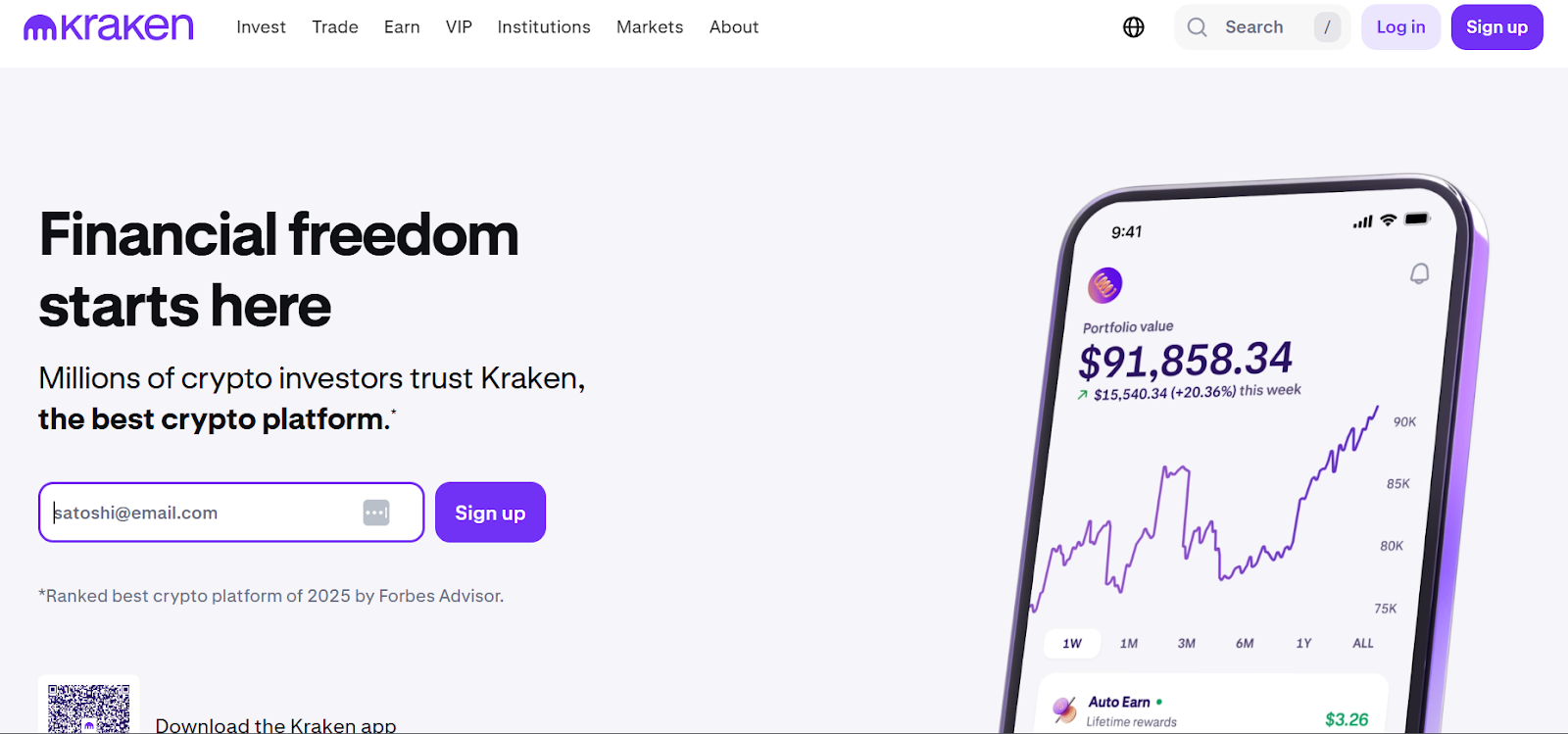
Kraken is a major centralized exchange that offers custodial staking for SOL. Users simply deposit SOL and activate staking with one click, while Kraken manages validator operations and distributes rewards. It’s a convenient option for those who prefer not to manage wallets or select validators themselves. However, as a custodial service, users relinquish direct control over their assets.
Custodial / Non-Custodial: Custodial.
Estimated APY: ~6–6.7% APR.
Ease of Use: Extremely easy; ideal for users who already trade on Kraken.
3. Solflare Wallet
Solflare is a Solana-native wallet built specifically for staking and DeFi. It supports both native staking (delegating to validators) and liquid staking via integrations with protocols such as Marinade. Solflare is known for its advanced features, including portfolio tracking, NFT management, and cross-platform support (web, mobile, and browser extension). It’s a strong choice for users who want greater flexibility than Phantom offers.
Custodial / Non-Custodial: Non-custodial.
Estimated APY: ~6.2% APY.
Ease of Use: Slightly more advanced than Phantom but still intuitive.
4. Jito Network
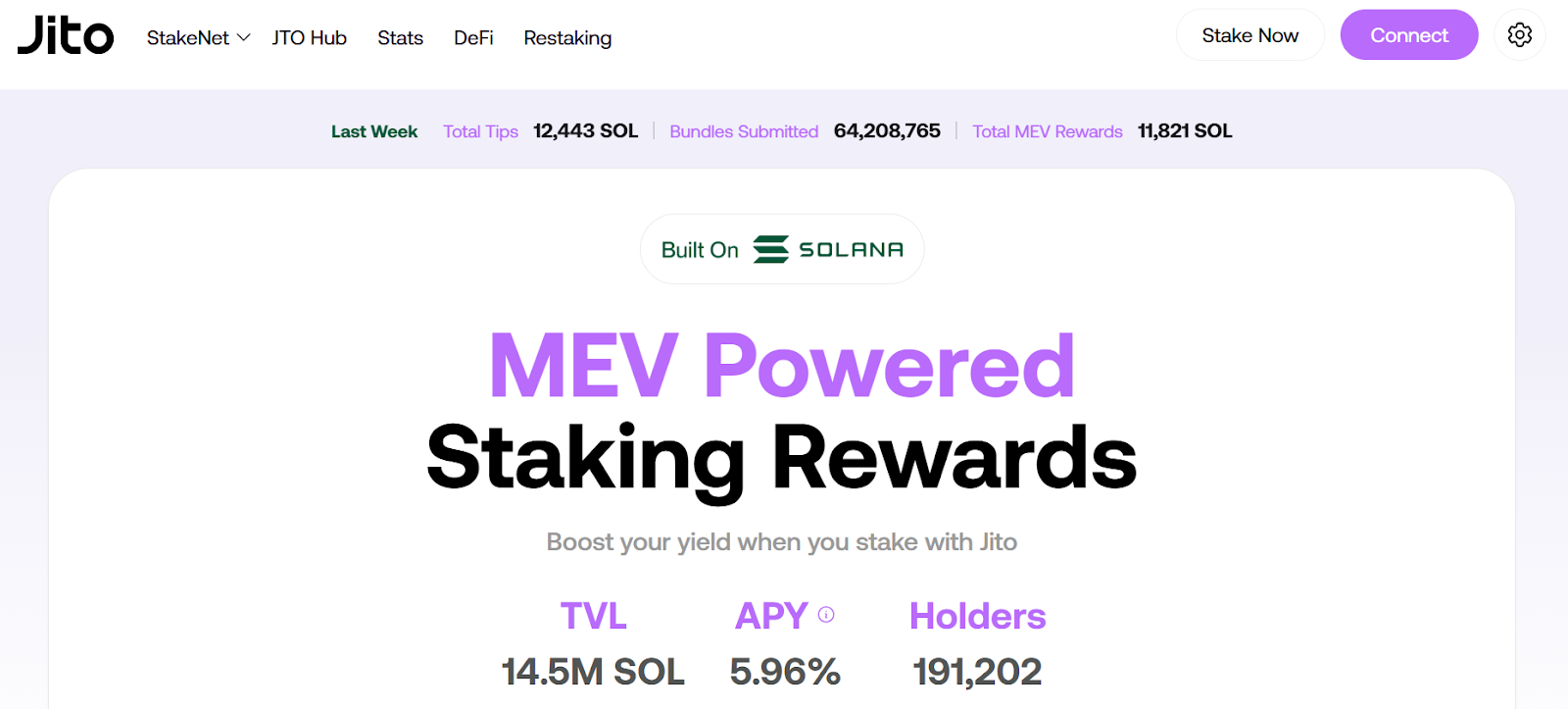
Jito is a liquid staking protocol that issues JitoSOL, a token representing staked SOL. Its unique value proposition lies in MEV (Maximum Extractable Value) optimization, enabling stakers to earn rewards beyond standard staking yields. JitoSOL can also be used across Solana DeFi platforms to enable lending, liquidity provision, and yield farming. This makes Jito especially attractive for yield-maximizers who are comfortable with DeFi and want to stack multiple income streams.
Custodial / Non-Custodial: Non-custodial.
Estimated APY: 5.96% to ~7–7.7% APY (boosted by MEV rewards).
Ease of Use: Requires familiarity with DeFi but offers strong upside potential.
5. Coinbase
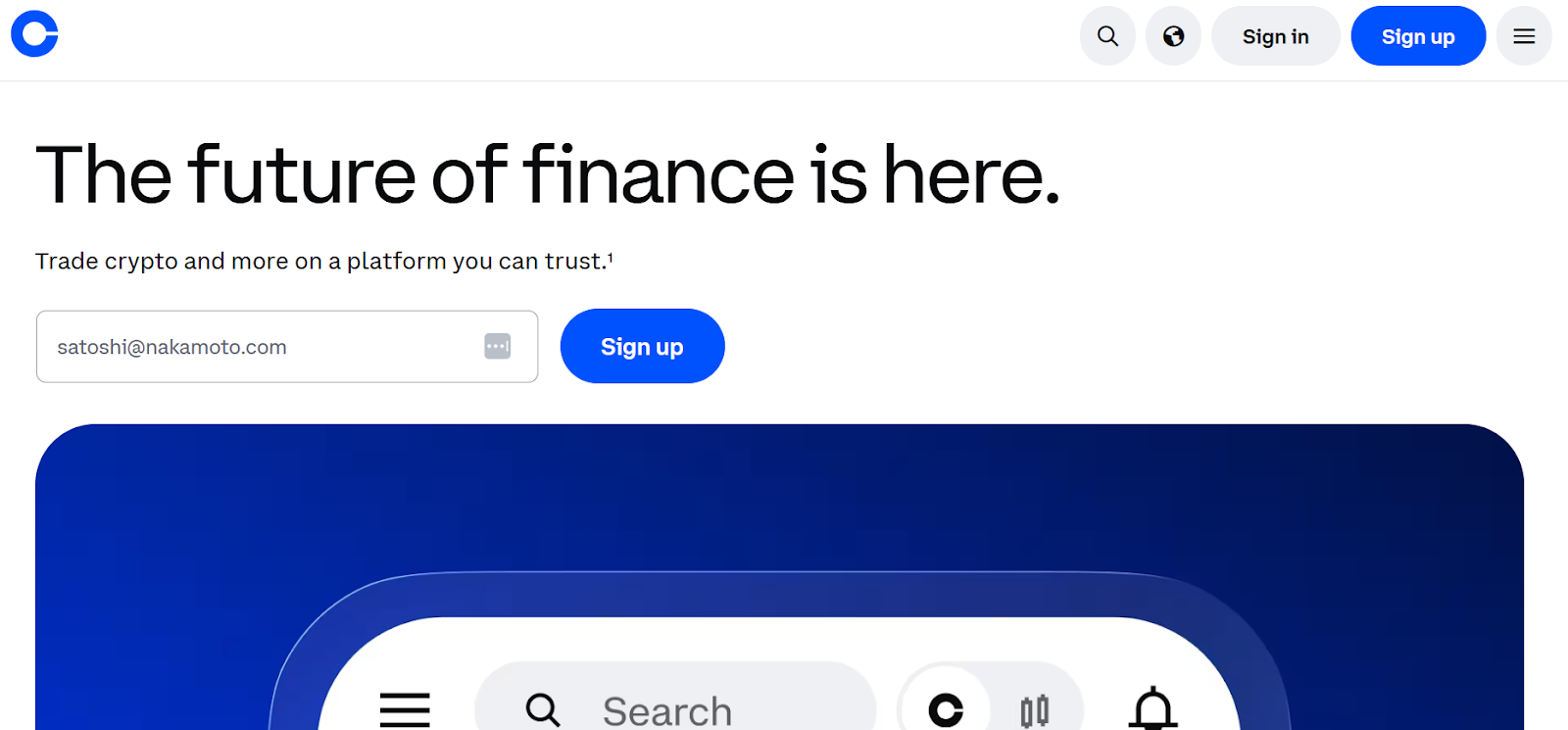
Coinbase is one of the largest global exchanges and offers custodial staking for SOL. Designed for simplicity, the platform lets users stake directly from their Coinbase account without selecting validators or setting up a wallet. However, Coinbase typically offers lower yields than non-custodial or liquid-staking options due to fees and custodial overhead. Despite this, its ease of use and trusted brand make it a popular choice for beginners who prioritize convenience and security over maximum returns.
Custodial / Non-Custodial: Custodial.
Estimated APY: ~3–4% APY.
Ease of Use: Extremely simple; ideal for newcomers.
6. BlazeStake
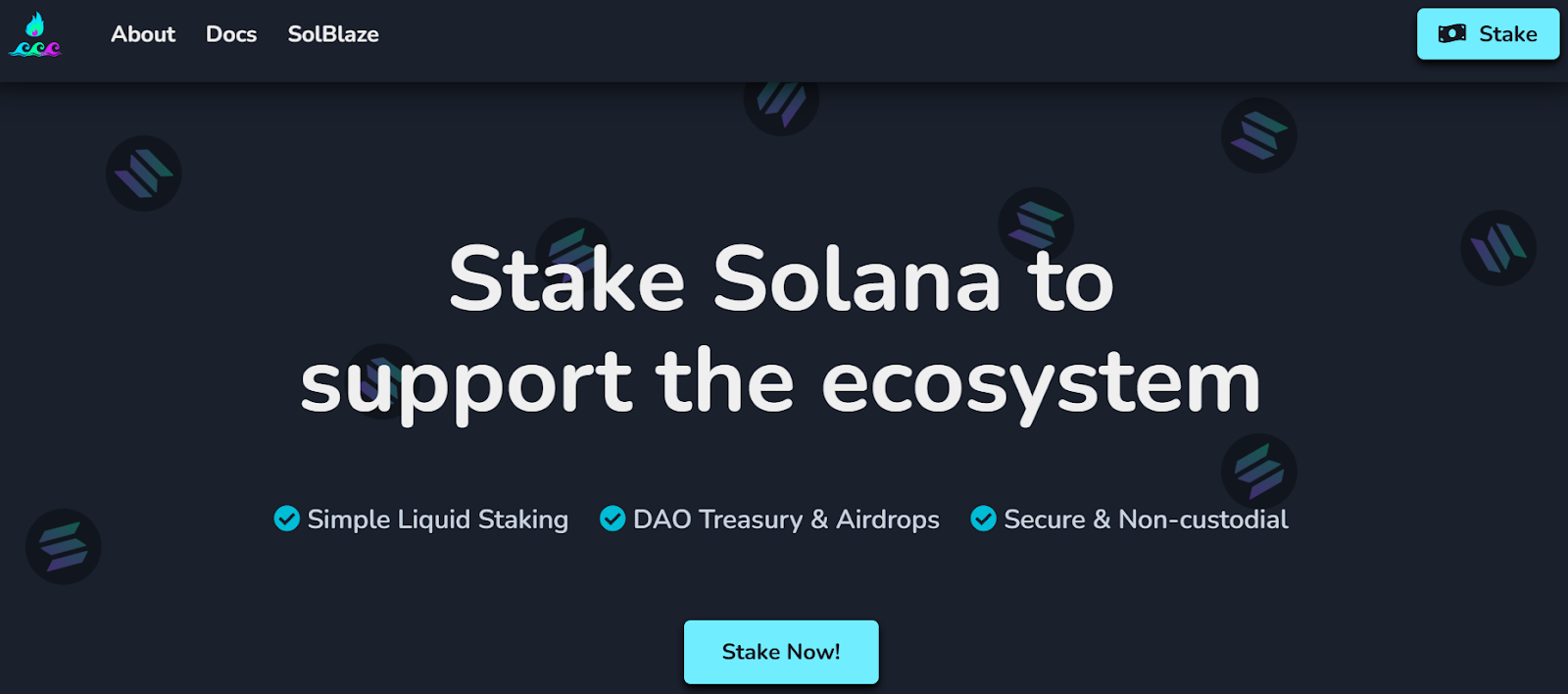
BlazeStake is a decentralized liquid-staking protocol that issues bSOL, a liquid-staking token. Users earn staking rewards while retaining liquidity, and bSOL can be used in DeFi strategies to generate additional yield. BlazeStake emphasizes decentralization and validator diversity, spreading stake across multiple validators to strengthen network security. It’s a community-driven alternative to larger liquid staking protocols, appealing to users who value decentralization and want to maximize their DeFi opportunities.
Custodial / Non-Custodial: Non-custodial.
Estimated APY: ~5.9–6.3% APY.
Ease of Use: Straightforward for DeFi users; requires wallet connection.
7. Ledger
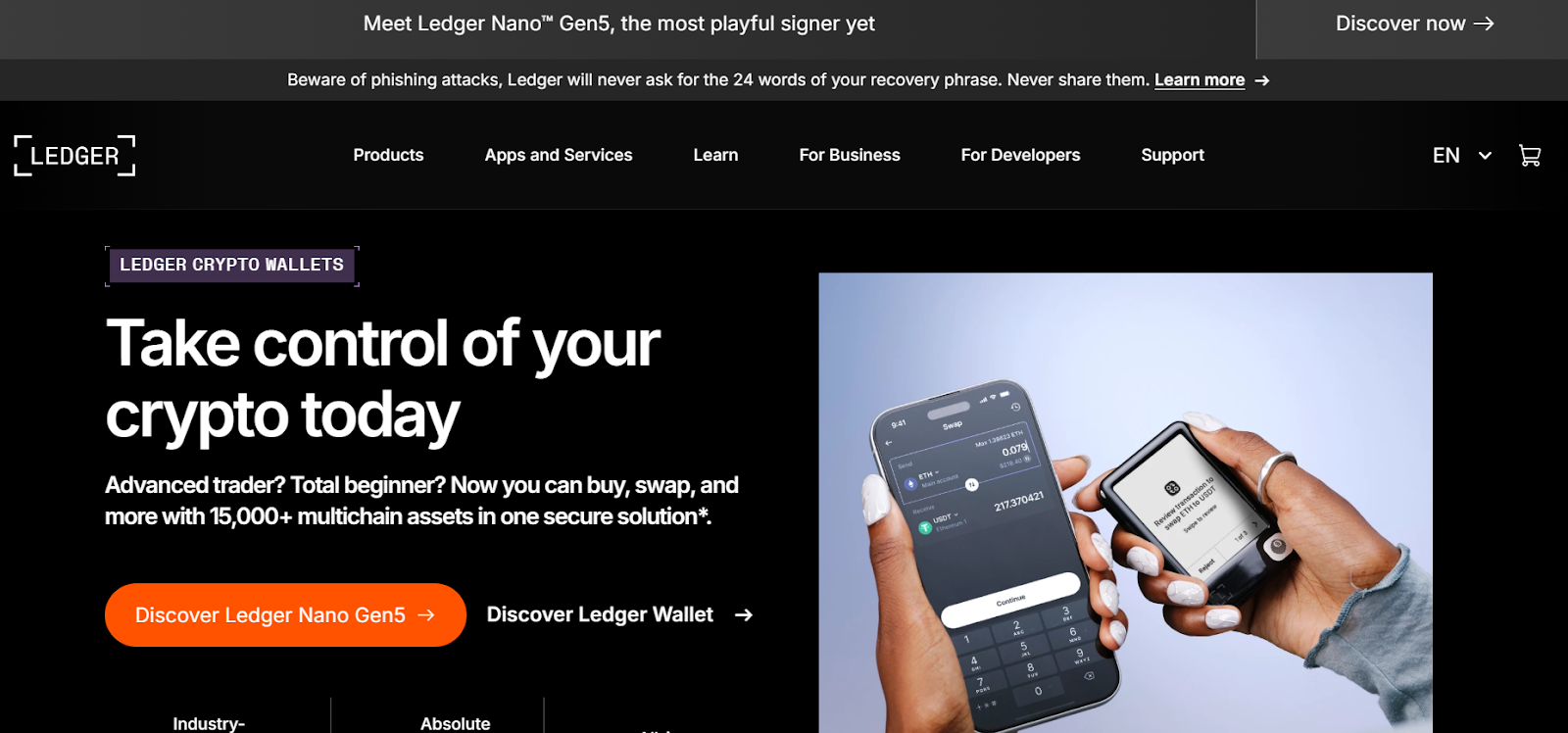
Ledger is a hardware wallet that provides maximum security for SOL holders. Through integrations with staking providers like Figment, users can delegate SOL directly from their Ledger device. This option is ideal for long-term holders who prioritize cold storage security while still earning staking rewards. While setup is more technical than with software wallets, Ledger offers unmatched security for those who want to protect their assets from online threats.
Custodial / Non-Custodial: Non-custodial (self-custody).
Estimated APY: ~5.8–6% APY (minus validator commission).
Ease of Use: Best for advanced users; hardware setup required.
8. Marinade Finance
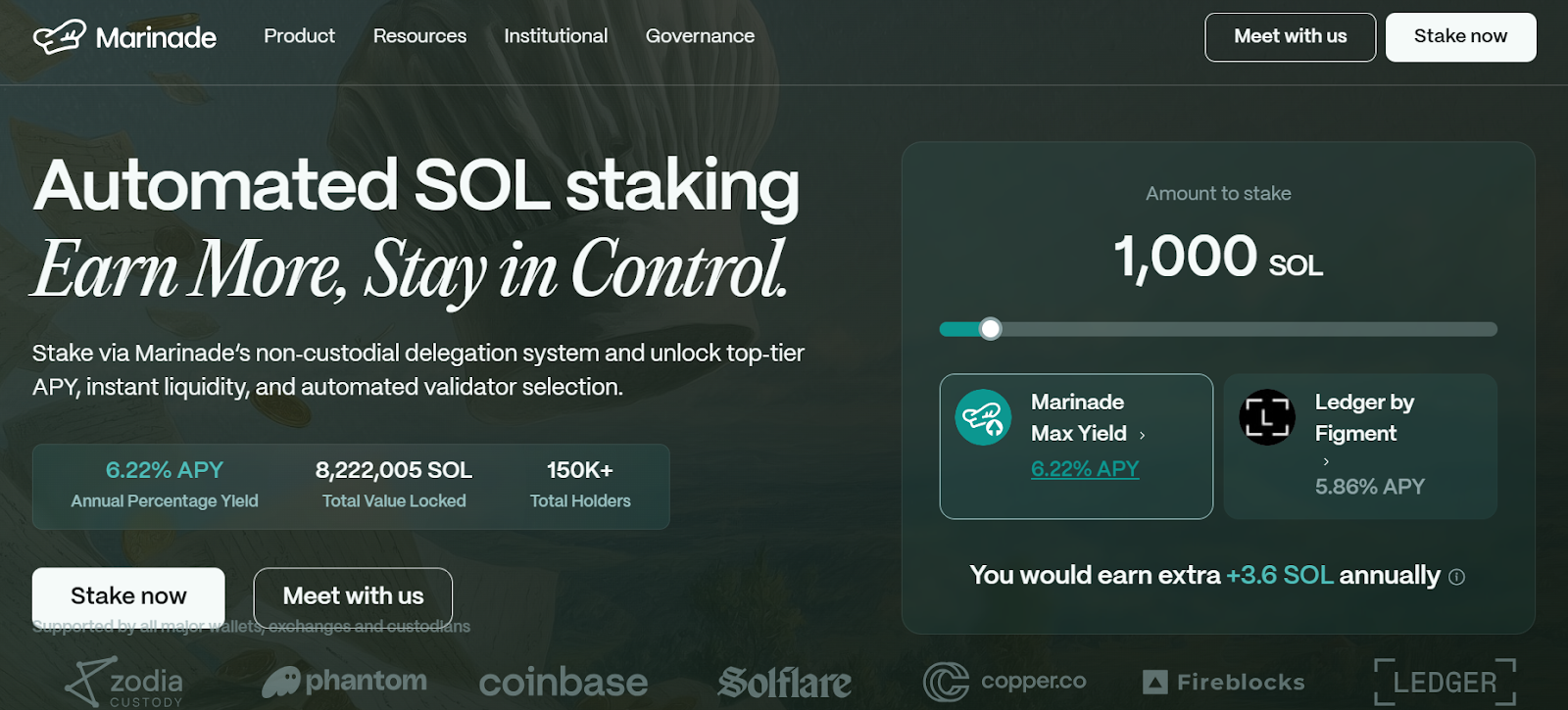
Marinade is the largest liquid staking protocol on Solana, issuing mSOL as a liquid staking token. It’s widely integrated across Solana DeFi, making it one of the most versatile options for users who want to earn staking rewards while participating in lending, liquidity pools, and yield farming. Marinade also promotes decentralization by spreading stake across many validators through its delegation strategies. Its scale, integrations, and community support make it a cornerstone of Solana’s liquid staking ecosystem.
Custodial / Non-Custodial: Non-custodial.
Estimated APY: ~6.2% APY.
Ease of Use: Simple staking interface, widely adopted in DeFi.
What to Look For in a Good Solana Staking Platform
Choosing the right Solana staking platform is about balancing control, security, yield, liquidity, and usability. Beginners often gravitate toward custodial exchanges or simple wallets like Phantom, while yield hunters explore liquid staking protocols such as Jito or Marinade. Security-focused holders tend to prefer hardware wallets like Ledger. By carefully evaluating custody type, security, APY versus risk, validator control, liquidity, and ease of use, you can align your staking strategy with your personal goals and comfort level.
- Custody Type: One of the first decisions when choosing a staking platform is whether to use a custodial or non-custodial setup. Custodial platforms, such as centralized exchanges, hold your SOL on your behalf and manage staking. This is convenient but means you relinquish direct control over your assets. Non-custodial platforms, on the other hand, allow you to retain full ownership of your tokens, whether through wallets, hardware devices, or decentralized liquid staking protocols. The choice comes down to your comfort level with self-custody versus your preference for simplicity.
- Security: Security is a critical factor in staking. Non-custodial wallets and hardware devices generally offer stronger protection, as you control your private keys and reduce reliance on third parties. Hardware wallets like Ledger offer the highest level of security, making them ideal for long-term holders. Custodial exchanges rely on their own security infrastructure, which can be robust but still exposes you to risks such as cyberattacks or regulatory scrutiny. Before staking, consider whether you trust yourself to manage keys securely or prefer to rely on an exchange’s safeguards.
- APY vs. Risk: Annual percentage yield (APY) is often the headline figure that attracts stakers, but it should always be weighed against risk. Native staking through wallets typically yields around 6%, while liquid staking protocols can offer higher returns, especially when enhanced by features such as MEV rewards. However, these protocols carry smart contract risks. Custodial exchanges usually deliver lower yields, often in the 3–4% range, but with fewer complexities. The right choice depends on whether you prioritize maximizing yield or minimizing risk exposure.
- Validator Control: Selecting a validator is another important consideration. With native staking, you select which validator to delegate your SOL to, giving you direct influence over decentralization and validator performance. Liquid staking protocols automatically spread stake across multiple validators, promoting network health but removing individual choice. Custodial exchanges typically keep validator operations opaque, meaning you have no say in where your SOL is delegated. If supporting decentralization and transparency matters to you, native staking offers the most control.
- Liquidity: The speed at which you can access your SOL after staking. Native staking requires a roughly two- to three-day unstaking period, which can be limiting if you need immediate access. Liquid staking protocols address this by issuing tokens such as mSOL or JitoSOL that can be freely traded or used in DeFi while still earning rewards. Custodial exchanges often allow instant unstaking, but this depends on their policies. Your decision should reflect whether you value flexibility and quick access or are comfortable with lock-up periods in exchange for steady rewards.
- Ease of Use: Ease of use varies widely across platforms. Custodial exchanges like Coinbase and Kraken are the simplest, offering plug-and-play staking with minimal effort. Wallets such as Phantom and Solflare are beginner-friendly but require some understanding of validator delegation. Liquid staking protocols such as Marinade and Jito add complexity by requiring interaction with DeFi applications, but they also unlock additional opportunities. Hardware wallets like Ledger are the most technical, requiring setup and integration with staking providers. Matching platform complexity to your experience level ensures a smoother staking journey.
Are There Any Risks of Staking Solana?
Staking SOL always involves some level of risk. While rewards are attractive, they are paid in SOL, so if the token’s market price drops, the real-world value of your rewards may shrink. Additionally, validator performance directly affects your yield; selecting poorly managed validators can reduce returns. Finally, staking requires some level of commitment; even with liquid staking, you’re exposed to protocol or market risks that don’t exist when simply holding SOL idle.
- Risks of Wallet-Based (Native) Staking: When staking through wallets like Phantom or Solflare, you retain full control of your SOL but also assume responsibility for validator selection and key management. If your chosen validator performs poorly, goes offline, or charges high commissions, your rewards will be lower. While Solana does not currently enforce harsh slashing penalties as some other blockchains do, there remains a risk of reduced rewards if validators misbehave. Another consideration is liquidity: unstaking SOL requires a 2–3-day wait, which can be limiting if you need immediate access to your funds.
- Risks of Exchange (Custodial) Staking: Centralized exchanges such as Kraken or Coinbase make staking easy but introduce custodial risk. By staking through an exchange, you relinquish direct control of your SOL, exposing your tokens to potential exchange hacks, insolvency, or regulatory intervention. Additionally, exchanges often charge fees or offer lower APYs compared to native or liquid staking options. While convenience is high, the trade-off is reduced transparency and reliance on the exchange’s operational integrity.
- Risks with Liquid Staking Protocols: Liquid staking platforms like Marinade, Jito, or BlazeStake issue liquid tokens (mSOL, JitoSOL, bSOL) that represent your staked SOL. These tokens allow you to stay liquid and participate in DeFi, but they introduce smart contract risk; if the protocol is exploited or suffers a bug, your funds could be at risk. Liquid staking also adds complexity, as using these tokens in DeFi exposes you to additional risks, including impermanent loss, lending defaults, and liquidity crunches. While yields can be higher, especially with MEV-optimized protocols like Jito, the risk profile is also elevated.
When staking Solana, it is important to recognize that each method comes with its own balance of benefits and risks. Wallet-based native staking offers strong decentralization and user control, but it requires responsibility in managing validators and patience with the two- to three-day unstaking period. Exchange staking is the most convenient option, especially for beginners, yet it introduces custodial and regulatory risks since you rely entirely on the platform to safeguard your assets.
Liquid staking protocols offer flexibility and often higher yields by issuing tradable tokens such as mSOL or JitoSOL, but they also expose users to smart contract vulnerabilities and the added complexities of DeFi. Understanding these trade-offs helps you set realistic expectations and choose the staking approach that best aligns with your priorities, whether that is control, convenience, or liquidity.
Final Thoughts
Staking Solana (SOL) is a powerful way to transform idle holdings into an income-generating asset while actively supporting the network’s security and growth. But as this article shows, there is no single “best” platform; your choice depends on what matters most to you. If you value control and decentralization, native wallet staking may be the right fit. If you prioritize flexibility and liquidity, liquid staking protocols unlock DeFi opportunities. If you prefer simplicity and convenience, custodial exchanges offer an easy entry point, though often at the cost of lower yields and reduced control.
The key takeaway is that staking involves trade-offs between custody, security, yield, liquidity, and ease of use. Your goals, risk tolerance, and experience level should guide your decision. Beginners may lean toward exchanges or simple wallets, while experienced users and yield hunters may explore liquid staking and DeFi integrations. Security-focused holders often prefer hardware wallets for maximum protection.
Ultimately, staking SOL is not just about chasing rewards; it is about aligning your strategy with your comfort level and long-term vision. By making an informed choice, you can confidently earn, support the Solana ecosystem, and ensure your staking journey aligns with your personal priorities.
Trust your judgment, weigh the trade-offs, and stake with confidence, because the best platform is the one that fits you.
Frequently Asked Questions
Is it safe to stake Solana?
Staking Solana is generally safe, offering passive rewards while supporting network security. Risks vary by method: wallets require key management, exchanges involve custodial risk, and liquid staking adds smart contract exposure. With informed choices and proper precautions, staking remains a reliable way to grow SOL holdings responsibly.
How much can you earn by staking Solana?
Staking Solana typically earns around 5–7% APY, depending on validator performance, platform choice, and whether you use native, liquid, or exchange staking. Liquid staking protocols may offer slightly higher yields, while exchanges often provide lower returns. Earnings compound over time, boosting long-term rewards alongside potential SOL price appreciation.
Are Solana staking rewards taxable?
Yes, Solana staking rewards are generally considered taxable income in most jurisdictions. The value of rewards when received is subject to income tax, and any gains or losses on the sale of SOL may trigger capital gains tax. Always consult local tax regulations or a professional.
Is staking Solana better than holding SOL?
Staking Solana is often better than holding idle SOL because it generates passive rewards, supports network security, and offers compounding potential. Holding SOL benefits only from price appreciation, whereas staking provides a consistent yield. The choice depends on your liquidity needs, risk tolerance, and long-term investment strategy.
Is it better to stake SOL on an exchange or a wallet?
Staking SOL on a wallet offers greater control, decentralization, and security, while exchanges provide convenience and simplicity but involve custodial risk and often lower yields. The better option depends on your priorities: wallets suit long-term, security-focused holders, while exchanges suit beginners seeking ease of use and instant access.
Can I unstake Solana anytime?
You can unstake Solana, but it is not always instant. Native wallet staking requires a 2–3-day cooldown before funds are available. Liquid staking protocols provide immediate liquidity via tradable tokens, while exchanges may offer instant or delayed unstaking, depending on their policies. Flexibility varies by platform choice.
Disclaimer
This article is for educational and information purposes, and should not be considered financial advice. For more information visit our disclaimer page
About the Author