

In 2024, hackers stole over $1.7 billion in crypto from online wallets and exchanges, a stark reminder that digital assets are only as secure as the tools protecting them. As crypto adoption surges globally, so does the need for its bulletproof security. That is where cold storage wallets come in.
Unlike hot wallets that stay connected to the internet and are vulnerable to hacks, cold wallets store your private keys completely offline. They are the digital equivalent of a vault, making them ideal for long-term holders, serious investors, and anyone who values peace of mind over convenience.
Let’s help you explore 9 of the best cold storage wallets of 2025 and how you can use them to protect your digital assets from malicious actors both online and offline.
Why Do You Need a Cold Storage Wallet?
If you are serious about protecting your digital assets, including cryptocurrencies and NFTs, a cold storage wallet is essential. It provides you with;
- Offline Safety: Cold storage wallets, also known as offline wallets, keep your private keys completely disconnected from the internet. This isolation means no exposure to malware, phishing, or remote hacking attempts. Your crypto assets remain safe even if your computer or phone is compromised. This method is ideal for storing large amounts of cryptocurrency securely.
- Protection from Hacks: In 2024 alone, hackers stole over $1 billion in crypto through online vulnerabilities. Cold wallets eliminate this risk by preventing unauthorized access via internet-based attacks. They offer tamper-proof hardware options like Ledger and Trezor, which support multi-signature setups for added security.
- Peace of Mind: Cold storage is perfect for those who want to invest for the long haul and don’t need daily access. Cold storage wallets are essential if you want to sleep easy knowing your assets are safe and prefer a “set it and forget it” approach to crypto security.
Cold storage or offline wallets are tailored to different user needs. Whether you are a casual investor securing a few coins, a crypto whale safeguarding millions, or a business managing treasury reserves, there is a cold wallet solution for you. From simple paper wallets to advanced hardware devices, the market offers options to suit every profile.
When searching for the best cold storage crypto wallet, consider;
- Security features such as PIN protection, seed phrase backups, and encryption.
- Ease of use for user-friendly interfaces for non-tech users.
- Compatibility to have support for multiple coins and platforms.
- Reputation always goes with trusted brands like Ledger Nano X, Trezor Model T, and BitBox02.
What Are the Main Types of Crypto Cold Storage?
Cold storage wallets come in various forms, each designed to keep your private keys offline and safe from online threats. While the goal is the same, to provide maximum crypto security, the methods differ in complexity, usability, and risk. Here’s a breakdown of the main types:
1. Hardware Wallets
Hardware wallets are physical devices that store private keys offline. They resemble USB drives and connect to your computer or phone only when signing transactions. For these wallets to work, private keys are generated and stored within the device. The transactions are then signed internally, so the private key never leaves the wallet.
Some popular examples of hardware wallets include Ledger Nano X, Trezor Model T, and ELLIPAL Titan 2.0. They offer high security and are protected by PIN codes, seed phrases, and often encrypted chips. Their usability is moderate as they require setup and occasional firmware updates. Their prices typically range from $69 to $279, depending on features and brand.
2. Paper Wallets
A paper wallet is a printed or handwritten document containing your public and private keys. You generate keys using an offline tool and print them, as no software or hardware is involved. They offer strong security against online threats but are vulnerable to physical damage, theft, or loss.
The usability of paper wallets is low as they require manual entry of keys and careful handling. These wallets are best for advanced users who understand key management and want ultra-low-cost cold storage.
3. Sound Wallets
Sound wallets store encrypted private keys as audio files, often embedded in CDs or vinyl records. These keys are converted into sound for wallets by using encryption algorithms. Playback with only the right decoder reveals the key.
The security of sound wallets is experimental as it relies on obscurity and physical media. Their usability is very low as these wallets require specialized tools and knowledge. Sound wallets are best for niche users or cryptography enthusiasts exploring alternative storage methods.
4. Deep Cold Storage
Deep cold storage involves placing private keys in highly secure and physically isolated environments. These keys are stored on paper, hardware, or encrypted drives and locked in vaults, safety deposit boxes, or other inaccessible locations.
Deep cold storage provides maximum security and is ideal for long-term holdings with no immediate access needs. However, their usability is very low as retrieving keys can take hours or days. Deep cold storage is best for institutions, hedge funds, or individuals holding large crypto reserves.
5. Offline Software Wallets as Cold Storage
These are software wallets installed on devices that never connect to the internet. For these wallets to work, you install wallet software on an air-gapped computer. Transactions are then signed offline and transferred via USB or QR code.
Offline software wallets offer high security because there is no network exposure, but they depend on user discipline. These wallets are technical as they require setup, maintenance, and secure backups. They are best for tech-savvy users who want full control without buying hardware.
Best Cold Storage Wallets in 2025 (Top Picks)
As crypto adoption grows, so does the need for secure and offline storage. Cold wallets are the gold standard for protecting your digital assets from hacks, phishing, and exchange failures. In 2025, the best cold storage wallets combine advanced security features, broad coin support, and a user-friendly design.
To identify the top 9 picks, we evaluated these wallets based on;
- Security architecture: Air-gapped design, encryption chips, and biometric access
- Supported assets: Number of coins and blockchain compatibility
- Ease of use: Setup process, interface, and mobile integration
- Price-to-value ratio: Balancing cost with features
- Reputation: Community trust, reviews, and brand history
| Name of Wallet | Pricing | Security | Storage | Best For | Key Features |
| Tangem | $54.90–$69.90 USD | Fully air-gapped via NFC and Common Criteria EAL6+ certified | 6,000+ cryptocurrencies and NFTs | Beginners, Mobile-first users, Travelers, and Security-conscious holders | Tap-to-sign, Multi-card redundancy, Tamper-proof design, and Cross-platform support |
| Ledger Nano X | €124.17 Euro | AES-encrypted Bluetooth and a Secure Element chip with CC EAL5+ certified | 5,500+ cryptocurrencies and NFTs | Active traders, multi-asset holders, security-conscious users, NFT collectors, and DeFi users | Bluetooth-enabled, Built-in battery, Ledger Live app, Multi-chain support, and Compact design |
| Ledger Stax | $399 USD or €124.17 Euro | Secure Element Chip (ST33K1M5) with CC EAL6+ certification and PIN protection | 5,500+ cryptocurrencies | NFT collectors, power users, design-conscious investors, and long-term holders | Bluetooth 5.2, USB-C, Wireless Qi charging, customizable lock screen, magnetized shell, and Ledger Live integration |
| Trezor Safe 3 | $79 USD or €79 Euro | Secure Element chip (EAL6+ certified), PIN and Passphrase protection, Shamir Backup | 8,000+ cryptocurrencies | New crypto users, security-focused investors, privacy advocates, and Bitcoin maximalists | Compact design, Durable aluminium finish, Privacy tools, and FIDO2 authentication |
| COLDCARD | $157 USD | Air-gapped operation, duress PINs, brick-me PINS, and countdown-to-brick PINS | Bitcoin only | Bitcoin maximalists, advanced users, privacy advocates, and institutional holders | Numeric keypad, NFC tap-to-sign, MicroSD slot, Virtual disk mode, and no internet connectivity |
| BitVault Audio Edition | $99-$149 USD | Air-gapped, sound encryption, and time-delay multisig | Bitcoin only | Bitcoin holders, institutions, enterprises, privacy-focused users, and advanced crypto users | Encrypted audio storage, Time-delay multisig, Physical media options, Open-source decoder tools, and Tamper-evident packaging |
| Electrum | Free | Multisig wallets, 2FA, and 12-word seed phrase | Bitcoin only | Bitcoin purists, tech-savvy users, privacy advocates, and long-term holders | Lightweight client, Custom fee control, Watch-only wallets, Plugin support, and Encrypted wallet files |
| Armory Wallet | Free | Fragmented backups, Shamir’s Secret Sharing, and Multi-sig wallets | Bitcoin only | Advanced users, institutions, enterprises, security professionals, and long-term holders | Advanced key management, Offline transaction signing, Watch-only wallets, Secure cold storage, and Open-source codebase |
| Exodus | Free | 12-word seed phrase | 1,000+ cryptocurrencies | Multi-asset holders, privacy-conscious users, beginner-friendly investors, and long-term holders. | User-friendly interface, Built-in exchange, Portfolio tracking, Staking support, and Air-gapped setup |
1. Tangem – Hardware Wallet
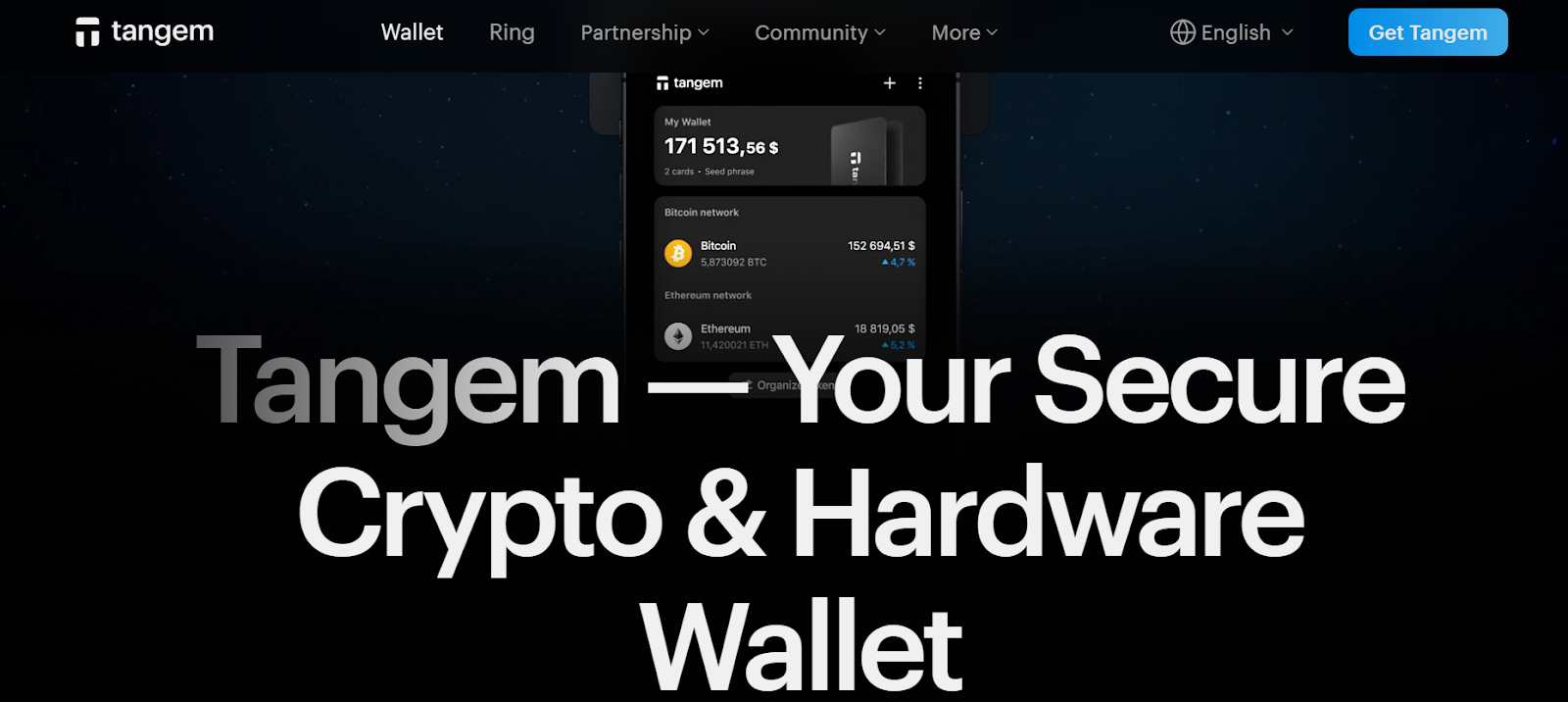
Tangem is a sleek, card-based hardware wallet that uses NFC (near-field communication) to securely manage crypto assets via your smartphone. It’s one of the most affordable and user-friendly cold storage options available in 2025.
Its price is between $54.90–$69.90 USD, depending on the model and bundle. Tangem supports 6,000+ cryptocurrencies across 78 networks and is compatible with decentralized apps (DApps) and NFT platforms.
It is best for beginners, mobile-first users, travelers, and security-conscious holders.
2. Ledger Nano X – Hardware Wallet
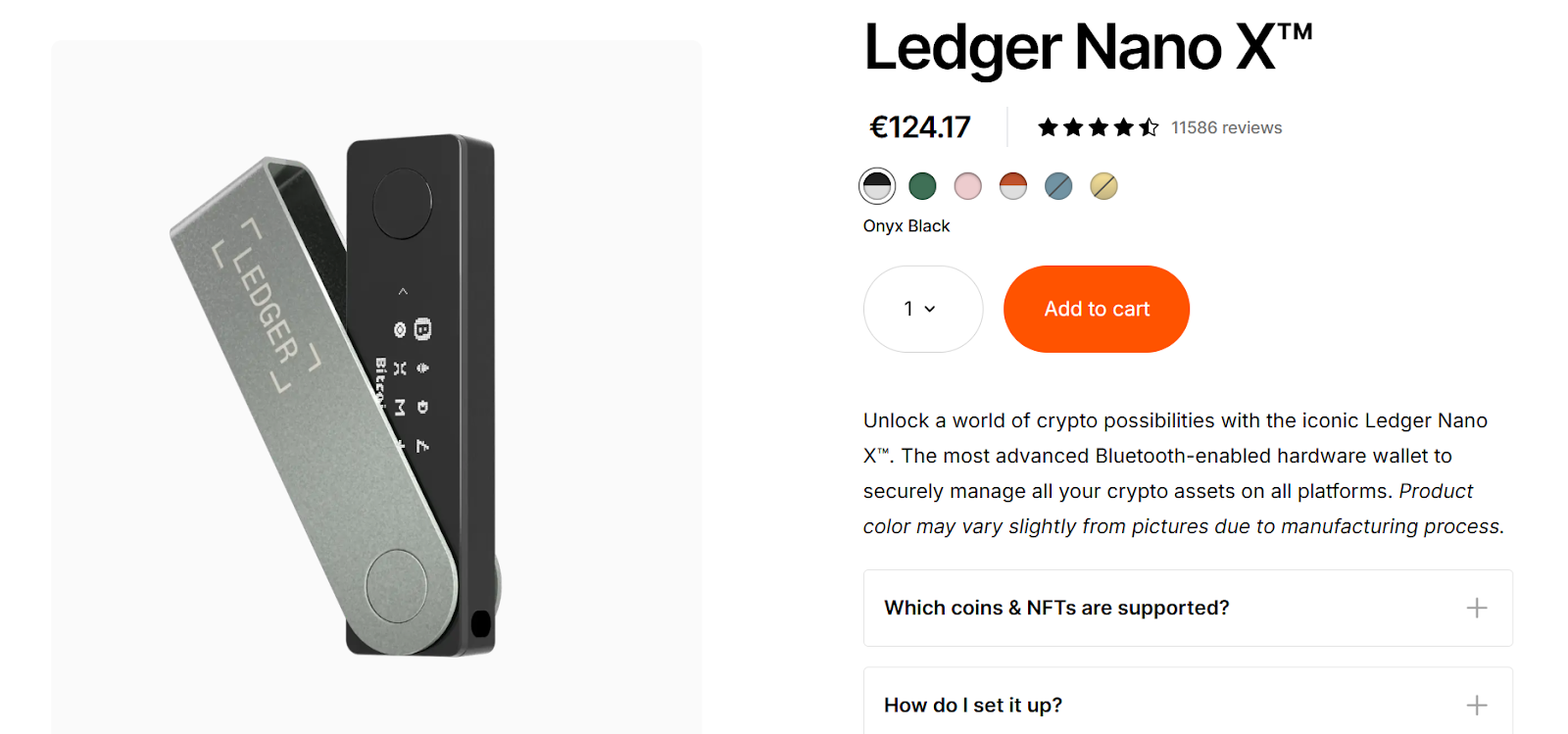
Ledger Nano X remains one of the most trusted and feature-rich cold storage wallets in 2025. Designed for both mobile and desktop users, it offers a strong balance of security, flexibility, and ease of use.
It costs €124.17, depending on the region and retailer. It supports 5,500+ cryptocurrencies, including Bitcoin, Ethereum, Solana, XRP, and stablecoins, and is compatible with NFTs, DeFi apps, and staking platforms.
Ledger Nano X is best for active traders, multi-asset holders, security-conscious users, NFT collectors, and DeFi users.
3. Ledger Stax – Hardware Wallet
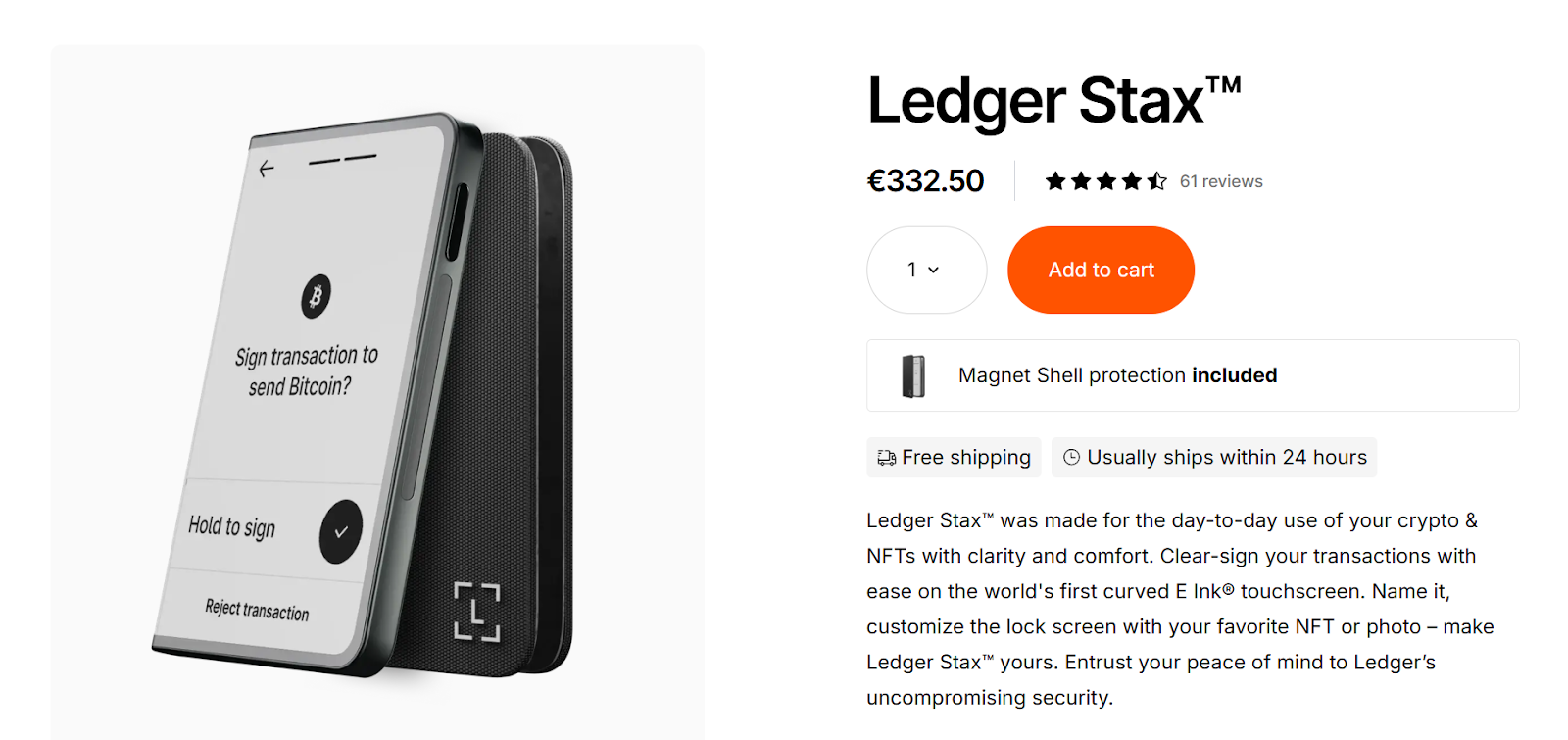
Ledger Stax is Ledger’s premium cold storage wallet, designed for users who want top-tier security with a sleek, modern interface. It combines advanced protection with a unique curved E Ink touchscreen, making crypto management both secure and stylish.
It costs $399 USD or 124.17 Euro and supports 5,500+ cryptocurrencies, including Bitcoin, Ethereum, Solana, and NFTs. It is also compatible with the Ledger Live app on iOS, Android, and desktop.
Ledger Stax is best for NFT collectors, power users, design-conscious investors, and long-term holders.
4. Trezor Safe 3- Hardware Wallet
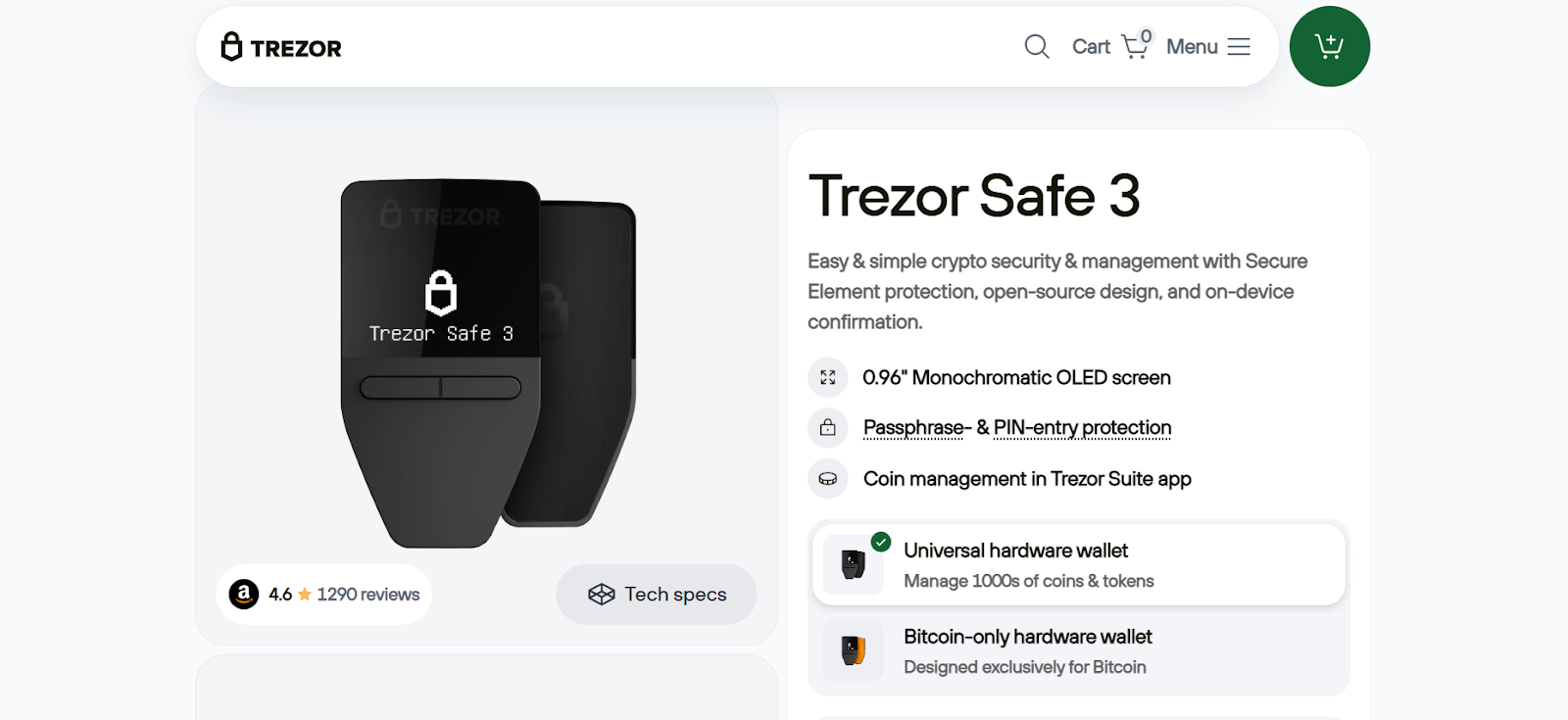
Trezor Safe 3 is the latest generation cold wallet from SatoshiLabs, designed to deliver robust security with a user-friendly experience. It is ideal for both beginners and seasoned crypto holders looking for reliable self-custody.
It costs $79 USD or €79 EUR and it supports 8,000+ cryptocurrencies, including BTC, ETH, SOL, ADA, and USDC. It is also compatible with Trezor Suite and third-party wallet apps. Trezor Safe 3 is best for new crypto users, security-focused investors, privacy advocates, and Bitcoin maximalists.
5. COLDCARD – Hardware Wallet
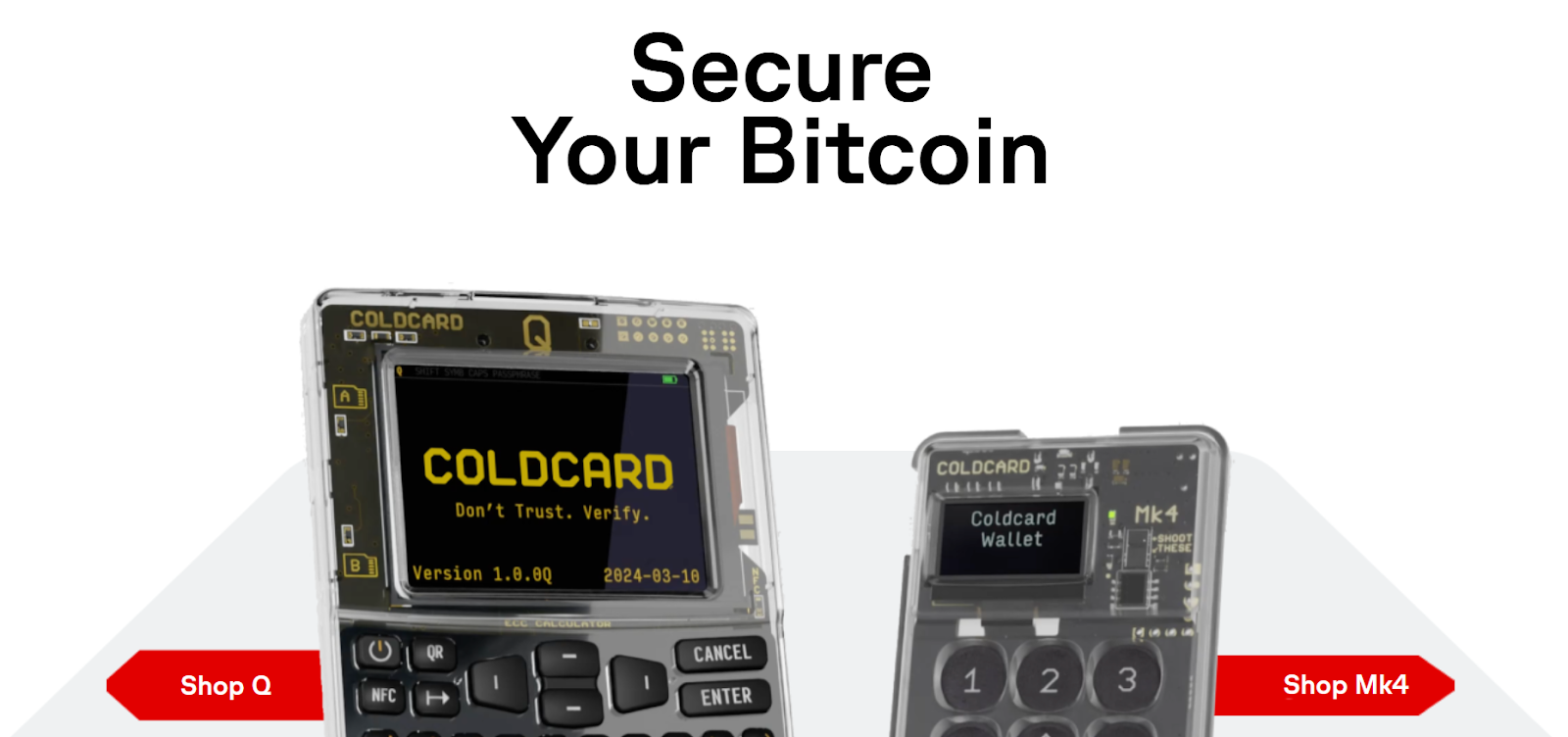
COLDCARD Mk4 is a Bitcoin-only hardware wallet engineered for maximum offline security. It is built for users who prioritize air-gapped workflows, open-source transparency, and advanced physical protection.
Its price is $157 USD (base model), and it is a Bitcoin-only wallet with no support for altcoins. COLDCARD Mk4 is also compatible with PSBT (Partially Signed Bitcoin Transactions) workflows and is best for Bitcoin maximalists, advanced users, privacy advocates, and institutional holders.
6. BitVault Audio Edition – Sound Wallet
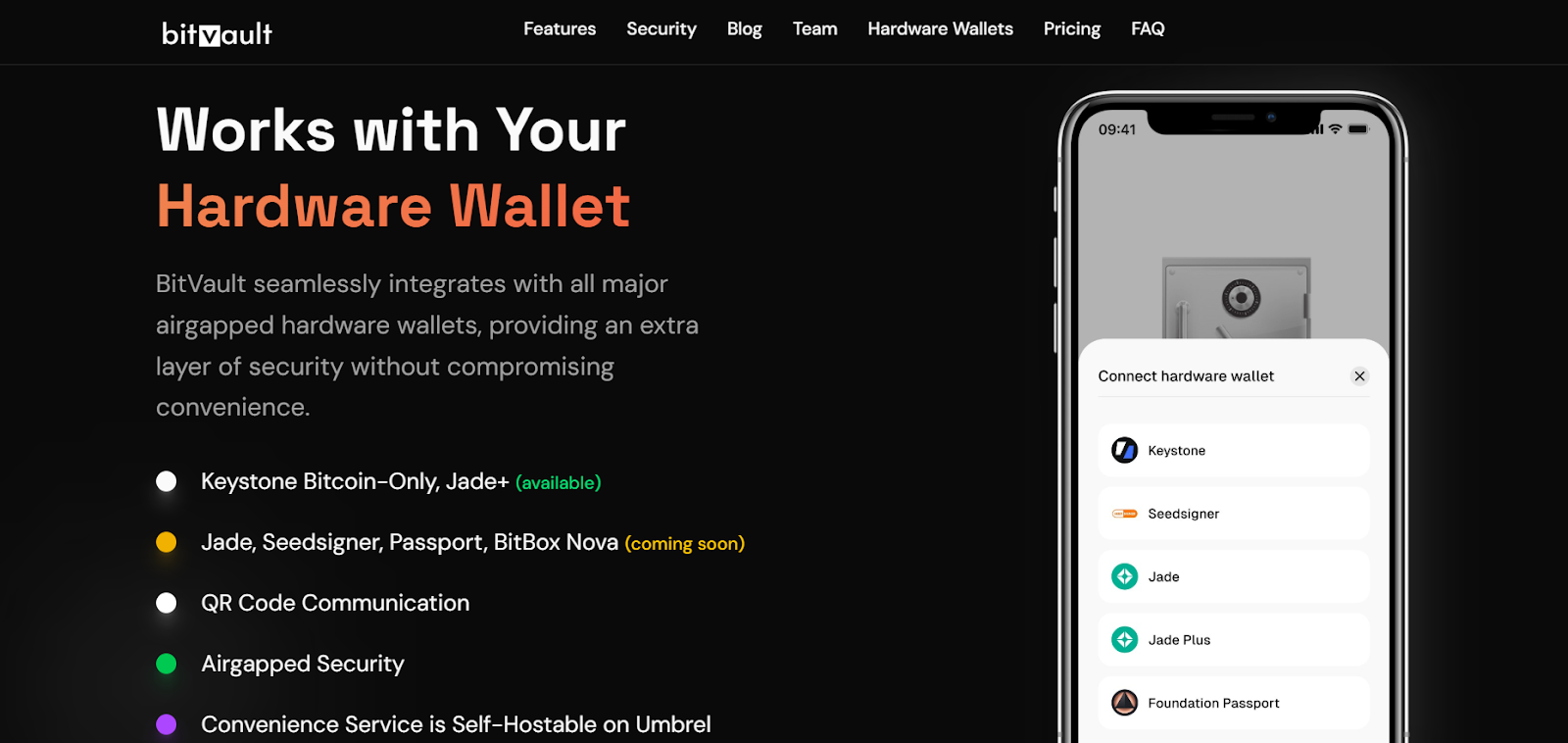
BitVault Audio Edition is a cutting-edge sound wallet designed to store Bitcoin private keys using encrypted audio formats. It combines physical media with advanced cryptographic techniques to offer a unique form of cold storage that resists both digital and physical threats.
It costs $99–$149 USD depending on format and bundle, and is available in CDs, vinyl records, and downloadable encrypted audio files. It is a Bitcoin-only wallet where keys are stored as AES-256-encrypted audio signals. It is also Compatible with BitVault decoder software for secure key retrieval and supports multisig setups and time-delayed transactions.
BitVault audio edition is best for Bitcoin holders, institutions, enterprises, privacy-focused users, and advanced crypto users.
7. Electrum (Bitcoin) – Offline Software Wallet
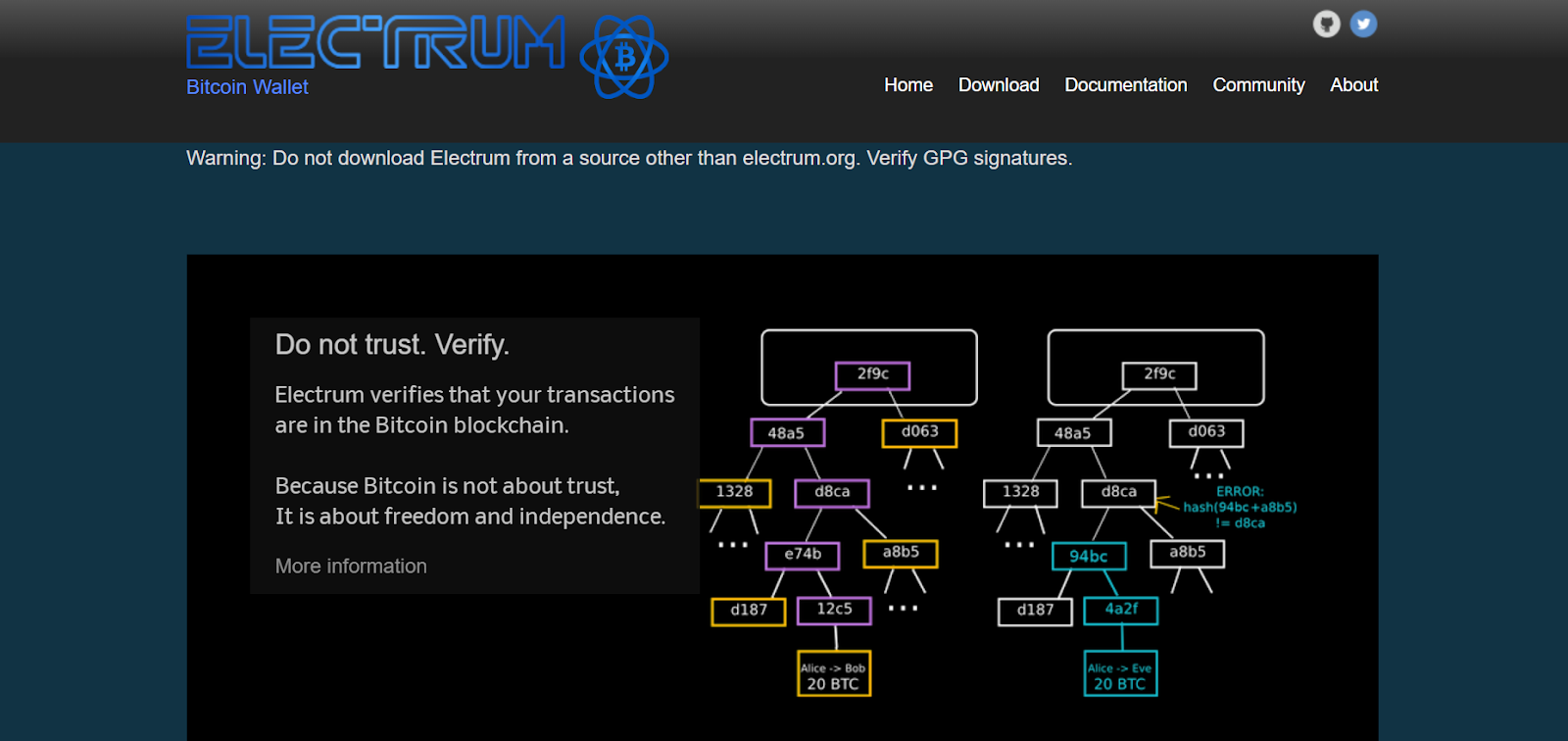
Electrum is one of the oldest and most trusted Bitcoin wallets, known for its speed, security, and flexibility. As an offline software wallet, it can be installed on an air-gapped computer to serve as a cold storage solution for Bitcoin holders.
It is free and open-source with no subscription or hardware required. It is a Bitcoin-only wallet and is compatible with Windows, macOS, Linux, and Android. It also supports SegWit, Legacy, and Taproot addresses and integrates with hardware wallets like Ledger, Trezor, and Coldcard.
Electrum is best suited to Bitcoin purists, tech-savvy users, privacy advocates, and long-term holders.
8. Armory Wallet – Offline Software Wallet
Armory Wallet is a high-security, Bitcoin-only software wallet designed for advanced users and institutions. It offers robust offline capabilities, making it one of the most secure options for cold storage when installed on an air-gapped computer.
It is free and open-source with no subscription or hardware required. It is a Bitcoin-only wallet and is compatible with Windows, macOS, Linux, and Android. It also supports SegWit, Legacy, and Taproot addresses and integrates with hardware wallets like Trezor and Coldcard.
The Armory wallet is best for advanced users, institutions, enterprises, security professionals, and long-term holders.
9. Exodus (Air-gapped Mode) – Offline Software Wallet
Exodus is a popular multi-asset software wallet known for its sleek interface and broad coin support. While typically used online, it can be configured in air-gapped mode for enhanced cold storage security, making it a versatile option for users who want both convenience and offline protection.
It is free to download and use with no subscription fees or hardware required. It supports 1,000+ cryptocurrencies, including Bitcoin, Ethereum, Solana, Cardano, and NFTs, and is available on Windows, macOS, Linux, iOS, and Android. It is also Compatible with Trezor hardware wallets for added security and can be installed on an air-gapped computer for cold storage.
Exodus is best for multi-asset holders, privacy-conscious users, beginner-friendly investors, and long-term holders.
How to Choose the Right Cold Wallet
Not all cold wallets are created equal, and choosing the right one can make the difference between peace of mind and potential loss. Here are the key factors to consider when selecting a cold storage wallet.
- Security Features: Look for secure element chips (EAL5+ or higher) to protect private keys. Prefer wallets with an air-gapped architecture (no Wi-Fi, Bluetooth, or USB) and consider multi-signature support, biometric access, and tamper-proof design. Wallets with open-source firmware add transparency and trust.
- Supported Cryptocurrencies: Ensure the wallet you choose supports the coins and tokens you plan to hold, as some wallets are Bitcoin-only. In contrast, others support thousands of assets across multiple blockchains. Also, check for NFT and DeFi compatibility if you use those platforms.
- Ease of Use: Choose a wallet with a user-friendly interface and clear setup instructions, as touchscreens, mobile apps, and QR-based signing improve usability. Consider whether the wallet supports recovery options like seed phrases or backup cards.
- Budget and Pricing: Cold wallet prices range from $50 to $400+, depending on features and build quality. Entry-level wallets offer basic protection, while premium models include advanced security and design. Always factor in long-term value because a slightly higher price may mean better protection.
- Brand Reputation and Reviews: Stick with the wallet brands that have a proven track record and strong community trust. Look for independent audits, open-source code, and positive user feedback, and avoid unknown or unverified products that lack transparency.
Cold Wallets vs Hot Wallets: What’s the Difference?
Choosing between a cold wallet and a hot wallet depends on your crypto habits, whether you trade frequently or hold long-term. Here is a clear comparison table to help you decide:
| Feature | Hot Wallets | Cold Wallets |
| Connectivity | Always connected to the internet | Completely offline (air-gapped or USB) |
| Security Risk | Higher risk of hacks, malware, and phishing | Extremely secure from online threats |
| Convenience | Instant access for trading and payments | Requires manual access and setup |
| Best Use Case | Daily transactions and active trading | Long-term holding and large asset storage |
| Examples | Mobile apps and browser extensions | Hardware wallets, paper wallets, and sound wallets |
| Recovery Options | Often cloud-based or app-linked | Seed phrases, backup cards, or multisig |
| Cost | Usually free | $50–$400+ depending on model |
| Privacy | May share data with third-party apps | Full control with no third-party exposure |
Hot wallets are great for convenience and speed, but they are more vulnerable to cyberattacks. In comparison, cold wallets prioritize security and are ideal for storing large amounts of crypto safely over time.
How to Set Up and Maintain a Cold Storage Wallet
Setting up and maintaining a cold wallet is one of the smartest moves you can make to protect your crypto. Here is a detailed breakdown on how to achieve this.
- Buy from a Trusted Source: Always purchase a cold storage wallet directly from the manufacturer’s website or an authorized reseller. Avoid second-hand or pre-owned wallets as they may be compromised.
- Unbox and Inspect: Check for tamper-evident packaging and factory seals on the wallet. If anything looks suspicious, contact the manufacturer before using.
- Initialize the Wallet: Power on your wallet and follow the on-screen instructions. Always generate a new wallet and never import one from unknown sources.
- Write down your Seed Phrase: You will receive a 12-, 18-, or 24-word recovery phrase on initializing your wallet. Write it down on paper or a metal backup and never store it digitally.
- Verify and Test: Confirm the seed phrase by re-entering it and send a small amount of crypto to test the wallet’s functionality.
Keeping your cold wallet safe is of paramount importance. Here is a list of some security measures that you should follow to keep your seed phrase and wallet safe.
- Store your Seed Phrase Offline: Use a fireproof safe, metal backup plate, or secure location to store your seed phrase. Never take a photo or save it on your phone or computer.
- Create Backups: Make multiple copies of your seed phrase and store them in separate locations. Consider using Shamir Backup or multi-card redundancy if supported.
- Keep Firmware Updated: Periodically check for official firmware updates for your cold wallet and apply them securely.
- Avoid Connecting to Unknown Devices: Only use your wallet with trusted computers or apps and never plug it into public or shared machines.
- Use Passphrases or PINs: Add an extra layer of protection to your cold wallet with a strong PIN or passphrase.
Review your seed phrase and PIN backups every few months. Test recovery on a spare device if possible, and stay informed about wallet updates and security advisories. Cold wallets are your crypto vault; make sure to treat them like one.
Risks of Using A Cold Storage Wallet
Cold wallets are one of the most secure ways to store cryptocurrency, but they are not completely risk-free. Understanding the potential pitfalls can help you protect your assets more effectively.
- Device Loss or Theft: If your hardware wallet is lost or stolen and you don’t have a backup, your crypto could be gone forever.
- Forgotten Recovery Phrase: Your seed phrase is the only way to recover your cold wallet. If you lose or forget it, there is no way to access your funds.
- Hardware Damage: Physical damage from fire, water, or wear-and-tear can render your cold wallet unusable, especially if backups are also compromised.
- Fake or Tempered Devices: Buying from unauthorized sellers or second-hand sources can expose you to compromised cold wallets that steal your private keys and result in loss of your digital assets.
- Improper Backup Storage: Storing your seed phrase digitally, such as on your phone or cloud, makes it vulnerable to hacks and malware.
To stay safe and avoid those risks, always buy your cold wallets from trusted sellers. Use secure backups and create multiple copies of them. Always inspect the packaging of your newly bought cold wallet and periodically test recovery on it to protect your crypto assets.
The Bottom Line
Cold wallets are the gold standard for crypto security, offering unmatched protection by keeping your assets completely offline. Whether it is a hardware wallet, sound wallet, or an offline software wallet, each type has its own strengths and trade-offs.
With cold wallets, you get the safest long-term storage. In comparison, hot wallets are convenient but riskier. Choosing the right wallet depends on your goals, tech comfort, and asset types.
If you are serious about protecting your crypto, there is no better time than now to take control. Don’t wait until it is too late. Set up your cold wallet, secure your seed phrase, and sleep better knowing your assets are safe.
Ready to dive deeper and learn everything about crypto? Explore our expert guides, wallet comparisons, and setup tutorials at DyptoCrypto’s Learning Hub and start securing your crypto the smart way.
H2: FAQs (Frequently Asked Questions)
Q: Can I recover my crypto if I lose my cold wallet?
A: Yes, but only if you have safely backed up your recovery phrase. Otherwise, it is gone forever.
Q: Are cold wallets vulnerable to malware or hacking?
A: Cold wallets are designed to be offline, which makes them highly resistant to malware and hacking, but not completely invincible. They can be hacked if you buy from a shady reseller or get a tempered device.
Q: Can I store NFTs on a cold storage wallet?
A: Yes, many cold wallets support NFT storage, especially those that integrate with blockchains like Ethereum, Solana, and Polygon.
Q: Is it safe to buy a second-hand hardware wallet?
A: No, it is strongly discouraged. Buying a second-hand hardware wallet exposes you to serious risks that could compromise your crypto assets. You may end up getting a device with tempered firmware that can lead to your seed phrase exposure and loss of crypto assets.
Q: What is the difference between air-gapped and non-air-gapped wallets?
A: An air-gapped wallet is completely offline. It never connects to the internet, USB, Bluetooth, or Wi-Fi, making it extremely secure against remote attacks. A non-air-gapped wallet, while still secure, connects to devices or networks, making it more convenient but slightly more vulnerable to malware or phishing.
Q. How long can I store crypto in a cold wallet?
A: You can store crypto in a cold wallet indefinitely, as long as your recovery phrase is safe and the wallet remains intact. Cold wallets are designed for long-term storage, making them ideal for holding assets for years and even decades.
Q. Can cold wallets be insured?
A: Yes, cold wallets can be insured, but it depends on your provider and the value of your assets. However, personal cold wallets, like Ledger or Trezor, are rarely covered by standard insurance unless you work with a specialized crypto insurer or include them in a broader home or business insurance policy.
Disclaimer
This article is for educational and information purposes, and should not be considered financial advice. For more information visit our disclaimer page
About the Author