
In today’s fast-moving digital economy, safeguarding crypto assets has become just as important as growing them. With billions flowing through DeFi, institutional custody, and cross-chain ecosystems, the stakes for security have never been higher. Investors, startups, and enterprises alike are realizing that traditional wallets and seed phrases leave too many gaps, from human error to single points of failure.
That is where MPC wallets step in. They are not just another tool; they are a strategic layer of trust that blends cutting-edge cryptography with practical usability. Choosing the right MPC wallet today isn’t about chasing hype; it is about aligning your security model with your goals, whether that is protecting a DAO treasury, scaling enterprise workflows, or simply keeping personal assets safe without friction.
This list of the 8 best MPC wallets for 2026 highlights the providers shaping secure digital asset management today, balancing trust, adoption, and practical value for both individuals and institutions.
What Is an MPC Wallet and How Does It Work
An MPC wallet (Multi-Party Computation wallet) is a type of cryptocurrency wallet that uses advanced cryptography to split a private key into multiple encrypted shares. These shares are distributed across different parties or devices, ensuring that no single entity ever has access to the full private key.
This design eliminates the traditional single point of failure found in standard wallets, where a compromised private key could result in total asset loss. Here is a step-by-step breakdown of how MPC wallets function:
- Key Generation: Instead of generating a single private key, MPC generates multiple key shares. Each share is stored separately (e.g., on different servers, devices, or with different custodians).
- Transaction Signing: When a user initiates a transaction, the wallet doesn’t reconstruct the private key. Instead, each party holding a share participates in a collaborative computation. When combined, the shares produce a valid digital signature without ever exposing the full key.
- Security Layer: Even if one share is compromised, it’s useless without the others. This prevents hackers, rogue employees, or device failures from gaining full control.
- Communication Protocols: MPC relies on cryptographic protocols that allow multiple parties to compute together without revealing their inputs. This ensures privacy and integrity during the signing process.
Best MPC Wallets for Digital Asset Management in 2026
In 2026, MPC (Multi-Party Computation) wallets have become a cornerstone of secure digital asset management. To curate this list, we applied a multi-factor evaluation framework focusing on:
- Security: Strength of MPC implementation, resilience against hacks, compliance with institutional standards.
- Usability: Ease of onboarding, intuitive interfaces, and transaction workflows.
- Supported Ecosystems: Breadth of blockchain support, DeFi/NFT integrations, and institutional adoption.
- Real-World Adoption: Proven track record, trusted by enterprises, and community credibility.
This list highlights the most relevant MPC wallets in 2026 without endorsing any single provider upfront.
1. Zengo
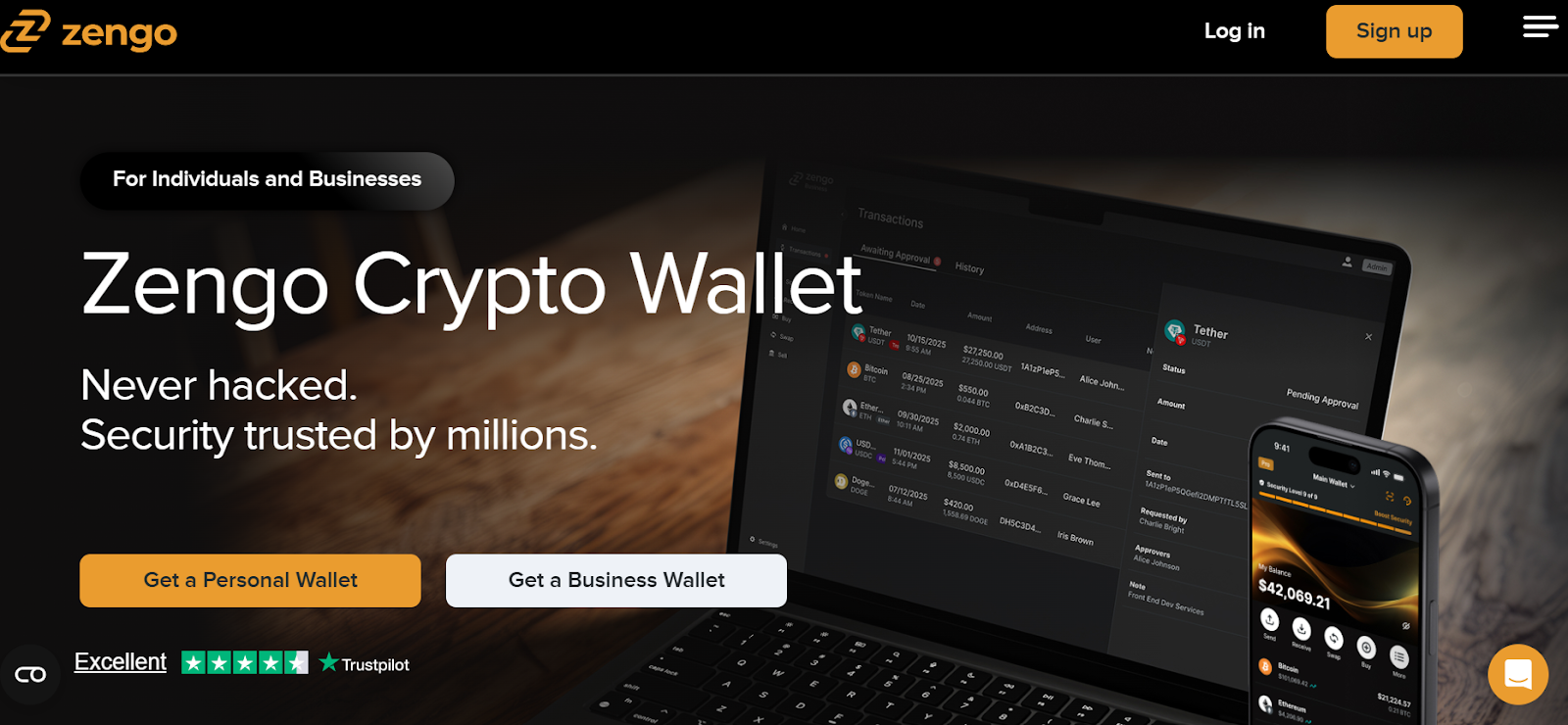
Zengo is a consumer-focused MPC wallet that emphasizes simplicity and security for everyday crypto users. It eliminates seed phrases, replacing them with biometric authentication and MPC-based key shares. Its mobile-first design makes it popular among retail traders who want institutional-grade security without complexity.
MPC & Security Model: Keyless MPC with biometric authentication, threshold signatures.
Supported Blockchains: Bitcoin, Ethereum, Polygon, and major EVM-compatible chains.
Custodial or Non-Custodial: Non-custodial.
Pricing: Free with optional premium services.
Best For: Retail users seeking simple, secure, seedless crypto storage.
2. Coinbase Wallet
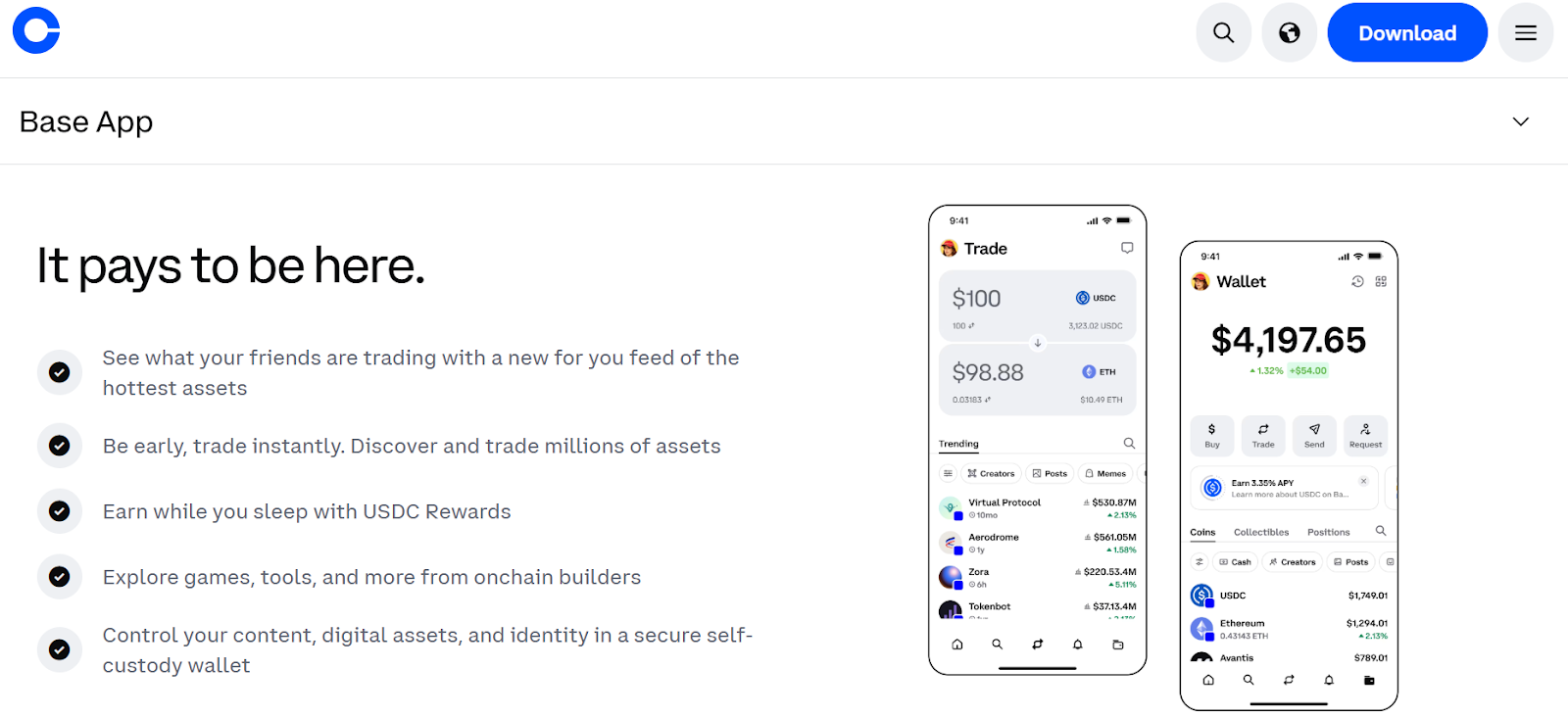
Coinbase Wallet integrates MPC technology into its ecosystem, offering users a secure way to manage assets while staying connected to Coinbase’s exchange and DeFi integrations. It bridges institutional-grade custody with consumer usability, making it a hybrid solution for traders and enterprises.
MPC & Security Model: MPC-based key shares with Coinbase’s compliance infrastructure.
Supported Blockchains: Ethereum, Bitcoin, Solana, and multiple DeFi ecosystems.
Custodial or Non-Custodial: Hybrid (non-custodial wallet with custodial integrations).
Pricing: Free for retail, enterprise pricing available.
Best For: Users who want seamless integration with Coinbase’s ecosystem.
3. MetaMask

MetaMask, traditionally a seed-phrase wallet, introduced MPC features in 2026 to enhance security. This evolution allows users to benefit from its massive DeFi ecosystem while reducing the risks associated with a single private key. Its adoption of MPC reflects the industry’s shift toward stronger cryptographic standards.
MPC & Security Model: MPC-enabled signing with distributed key shares.
Supported Blockchains: Ethereum, Layer-2s, and EVM-compatible chains.
Custodial or Non-Custodial: Non-custodial.
Pricing: Free.
Best For: DeFi and NFT users who want enhanced security without leaving MetaMask’s ecosystem.
4. OKX Keyless Wallet (MPC)
OKX’s Keyless Wallet leverages MPC to eliminate the need for seed phrases, providing a secure, user-friendly experience. It integrates directly with OKX’s trading platform, making it ideal for users who want both exchange access and advanced wallet security.
MPC & Security Model: MPC-based threshold signatures, seedless design.
Supported Blockchains: Bitcoin, Ethereum, Solana, and OKX-supported ecosystems.
Custodial or Non-Custodial: Non-custodial.
Pricing: Free.
Best For: Traders who want exchange integration with MPC security.
5. Krayon MPC Wallet
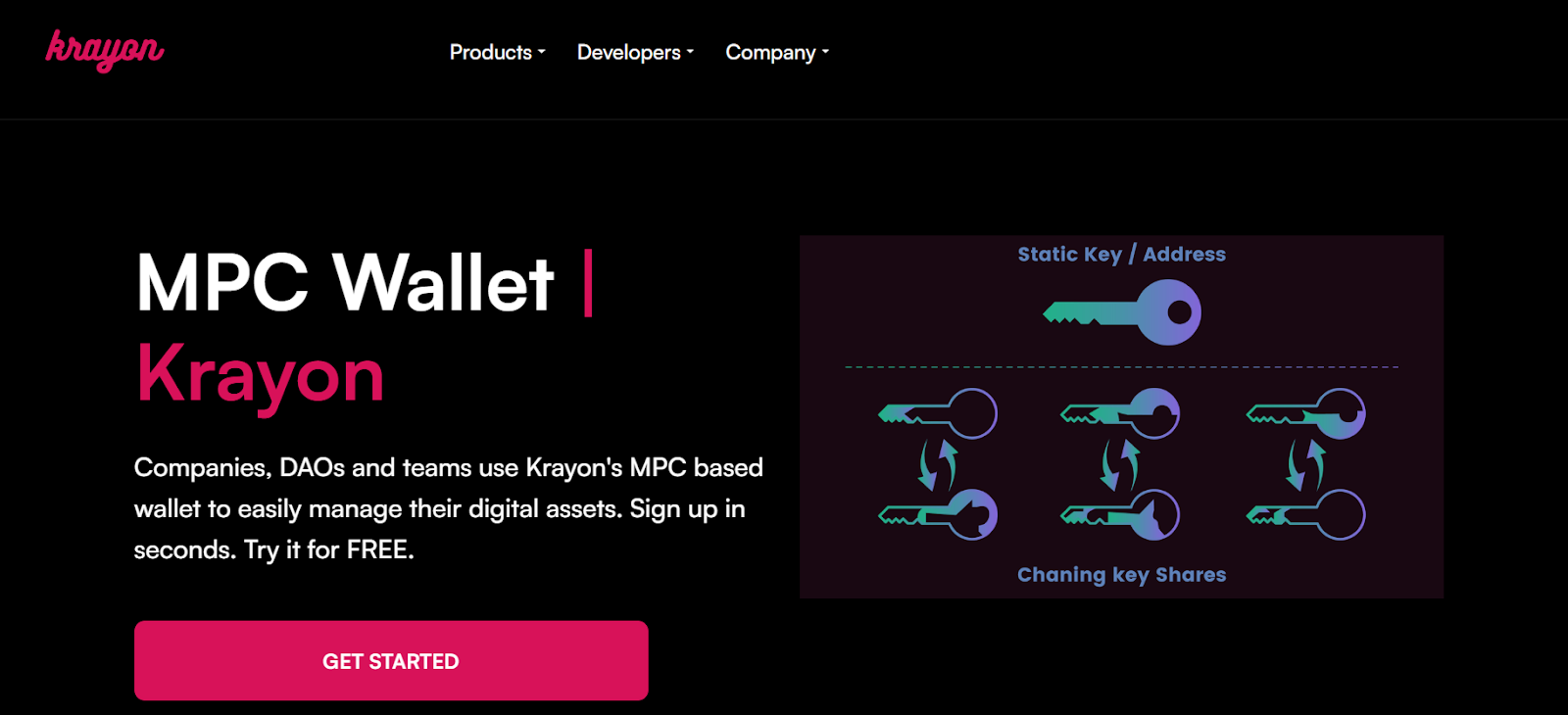
Krayon is an enterprise-grade MPC wallet designed for businesses managing large digital asset portfolios. It focuses on compliance, scalability, and multi-user governance, making it a strong contender for institutional adoption in 2026.
MPC & Security Model: MPC with customizable governance policies.
Supported Blockchains: Bitcoin, Ethereum, and enterprise-focused chains.
Custodial or Non-Custodial: Non-custodial enterprise solution.
Pricing: Enterprise pricing.
Best For: Institutions and businesses requiring compliance and governance.
6. Fireblocks
Fireblocks remains the gold standard for institutional MPC wallets in 2026. Trusted by banks, hedge funds, and asset managers, it offers automated workflows, compliance-first infrastructure, and a network of 1,800+ institutions for secure settlements.
MPC & Security Model: Advanced MPC with multi-layered security and governance.
Supported Blockchains: A wide range, including Bitcoin, Ethereum, Solana, and enterprise chains.
Custodial or Non-Custodial: Custodial with enterprise-grade controls.
Pricing: Enterprise pricing.
Best For: Financial institutions and enterprises managing large-scale assets.
7. Qredo
Qredo combines MPC with decentralized custody, offering cross-chain settlement and governance features. It is widely adopted by institutions that require interoperability and decentralized infrastructure for asset management.
MPC & Security Model: MPC with decentralized governance and cross-chain settlement.
Supported Blockchains: Bitcoin, Ethereum, and multiple cross-chain ecosystems.
Custodial or Non-Custodial: Non-custodial decentralized custody.
Pricing: Enterprise pricing.
Best For: Institutions needing decentralized custody and interoperability.
8. Safeheron
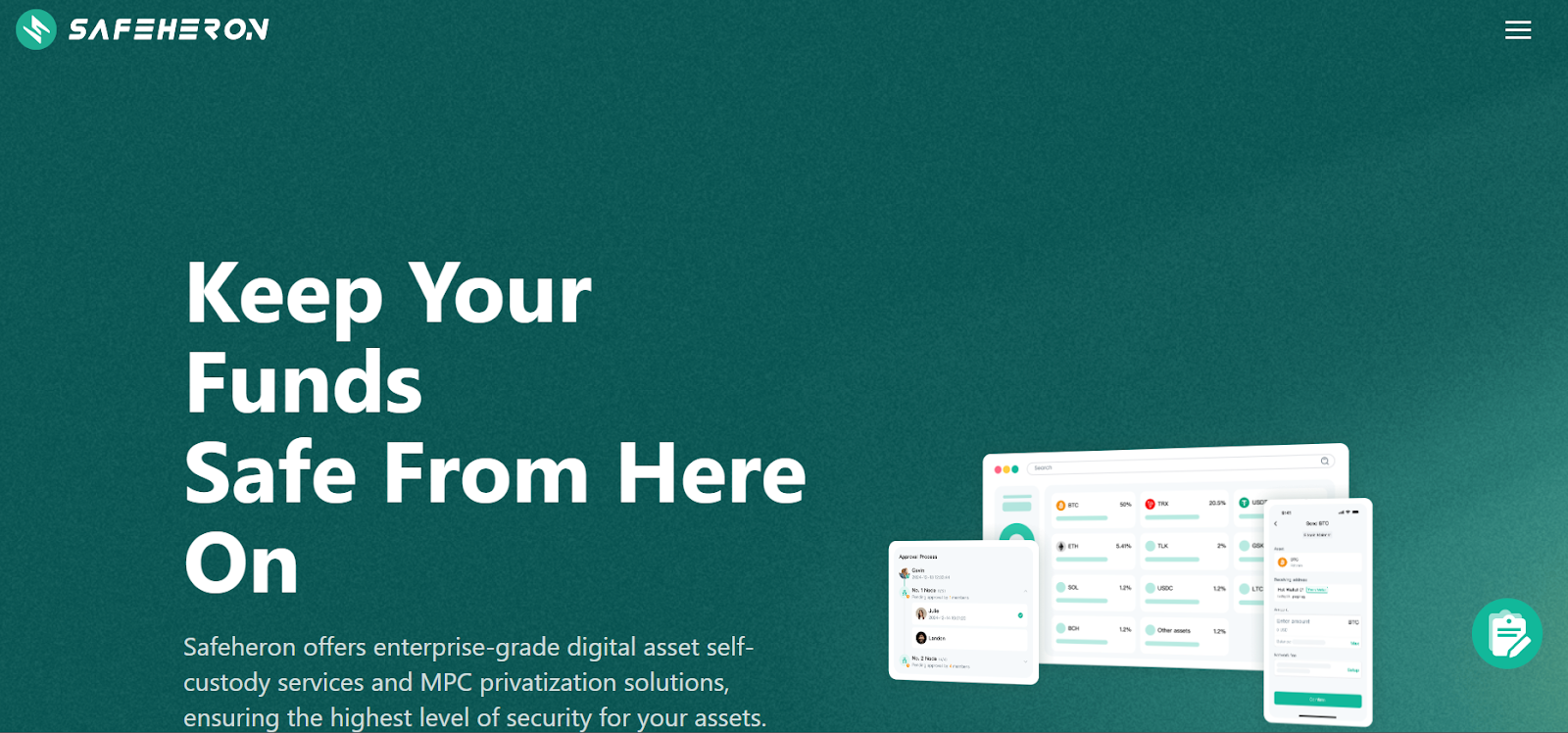
Safeheron is a rising MPC wallet provider focused on enterprise-grade security and compliance. It offers customizable governance, multi-user access, and integrations with institutional workflows, making it a strong competitor in Asia and globally.
MPC & Security Model: MPC with customizable governance and compliance features.
Supported Blockchains: Bitcoin, Ethereum, and major enterprise chains.
Custodial or Non-Custodial: Non-custodial enterprise solution.
Pricing: Enterprise pricing.
Best For: Enterprises seeking compliance-focused MPC custody.
How to Choose the Right MPC Wallet for Your Needs
Selecting the right MPC wallet depends on your use case, whether you are a retail trader, a DeFi enthusiast, or an institution managing billions in assets. Here is a practical decision guide to help you match wallet features with your requirements:
| Use Case | Recommended Wallets | Why |
| Retail Trader | Zengo, OKX Keyless | Simple, seedless, mobile-friendly |
| DeFi/NFT User | MetaMask MPC | Deep Ethereum ecosystem integration |
| Small Business | Krayon, Safeheron | Governance + compliance at a manageable scale |
| Large Institution | Fireblocks, Qredo | Enterprise-grade MPC, APIs, compliance, settlement networks |
Custody Model
- Non-Custodial: You retain control of your assets; ideal for individuals and teams who want independence. For example, Zengo and MetaMask MPC.
- Custodial / Enterprise: Assets are managed with institutional-grade infrastructure, making it best for businesses that need compliance and governance. For example, Fireblocks and Qredo.
Supported Blockchains
- Single Ecosystem Focus: If you mainly use Ethereum or EVM chains, wallets like MetaMask MPC, or Zengo are sufficient.
- Multi-Chain Support: For institutions or cross-chain traders, wallets like Qredo or Fireblocks provide broader coverage (BTC, ETH, Solana, etc.).
Integration Needs (API/UI)
- Retail Users: Look for simple mobile apps with biometric login and intuitive UI.
- Institutions: Require API integrations for automated workflows, treasury management, and settlement networks. For example, Fireblocks offers APIs for automated transfers and compliance reporting.
Team Workflows & Governance Controls
- Individual Use: Lightweight wallets with seedless MPC (Zengo, OKX Keyless).
- Team/Enterprise Use: Governance features like multi-user approvals, role-based access, and policy enforcement. For example, Krayon and Safeheron allow teams to customize governance rules.
Compliance Requirements
- Retail: Compliance is less critical; focus on usability and security.
- Institutional: Must meet regulatory standards (AML/KYC, audit trails). For example, Fireblocks and Safeheron are designed with compliance-first infrastructure.
Budget Considerations
- Free / Low-Cost: Zengo, MetaMask MPC, OKX Keyless Wallet.
- Enterprise Pricing: Fireblocks, Qredo, Krayon, and Safeheron are tailored for institutions with higher costs but advanced features.
Scalability
- Small Portfolios: Lightweight wallets with simple MPC are enough.
- Large Portfolios / Enterprises: Need scalable infrastructure with automated workflows, cross-chain settlement, and institutional-grade governance.
Benefits of Using an MPC Wallet
Here are the top advantages of adopting an MPC (Multi-Party Computation) wallet for digital asset management:
- Eliminates Single Point of Failure: Private keys are split into multiple shares, so no single device or person can compromise the wallet.
- Seedless Security: Many MPC wallets eliminate the need for seed phrases, reducing the risk of loss or theft due to poor storage practices.
- Enhanced Protection Against Hacks: Even if one share is stolen, it’s useless without the others, making attacks significantly harder.
- Flexible Governance Controls: Enterprises can set policies such as multi-user approvals, role-based access, and transaction limits.
- Improved Compliance & Auditability: Institutional MPC wallets often include audit trails, AML/KYC integrations, and regulatory compliance features.
- Cross-Device & Cross-Party Collaboration: Key shares can be distributed across devices or team members, enabling secure multi-party signing.
- Resilience Against Hardware Loss: Losing one device doesn’t mean losing funds, since other shares can still authorize transactions.
- Scalability for Institutions: Supports large portfolios with automated workflows, APIs, and settlement networks for enterprise use.
- User-Friendly Experience: Many MPC wallets integrate biometrics or simple mobile interfaces, making advanced cryptography accessible to everyday users.
- Future-Proof Technology: MPC is considered a cutting-edge cryptographic approach that aligns with the industry’s move toward stronger, decentralized custody solutions.
MPC wallets combine security, usability, and scalability, making them suitable for both individuals seeking peace of mind and institutions requiring compliance and governance
MPC Wallets vs Multisig Wallets: What’s the Difference?
Both MPC (Multi-Party Computation) wallets and multisig wallets aim to improve security and shared control over digital assets, but they achieve this in very different ways. Understanding their distinctions helps you choose the right model for your needs.
| Feature | Multisig Wallets | MPC Wallets |
| Security Model | Multiple private keys | One key split into shares |
| Key Management | Each signer holds the full key | No full key exists, only shares |
| Signer Coordination | On-chain signatures | Off-chain computation |
| On-Chain Visibility | Multiple signatures visible | Single signature visible |
| UX | More complex, slower | Seamless, faster |
| Cost | Higher gas fees | Lower Fees |
| Best Use Cases | DAOs, community funds | Institutions, enterprises |
Below is a detailed breakdown of key differences between multisig and MPC wallets.
- Security Assumptions: Multisig relies on multiple independent private keys stored by different parties. MPC splits one private key into multiple shares, requiring collaborative computation to sign transactions.
- Key Management: In Multisig, each signer holds a full private key. In MPC, no single party ever holds the complete key; only shares exist.
- Signer Coordination: In Multisig, each signer must submit their signature on-chain. In MPC, signers collaborate off-chain to produce one valid signature.
- On-Chain vs. Off-Chain Behavior: In Multisig, transactions are visible with multiple on-chain signatures, increasing transparency but also costs. MPC appears as a single signature on-chain, reducing fees and complexity.
- User Experience (UX): Multisig can be slower and more complex, especially with many signers. MPC is seamless UX, often seedless, with faster signing.
- Cost: Multisig has higher gas fees due to multiple on-chain signatures. MPC has lower fees since only one signature is posted.
- Typical Use Cases: Multisig is used by DAOs, community treasuries, and transparent governance. MPC is favored by institutions, exchanges, and enterprises needing efficiency, compliance, and scalability.
Choose Multisig if you need transparent governance (e.g., DAOs, community treasuries), on-chain visibility of multiple signers for accountability, and cost/speed are less critical than transparency. Choose MPC if you are an institution or enterprise managing large portfolios, need scalability, compliance, and efficiency, and prefer a seamless UX and lower transaction costs.
Final Thoughts
MPC wallets represent a major evolution in digital asset security, blending cryptographic innovation with practical usability. By splitting private keys into multiple shares and enabling collaborative signing, they eliminate the traditional single point of failure while offering flexibility for both individuals and institutions.
- Security First: MPC wallets offer stronger protection against hacks and hardware loss than traditional wallets.
- Usability Gains: Seedless designs and biometric authentication make them accessible to everyday users.
- Institutional Fit: Governance controls, compliance features, and API integrations make MPC wallets ideal for enterprises.
- Choice Matters: Retail users may prefer lightweight, mobile-friendly MPC wallets, while institutions benefit from enterprise-grade solutions with scalability and auditability.
- Future-Proofing: As the industry moves toward decentralized custody and regulatory alignment, MPC wallets are positioned as a long-term solution.
MPC wallets are not just a security upgrade; they are a strategic tool for managing digital assets in 2026 and beyond, balancing trust, efficiency, and scalability.
Frequently Asked Questions
Are MPC wallets safer than traditional crypto wallets?
Yes, MPC wallets are generally safer than traditional crypto wallets because they split private keys into multiple encrypted shares. This eliminates single points of failure, reduces the risk of hacks or device loss, and enhances security without exposing the full key at any time.
What are the main risks of using an MPC wallet?
The main risks of using an MPC wallet include technical complexity, reliance on multiple parties or devices for signing, potential communication failures during transactions, and higher costs for enterprise-grade solutions. Additionally, users must trust the wallet provider’s cryptographic implementation and governance policies to avoid vulnerabilities.
What should startups vs enterprises look for in an MPC wallet?
Startups should prioritize ease of use, low cost, and seedless security when choosing an MPC wallet, focusing on mobile-friendly options with simple governance. Enterprises, however, need scalability, compliance, API integrations, and advanced governance controls to ensure institutional-grade custody, multi-user workflows, and regulatory alignment for large asset portfolios.
Are MPC wallets compliant with regulations?
Yes, MPC wallets can align with regulatory requirements, especially at the enterprise level. Many providers build compliance features such as audit trails, AML/KYC integrations, and governance controls into their infrastructure, making them suitable for institutions operating under strict financial regulations.
Are MPC wallets suitable for DAO treasury management?
Yes, MPC wallets can be suitable for DAO treasury management, especially when efficiency and lower transaction costs are priorities. They provide strong security and governance flexibility, but unlike multisig, they lack on-chain transparency of multiple signers, which some DAOs may prefer for accountability.
Disclaimer
This article is for educational and information purposes, and should not be considered financial advice. For more information visit our disclaimer page
About the Author