

Ever watched a pro trader make moves that seem effortless? You’re seeing wins rack up while you’re still figuring out what a limit order is. Frustrating, right?
Here’s the good news: you don’t need years of trading experience to potentially profit like the pros. Copy trading lets you mirror the strategies of expert traders. Their trades become your trades, their timing becomes your timing.
Think of it as having a skilled trader manage your portfolio, except you’re still in control. You choose who to follow, how much to invest, and when to stop. It’s hands-off trading with training wheels that actually work.
But here’s the catch. Not all copy trading platforms are created equal. Some platforms have thousands of traders to choose from but terrible interfaces. Others are beginner friendly but charge fees that eat your profits. Picking the wrong one could cost you money or leave you copying traders who don’t actually know what they’re doing.
In this guide, we’re breaking down the 11 best crypto copy trading platforms for 2025. We’ll show you what makes each one different, who they’re best for, and how to actually choose the right platform for your goals. Whether you’re a complete beginner or looking to diversify your trading approach, this comparison will help you make the smart call.
Now let us break down each platform in detail.
1. Bybit
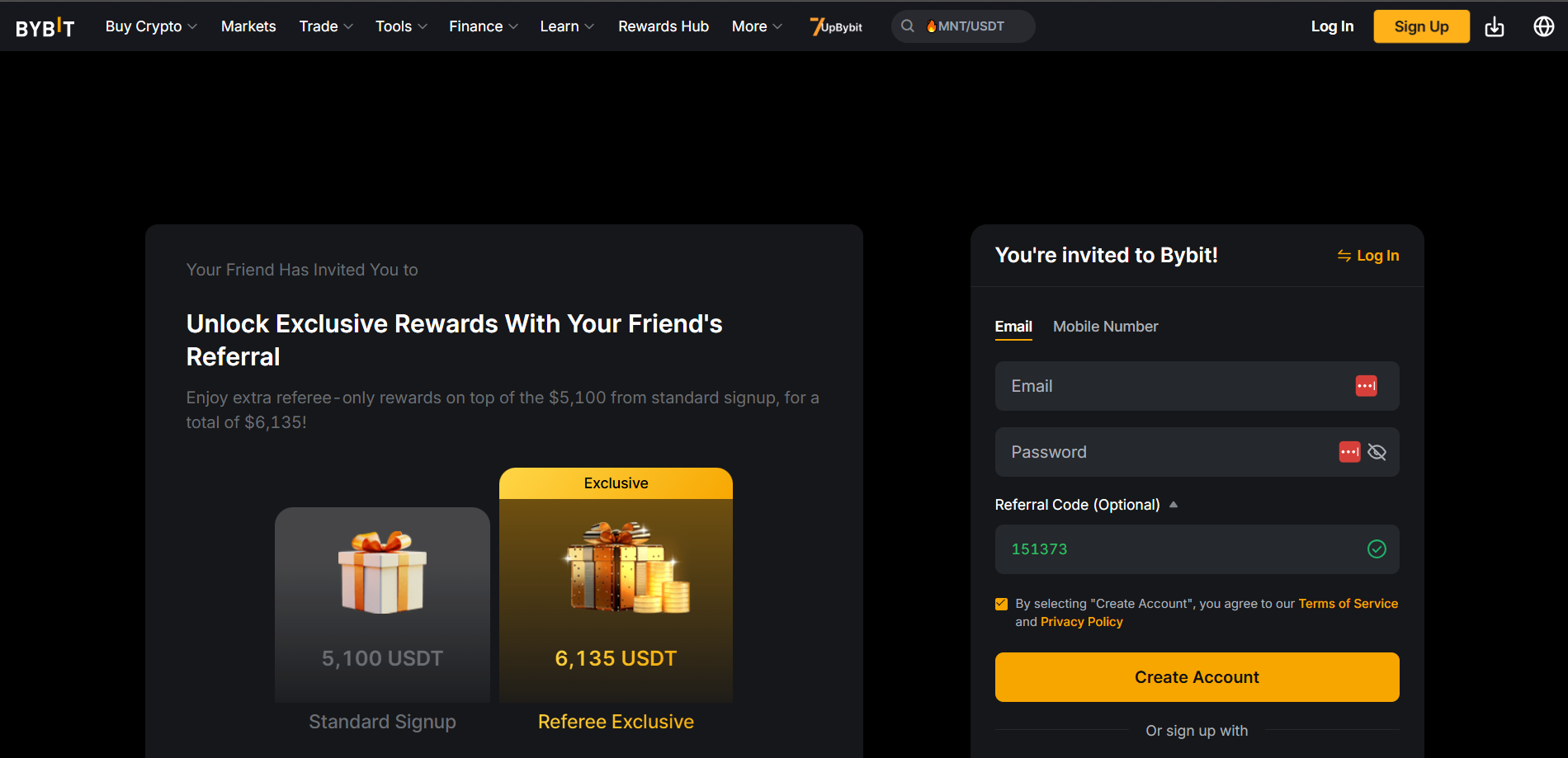
Bybit has become the heavyweight champion of crypto copy trading, and honestly, it’s not hard to see why. With over 76 million users and $5+ billion in daily trading volume, this platform combines serious infrastructure with features that actually work for both beginners and experienced traders.
Key Features
Bybit’s Master Trader program is their flagship. You’re not just copying random traders. You’re accessing professionals organized into clear tiers (Masters and Pro Masters). Pro Masters can earn up to 30% profit share, which means they’re seriously motivated to perform.
The platform supports multiple copy trading modes: USDT perpetual contracts (with up to 100x leverage if you’re into that kind of risk), USDC perpetuals, spot trading, and even trading bots. That flexibility means you can match your copy strategy to your risk tolerance.
One feature that stands out: DeFi yield farming integration. While your copy trades run, you can simultaneously earn 5-10% APY by linking to staking pools. Basically, your idle funds work double duty.
Bybit’s interface is clean despite all these features. You can filter traders by ROI, win rate, max drawdown, and even country. The “Daily Pick” section highlights top recent performers, which helps when you’re starting out.
Fees and Profit Sharing
Trading fees are competitive: 0.02% maker and 0.055% taker for perpetual contracts. Masters keep 10-15% of follower profits, while Pro Masters can claim up to 30%. These rates are transparent and displayed on each trader’s profile.
Supported Crypto
Over 650 cryptocurrencies including all majors (BTC, ETH, SOL) and a massive selection of altcoins. This breadth means you’re not limited to just the top 20 coins. You can copy traders working with emerging tokens.
Bybit works in 200+ countries but isn’t available to US residents. Security includes two-factor authentication, withdrawal whitelisting, and cold wallet storage for most funds.
2. Binance
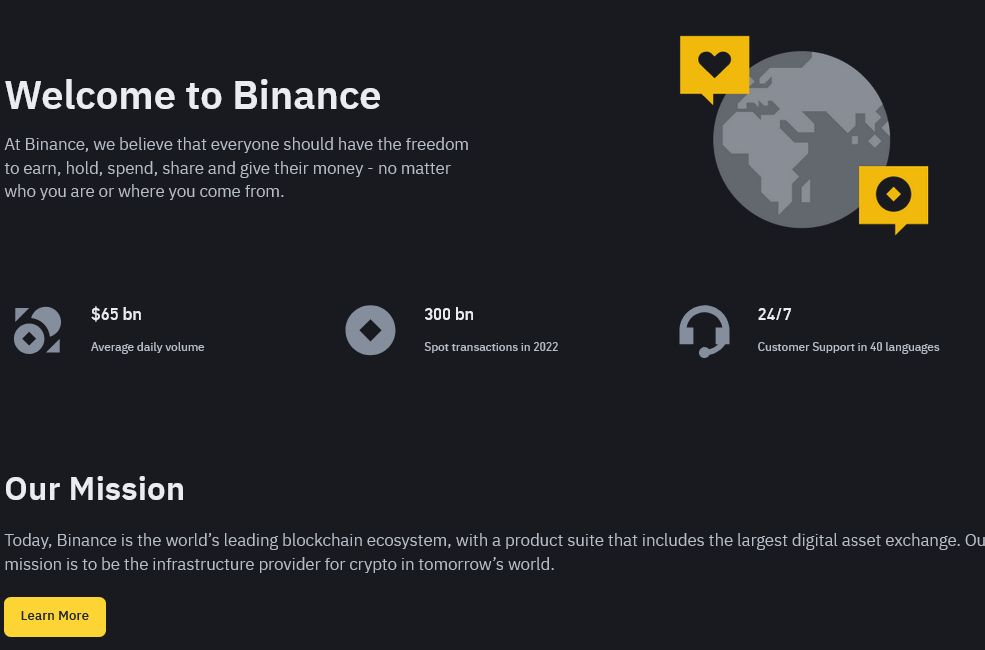
As the world’s largest crypto exchange by volume, Binance brings that massive liquidity to copy trading. When you’re copying someone buying Bitcoin, you benefit from Binance’s insane liquidity. Minimal slippage, tight spreads, and fast execution.
Key Features
Binance’s Lead Trader system lets you follow professionals across spot and futures markets. You can choose between Fixed Ratio (copy proportionally) or Fixed Amount (set specific dollar amounts per trade) modes.
A recent addition in 2025 is the “Trader Sentiment Index”. Basically a mood ring for your lead trader. You can see whether they’re bullish, bearish, or neutral, helping you align your strategy with current market conditions.
The platform offers paper trading, which is huge for beginners. Test strategies with fake money before risking real capital. You can practice following different traders, adjusting settings, and understanding how copy trading actually works without financial consequences.
Binance also has a dedicated mirror account for spot copy trading. Your funds stay isolated. They can’t be withdrawn or misused while copying. Once you stop, everything automatically returns to your regular spot wallet.
Fees and Profit Sharing
Standard Binance fees apply: around 0.1% for most trading pairs, with VIP discounts available for high volume users. Lead traders typically charge around 10% profit share, though rates vary individually.
Supported Crypto
Over 500 cryptocurrencies and 100+ futures contracts. If it’s traded in crypto, Binance probably has it. The selection is unmatched.
Binance is accessible in 150+ countries but has restrictions in the US and a few other regions due to regulatory issues.
3. eToro
eToro pioneered social trading way back in 2007, and they’ve been refining the experience ever since. With 30 million users globally, this platform combines copy trading with genuine social networking features. Think “Facebook meets trading”.
Key Features
The CopyTrader™ feature is dead simple. Browse traders, check their performance stats, click “Copy”. That’s it. You can copy up to 100 traders simultaneously, diversifying across different strategies and markets.
What makes eToro unique is the social environment. You can actually chat with traders you’re copying, ask questions, read their market commentary, and see what other copiers are saying. This transparency builds trust and helps you learn.
The Popular Investor program flips the script. If you become a successful trader, eToro will pay you up to 2.5% of assets copying you, on top of profit sharing. It’s legitimate income for skilled traders willing to share their strategies.
eToro supports more than just crypto. You can copy traders operating in stocks, forex, commodities, and ETFs. If you want diversification beyond crypto, this multi-asset approach is valuable.
Fees and Profit Sharing
Here’s where eToro gets expensive: 1% spreads on crypto trades. That’s significantly higher than exchange based platforms. However, there are no additional management fees for copy trading itself.
Supported Crypto
About 25 cryptocurrencies including BTC, ETH, XRP, and other majors. The selection is limited compared to exchanges but covers all the popular options most traders care about.
eToro is FCA-regulated (UK), operates in the US, EU, and Australia. This regulatory coverage provides safety and legitimacy many other platforms can’t match.
4. PrimeXBT
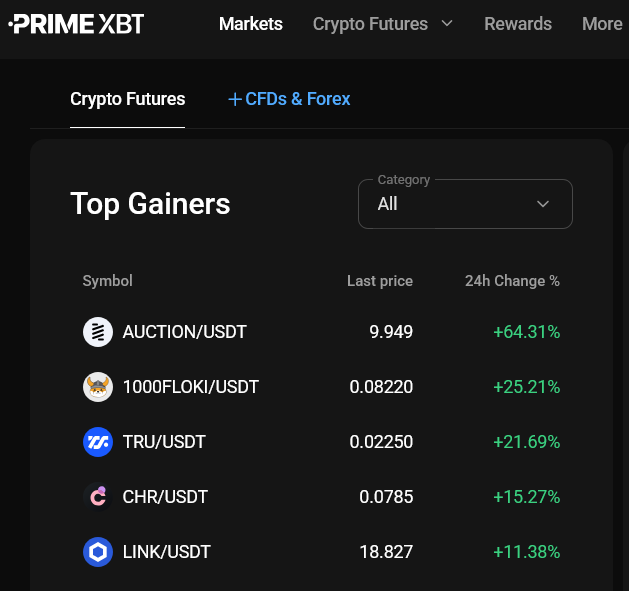
PrimeXBT takes copy trading beyond just crypto. If you’re interested in diversifying into traditional markets while maintaining crypto exposure, this platform bridges that gap.
Key Features
The Covesting module is PrimeXBT’s copy trading engine. You can follow Strategy Managers (their term for professional traders) across crypto, forex, commodities, and stock indices.
Strategy ratings make choosing traders easier. Each Strategy Manager has detailed performance metrics, risk scores, and historical data. You can see not just profits but how volatile those profits were. Critical for understanding risk.
PrimeXBT supports high leverage (up to 1000x on some pairs), though I’d strongly recommend starting conservatively. Leverage amplifies both gains and losses.
Fees and Profit Sharing
Trading fees vary by asset type. Crypto pairs typically charge maker/taker fees around 0.05%. Strategy Managers set their own profit sharing percentages, usually ranging from 10-20%.
Supported Crypto
Major cryptocurrencies plus access to forex pairs, commodities like gold and oil, and stock indices. This multi asset approach is unique among copy trading platforms.
Note: PrimeXBT is available globally with some restrictions. Check your region’s eligibility
5. Zignaly
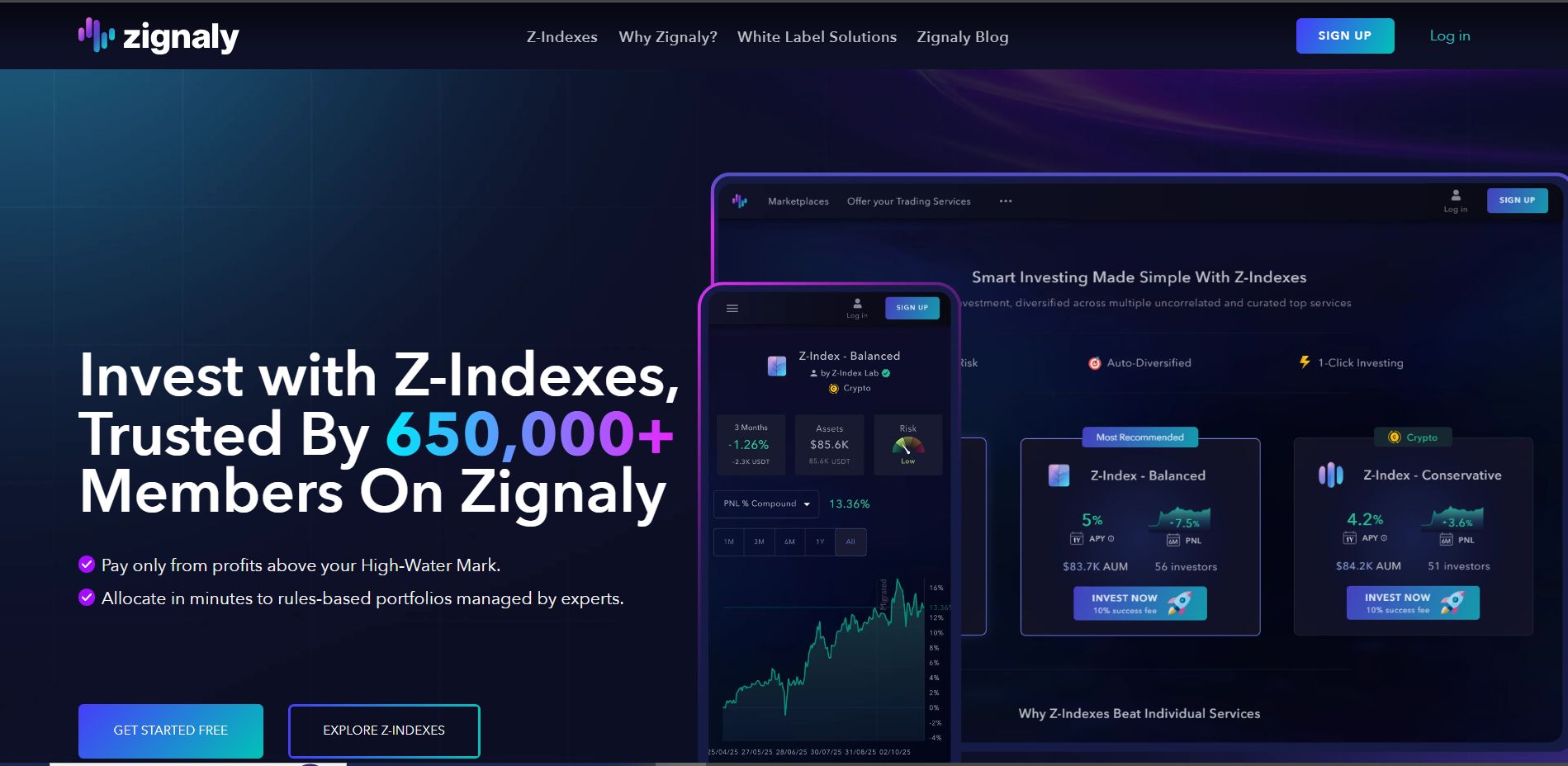
Zignaly operates differently. It’s not an exchange itself but a trading terminal that connects to your existing exchange accounts (Binance, KuCoin, etc.). Think of it as middleware that adds copy trading to exchanges that don’t natively offer it.
Key Features
The profit sharing model is fair: you only pay Strategy Managers when you actually make money. No monthly fees, no subscription costs. If they lose, you don’t pay.
AI-driven trader vetting is Zignaly’s differentiator. Their algorithms analyze trader behavior, consistency, and risk management before approving them as Strategy Managers. This filtering should theoretically reduce exposure to reckless traders.
The platform is officially licensed and regulated, which is rare for third-party trading tools. This adds credibility and legal protection.
Fees and Profit Sharing
No monthly subscription. You pay a percentage of profits to Strategy Managers. Rates vary by trader but typically range 10-30%. Plus you pay the trading fees of whatever exchange you’re connected to.
Supported Crypto
Depends entirely on the exchange you connect. If you link to Binance, you access Binance’s full coin selection. Link to KuCoin, you get KuCoin’s selection. The flexibility is the feature.
Zignaly requires connecting via API keys, which some users find intimidating but is actually secure when done correctly.
6. WunderTrading
Another third party platform that enhances existing exchanges with copy trading and automation features.
Key Features
Automated copy preferences let you fine tune how trades are mirrored. Want to skip trades during weekends? Copy only when RSI is below 30? WunderTrading’s customization handles that.
Educational resources are solid. They offer tutorials, strategy guides, and market analysis, valuable for beginners who want to learn while copying.
The platform supports multiple exchanges simultaneously, meaning you could copy different traders on Binance and KuCoin from one dashboard.
Fees and Profit Sharing
Subscription based pricing with different tiers. Basic plans start around $20-30/month. Higher tiers unlock more features and simultaneous copy slots. Plus profit sharing with copied traders (varies).
Supported Crypto
Again, it depends on connected exchanges. The platform itself doesn’t restrict coins but your exchange does.
7. Bitget
Bitget has assembled one of the largest copy trading communities, with over 190,000 traders offering strategies. That selection can feel overwhelming, but it also means tremendous variety.
Key Features
Smart copy mirrors a trader’s risk proportionally to your account size. If they risk 2% per trade, you risk 2%. Regardless of actual dollar amounts. This keeps risk consistent.
Diverse follow modes give control freaks options. Choose between copying all trades, only futures, only spot, or integrating with trading bots.
The trader pool is the draw. Browse tens of thousands of professionals, filter by performance metrics, read reviews from other copiers. It’s like Yelp for traders.
Fees and Profit Sharing
Standard trading fees plus profit sharing with Strategy Providers. Bitget’s fees are competitive with other major exchanges.
Supported Crypto
Hundreds of cryptocurrencies across spot and futures markets.
8. Cryptohopper

Primarily known as a trading bot platform, Cryptohopper also offers copy trading through its Strategy Marketplace.
Key Features
Bot integration is the unique angle. You’re not just copying humans, you can copy automated trading bots with backtested strategies.
The Strategy Marketplace lets you browse, test, and subscribe to various strategies (both human and algorithmic).
Backtesting capabilities allow you to simulate strategies against historical data before risking real money.
Fees and Profit Sharing
Subscription tiers ranging from free (limited features) to $99+/month for advanced plans. Strategy creators also charge fees (one-time or recurring).
Supported Crypto
Connects to major exchanges, supporting their coin selections.
10. MEXC
MEXC attracts traders with ultra low fees and a wide altcoin selection.
Key Features
Zero maker fees on many pairs (promotional but ongoing). This dramatically reduces trading costs for active copiers.
High leverage options (up to 200x on some pairs) for aggressive traders.
The platform lists obscure altcoins quickly, so if you’re into speculative small caps, MEXC provides exposure.
Fees and Profit Sharing
0% maker fees (promotional), low taker fees, plus profit sharing with lead traders.
Supported Crypto
One of the widest selections available, especially for lesser known tokens.
11. Gate.io

Gate.io specializes in altcoins and niche markets, making it ideal for traders wanting exposure beyond mainstream coins.
Key Features
ROI based trader rankings make it easy to sort by performance. See who’s actually making money, not just who has the most followers.
Multi market support covers spot, margin, futures, and even options trading.
The altcoin focus means you can copy traders specializing in speculative small cap tokens with high growth potential (and high risk).
Fees and Profit Sharing
Low fees competitive with other exchanges, plus profit sharing arrangements with copied traders.
Supported Crypto
Extensive selection including many altcoins not found on other platforms.
How to Choose the Right Platform for Crypto Copy Trading
Picking a platform isn’t about finding the best one. It’s about finding the best one for you. Here’s how to match platforms to your situation:
Evaluate fees honestly: If you’re making frequent trades, even small fee differences compound dramatically. Bybit at 0.02% versus eToro at 1% might not sound huge, but on a $10,000 trade that’s $2 versus $100. Annual costs can differ by thousands. However, if you’re buying once and holding, higher fees on a beginner-friendly platform might be worth it.
Assess trader transparency: Good platforms show you everything. Win rate, max drawdown, trading frequency, risk score, how long they’ve been active. Bad platforms hide negative metrics or only show cherry picked winners. Demand full transparency. If a platform won’t show you a trader’s losing streaks, walk away.
Check asset support: Want to copy trade Bitcoin and Ethereum only? Most platforms work. Want exposure to DeFi tokens, small cap altcoins, or multi asset strategies? Your options narrow. Make sure the platform offers what you actually want to trade.
Consider ease of use: Some platforms throw 100 features at you immediately. Others guide you step by step. If you’re a beginner, prioritize simple interfaces with good tutorials. If you’re experienced, prioritize customization and advanced features.
Verify regulation and safety: Regulated platforms (eToro, Coinbase connected services) offer legal recourse if something goes wrong. Unregulated platforms might offer better features but carry more risk. Your risk tolerance determines what matters more. Also check security features like 2FA, cold storage, insurance funds.
Test with demo accounts: Many platforms offer paper trading or demo accounts. Use them. Test following different traders, adjusting settings, and understanding the UI before committing real money. If a platform doesn’t offer demos, that’s actually a red flag.
Read profit-sharing terms carefully: Is profit share calculated on gross profits or net after losses? Are there minimum holding periods? Can you stop copying mid month or are you locked in? The devil is in these details.
Tips to Succeed on Copy Trading Platforms
Copy trading removes some work, but it’s not passive income autopilot. These tips improve your odds:
Diversify across multiple traders: Never put all funds on one trader. Spread across 3-5 with different styles. If one goes cold, others might stay hot. Diversification smooths out volatility.
Check consistency over flash: A trader with steady 5-8% monthly returns for a year beats someone who made 100% once then disappeared. Look for reliability, not lottery tickets.
Understand their strategy: If you can’t explain how your copied trader makes money, you shouldn’t copy them. Read their commentary, check what markets they trade, and understand their approach.
Set stop-losses: Most platforms let you set maximum loss thresholds. Use them. If a copied trader loses 10-15% of your allocation, stop copying automatically. Protects you from catastrophic losses.
Monitor regularly, don’t obsess: Check your copy trades weekly, not hourly. Constant monitoring leads to panic decisions. But complete neglect means missing warning signs. Find the balance.
Start small, scale up: Begin with minimum investments. Prove a trader’s strategy works for you over 1-2 months. Then increase allocation. Never start with life changing money.
Combine copy trading with learning: Copy trading should educate you, not replace learning. Ask yourself why trades worked or failed. Read about strategies. Eventually, you might not need to copy anymore.
Learn More About Crypto Trading With Dypto Crypto
Copy trading is just one strategy in the crypto world. Want to understand the bigger picture? Looking to build skills beyond just following others?
Dypto Crypto offers expertly crafted courses and resources for every level. Complete beginners just entering crypto, traders looking to sharpen specific skills, and investors building long term strategies.
What you’ll find at Dypto Crypto:
- Structured learning paths that take you from basics to advanced concepts step by step.
- Strategy breakdowns showing exactly how successful traders approach different markets.
- Risk management frameworks that protect your capital while maximizing opportunities
- Community insights from other traders learning and growing alongside you
- Regular updates covering new platforms, tools, and market developments
Trading doesn’t have to be lonely or confusing. With the right education and community, you’ll develop genuine skills that last beyond any single platform or strategy.
Ready to level up? Explore Dypto Crypto’s resources and start building the foundation that turns trading from gambling into a real skill. Sign up today and take control of your crypto education.
FAQs (Frequently Asked Questions)
How much money do I need to start copy trading crypto?
It varies by platform. OKX lets you start with just $1, while eToro requires $200 minimum. Most exchanges like Binance, Bybit, and MEXC require 10-50 USDT ($10-50). Start with money you can afford to lose completely, copy trading carries risk despite being passive.
Which crypto assets can be copy traded?
Depends on the platform. Major exchanges (Binance, Bybit, OKX) support 500+ cryptos including Bitcoin, Ethereum, and countless altcoins. Some platforms like eToro limit you to 20-30 major coins. Multi asset platforms (eToro, PrimeXBT) also offer forex, stocks, and commodities copy trading alongside crypto.
Is copy trading better than using trading bots?
Different tools for different goals. Copy trading follows human decision making, traders adapt to news, sentiment, and changing conditions. Bots follow fixed algorithms, consistent but inflexible. Copy trading is better for learning (you see why trades happen). Bots are better for 24/7 execution of tested strategies. Many traders use both.
Do all crypto copy trading platforms offer demo accounts?
No. Binance offers paper trading. Bybit, eToro, Bitget, and most third party platforms provide demo accounts. Some smaller platforms don’t. Always prioritize platforms with demos when starting, testing with fake money prevents expensive beginner mistakes.
Which platform is best for futures copy trading?
Bybit and Binance dominate futures copy trading. Bybit offers up to 100x leverage with extensive perpetual contract options. Binance provides 100+ futures contracts with excellent liquidity. Both have large pools of skilled futures traders to copy. For beginners, start with lower leverage despite what’s available. High leverage destroys accounts quickly.
Disclaimer
This article is for educational and information purposes, and should not be considered financial advice. For more information visit our disclaimer page
About the Author