

Do you want to make money day trading crypto? Well, you need to know a lot about the chaotic markets that are open 24/7! The prices swing faster than you can blink. That’s why day trading is not to be taken lightly. It is highly intensive and not for just anyone. You need to understand complicated concepts like technical analysis, risk management, and especially how to stay calm when trades go wrong.
But the good news is that you don’t have to go down obscure and random places to learn it all. There are courses available that will provide you with the knowledge you need to start crypto day trading. In this guide, we will cover 10 of the best crypto day trading courses to help beginners as well as experienced traders level up!
What is Crypto Day Trading?
Before we get to the course list, let’s first define what crypto day trading is. It basically refers to buying and selling coins on the same day to profit from the short-term price swings.
It’s really fast and has multiple trades per day. For this reason, it relies heavily on technical analysis rather than long-term fundamentals. Crypto enthusiasts know that crypto markets never really sleep, and volatility can be extreme. This means that there are always opportunities as well as risks to deal with.
Unlike investing or swing trading, day trading is completely about short-term price movements. Most people end up losing money here, but if you have the proper knowledge and realistic expectations, you can make some consistent profits!
Why Should You Take a Crypto Day Trading Course?
Obviously, you do not need a course to start trading! But diving blindly into this world is very risky. Crypto trading has a rather steep learning curve, and mistakes can cost you a lot of money.
So, a good course helps compress years of trial and error into structured learning that gives you the knowledge you need to trade. Courses will teach you invaluable information, including risk management, the psychology behind trading, and proven strategies to avoid common traps and maximize profits. Moreover, courses also offer you proper guidance and community support that help you gain the information you need to successfully trade. In the end, a good course often costs much less than what you would lose by learning on your own.
9 Best Crypto Day Trading Courses to Level Up Your Strategy
Now, let’s get straight to it! Here are the top crypto day trading courses that are available right now. We have got everything, from free options for people just starting in crypto, to premium programs for serious traders who want to invest in their crypto education.
We will discuss these in detail after the table.
| Course Name | What You Will Learn | Platform/Provider | Skill Level | Pricing |
| Crypto Trading 101 | Technical analysis, chart reading, trading strategies | Udemy | Beginner | $109.99 |
| DeFi Specialization | Decentralized finance, infrastructure, primitives | Coursera | Intermediate | Free (cert paid) |
| Bear Bull Traders | Day trading strategies, psychology, options | Bear Bull Traders | All Levels | $99-199/month |
| Warrior Trading | Momentum trading, technical analysis, live trading | Warrior Trading | Beginner to Advanced | $997 initial, then $197/month |
| Bullish Bears | Trading strategies, technical analysis, options | Bullish Bears | All Levels | $47/month |
| Humbled Trader | Mentorship, trading strategies, psychology | Humbled Trader | Intermediate to Advanced | Varies |
| Investors Underground | Community trading, strategies, live sessions | Investors Underground | Intermediate to Advanced | Varies |
| Ava Academy | Beginner crypto trading, blockchain basics | Ava Academy | Beginner | Varies |
| Day Trading Academy (DTA) | Comprehensive trading education, mentorship | DTA | All Levels | Premium pricing |
1. Udemy Courses
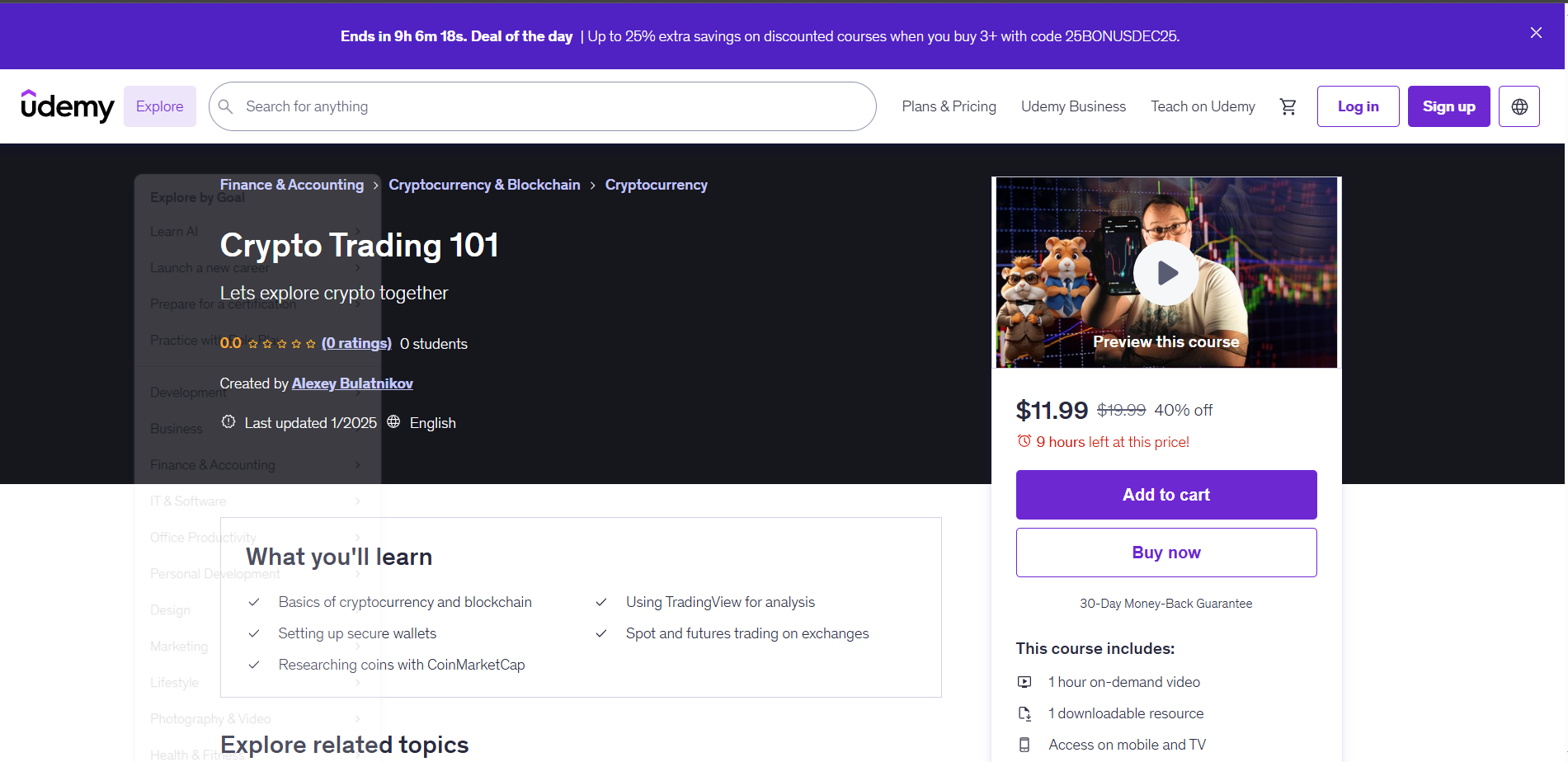
Udemy is a popular platform for online learning that offers a variety of courses in different domains. The options are really affordable as well. For crypto day trading specifically, there is one course that consistently gets recommended.
Course Overview
The course is “Crypto Trading Investing 101: Buy Sell Trade Cryptocurrency” by Luca Moschini. It’s a highly comprehensive 7-hour course that covers everything from blockchain basics to advanced technical analysis. Learners will get to learn about wallets, exchanges, and the different trading types (spot, futures, options). They will also learn about reading charts and creating actual strategies.
Platform & Instructor
Udemy’s platform is pretty straightforward. You can watch the course videos, download the resources, and take quizzes.
As for the instructor, Luca Moschini is an active trader who deals with stocks, ETFs, and cryptocurrencies. Moreover, he has built training programs for aspiring traders. Over 32,000 students have taken this course with a 4.5-star rating.
Skill Level
Beginner-friendly. The course assumes you know basically nothing and builds from there. If you can use a computer and take notes, you’re good to go.
Price & Duration
Usually $109.99, but Udemy constantly runs sales where you can grab it for $15-30. Lifetime access means you can revisit materials anytime. The duration is 7 hours of video content, but you should expect to spend more time practicing concepts.
Best For
People who want comprehensive training without breaking the bank. If you’re not sure trading is for you and don’t want to commit to expensive monthly subscriptions yet, Udemy courses are a low-risk way to start.
Pros
- Budget-friendly with frequent sales
- Lifetime access to course materials
- Certificate of completion
- Continuously updated with market news
- Bonus courses included
- 30-day money-back guarantee
Cons
- No live community or mentorship
- Self-paced means you need discipline
- Udemy certificates aren’t accredited (but still prove knowledge)
- No live trading sessions or real-time support
2. Coursera
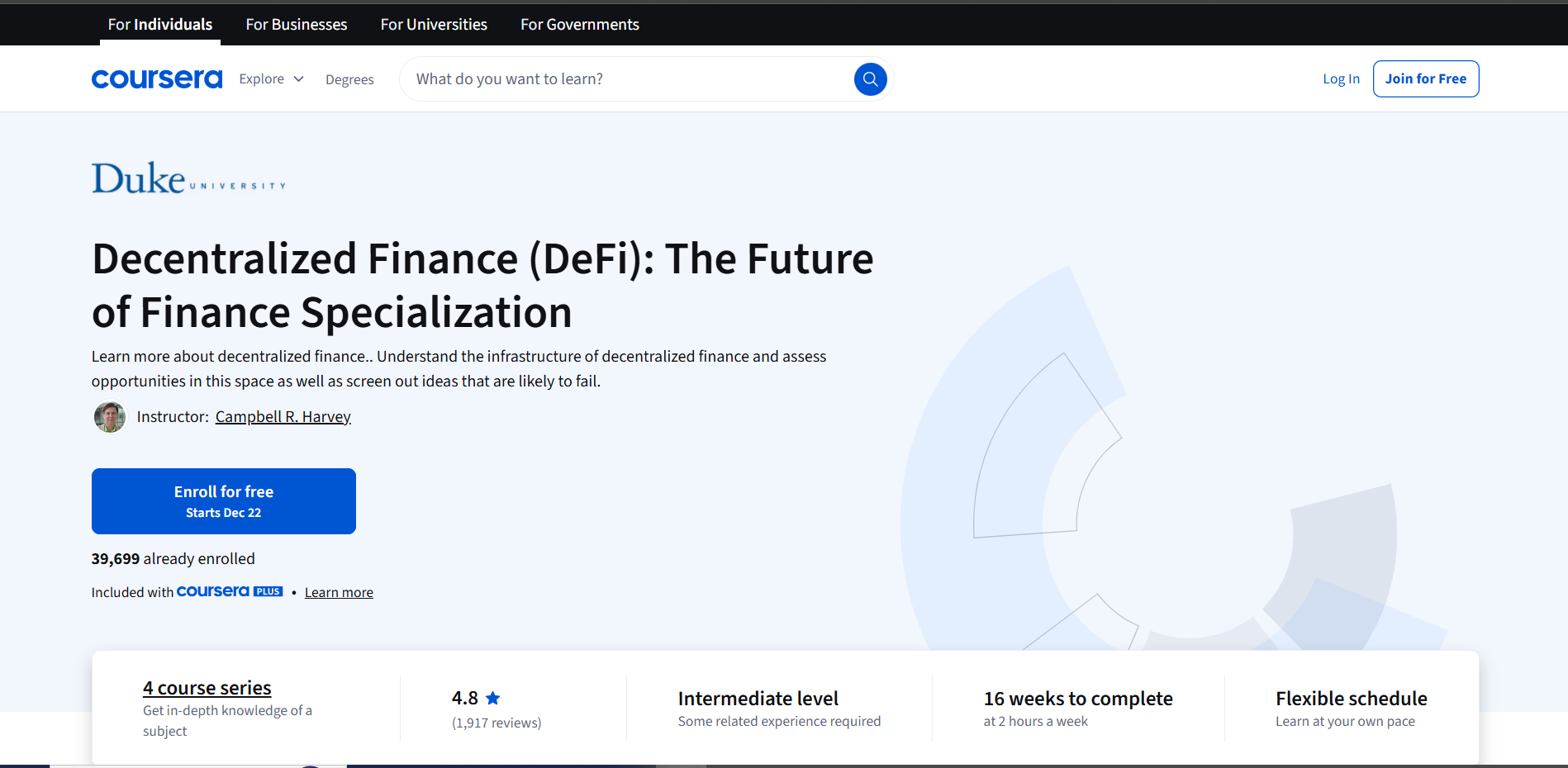
Coursera brings academic rigor to crypto education through university-partnered programs. Their DeFi specialization is particularly valuable for traders wanting a deeper understanding.
Course Overview
The “Decentralized Finance (DeFi): The Future of Finance Specialization” from Duke University is a four-course series covering DeFi infrastructure, primitives, deep dive applications, and opportunities/risks. You’ll learn about decentralized exchanges, token development, lending protocols, and risk frameworks – all critical for understanding modern crypto trading.
Platform & Instructor
Taught by Professor Cam Harvey, a finance expert from Duke University whose research focuses on cryptocurrencies and DeFi. Coursera’s platform combines video lectures, readings, quizzes, and peer discussions.
Skill Level
Intermediate. You should have some basic crypto knowledge before jumping in. This isn’t “what is Bitcoin”. It’s actually “how does DeFi infrastructure enable new financial primitives.”
Price & Duration
Free to audit (watch videos, read materials), but you’ll need Coursera Plus ($59.99/month) to earn certificates. The specialization takes about 4 months at the recommended pace, though you can go faster or slower.
Best For
Traders who want to understand the DeFi ecosystem deeply should explore it thoroughly. If you’re planning to trade DeFi tokens or use decentralized exchanges, this academic perspective is invaluable.
Pros
- University-accredited certificates from Duke
- Academic depth and rigor
- Free to audit without a certificate
- Comprehensive coverage of the DeFi ecosystem
- Taught by actual research experts
Cons
- More theoretical than practical
- Not specifically focused on day trading strategies
- The intermediate level may be challenging for total beginners
- Monthly subscription required for full benefits
3. Bear Bull Traders
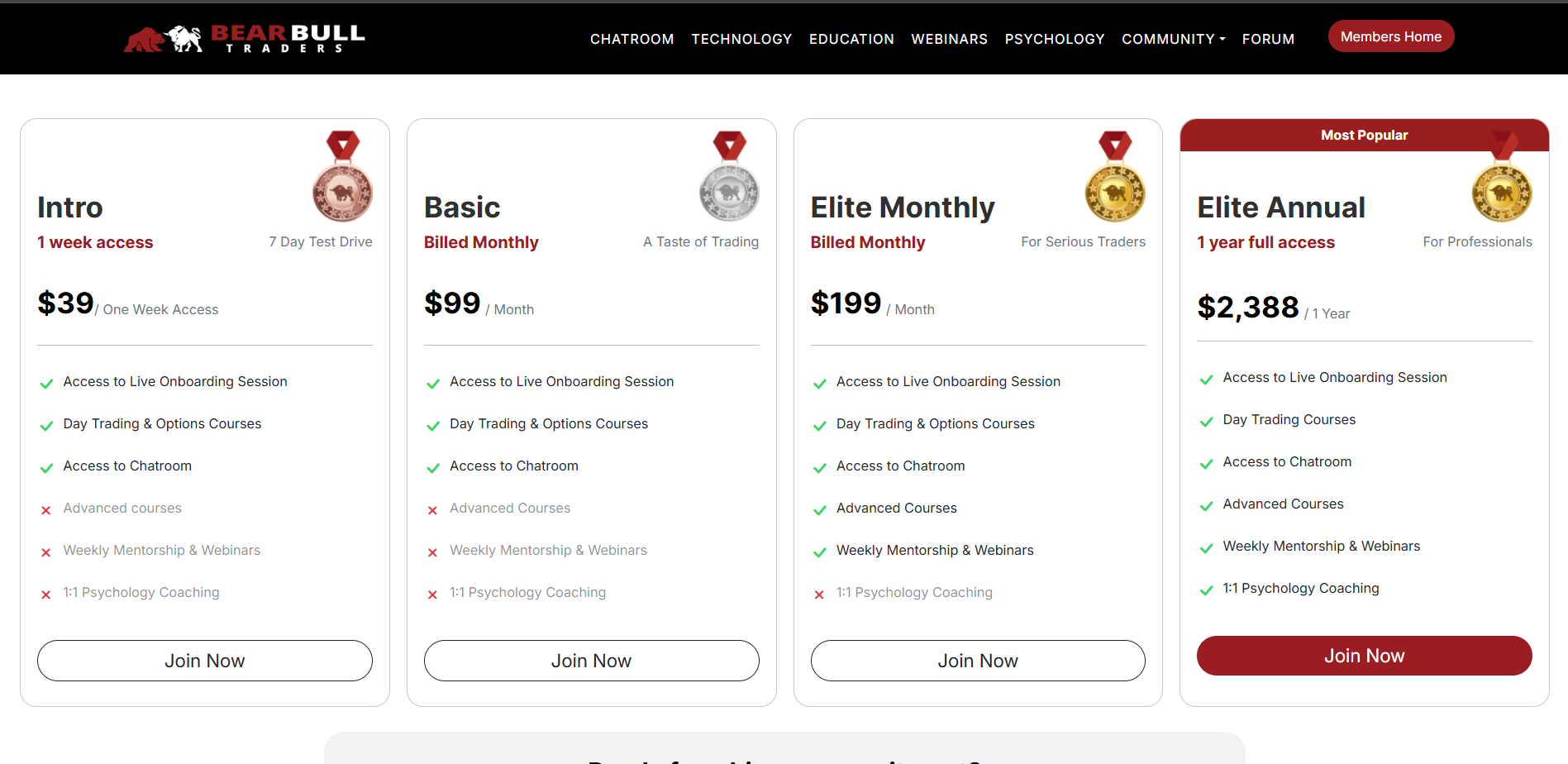
Bear Bull Traders has been around since 2016 and has built a serious reputation in the trading education space. Founded by Andrew Aziz, a successful trader and author, this platform emphasizes both strategy and psychology.
Course Overview
BBT offers multiple course levels from intro to elite. You’ll learn day trading strategies, technical analysis, price action, options trading, and, importantly, trading psychology. The education goes beyond just “here’s a pattern” – the program teaches you why patterns work and how to build a complete trading system.
Platform & Instructor
Founded by Andrew Aziz, who literally climbed Mt. Everest with a Bear Bull Traders flag (no joke). The platform includes live onboarding sessions, 24/7 access to recorded courses, weekly live webinars, and an active chat room where you can watch professional traders work.
Skill Level
All levels. They have intro courses for beginners and advanced content for experienced traders. The tiered membership system lets you start basic and upgrade as you progress.
Price & Duration
- Intro membership: 7-day trial to test it out
- Basic membership: $99/month
- Elite membership: $199/month
- All include chatroom access, courses, and live sessions
Best For
Traders who value community and want access to experienced mentors. If you like learning alongside others and want to see professionals trade in real-time, BBT delivers.
Pros
- Strong community of 5,000+ premium members
- Live trading sessions with professionals
- Comprehensive educational library
- Weekly webinars on technical and psychological topics
- 7-day trial to test before committing
- Includes trading simulator access
Cons
- Primarily focused on stocks and options, not crypto-specific
- Monthly subscription adds up over time
- It can be overwhelming with so much content
- Some moderators trade futures, but crypto isn’t the main focus
4. Warrior Trading: Runner-up
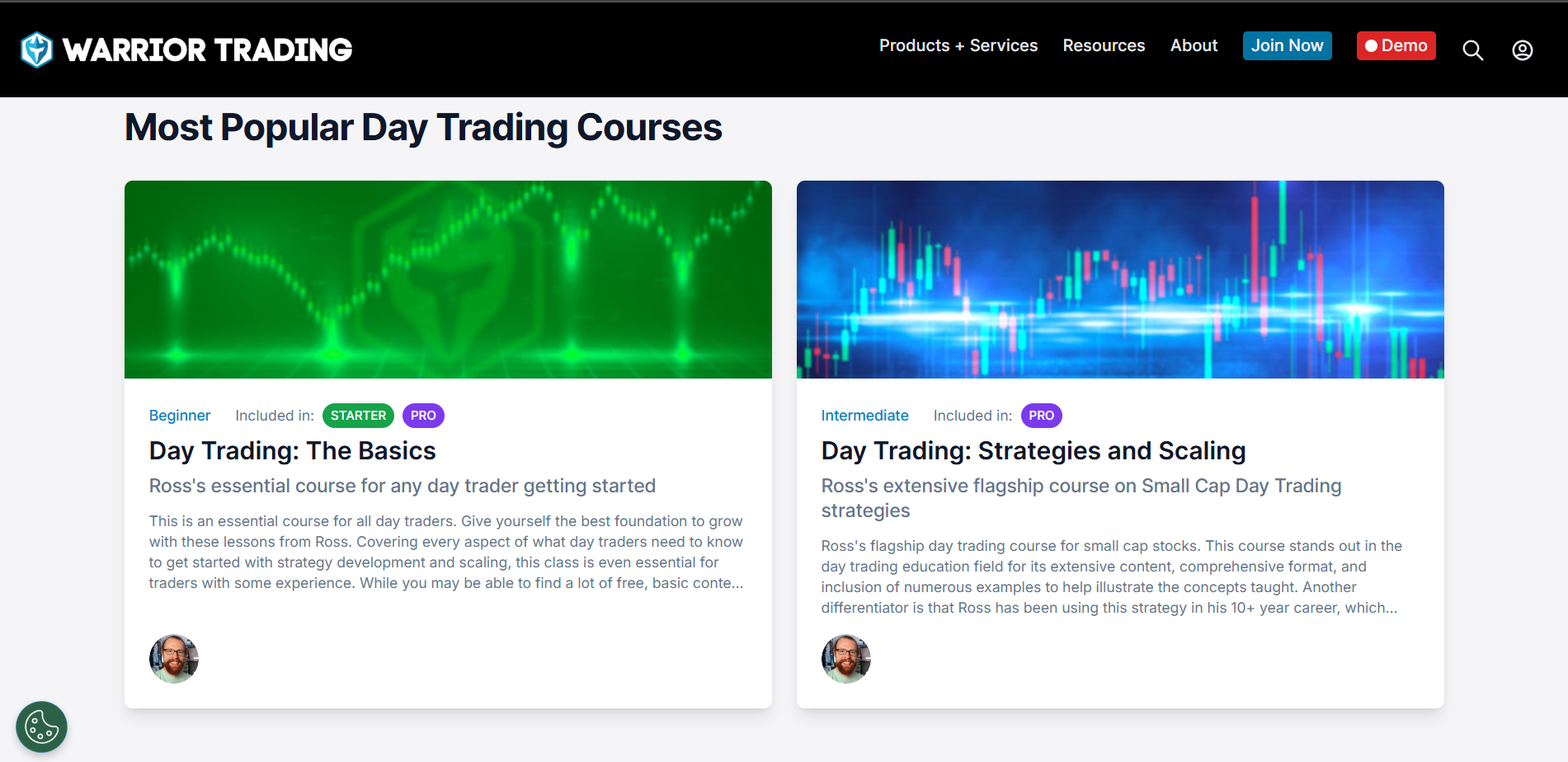
Warrior Trading is massive, with over 500,000 traders in their community and 5,000 premium members. Ross Cameron, the founder, has documented turning $583 into over $10 million through day trading. That track record gets attention.
Course Overview
The platform offers multiple courses, including “Day Trading: The Basics” (18+ hours) and “Strategies and Scaling.” You’ll learn momentum trading, technical analysis, risk management, and trader psychology. Ross streams his actual trades live, showing real profit/loss in real-time – that transparency is rare.
Platform & Instructor
Ross Cameron is the face of Warrior Trading, and he’s transparent about both wins and losses. The platform includes live trading rooms, extensive course libraries, breaking news alerts, and a $200,000 virtual trading simulator, allowing you to practice without risk.
Skill Level
Beginner to Advanced. The Warrior Starter membership is designed for beginners, while Warrior Pro offers advanced strategies for experienced traders.
Price & Duration
- Warrior Starter: $997 first month, then $197/month (includes 30 days free chatroom and simulator access)
- Warrior Pro: Higher tier with more features
- Free intro course available to try before buying
Best For
Serious traders who want structured education, live trading examples, and risk-free practice via a simulator. If you want to see exactly how a successful trader thinks and executes, Warrior Trading delivers.
Pros
- Massive community of traders to learn from
- Live trading streams showing real trades
- Comprehensive course library (hundreds of hours)
- $200,000 virtual simulator for practice
- Ross’s proven track record
- Breaking news service for timely market updates
- Transparent win/loss tracking
Cons
- Expensive compared to one-time course purchases
- Primarily stock-focused, though principles apply to crypto
- A monthly subscription model can add up
- High-volume momentum strategies may not suit all trading styles
- It can be overwhelming for complete beginners
5. Bullish Bears: Best budget course
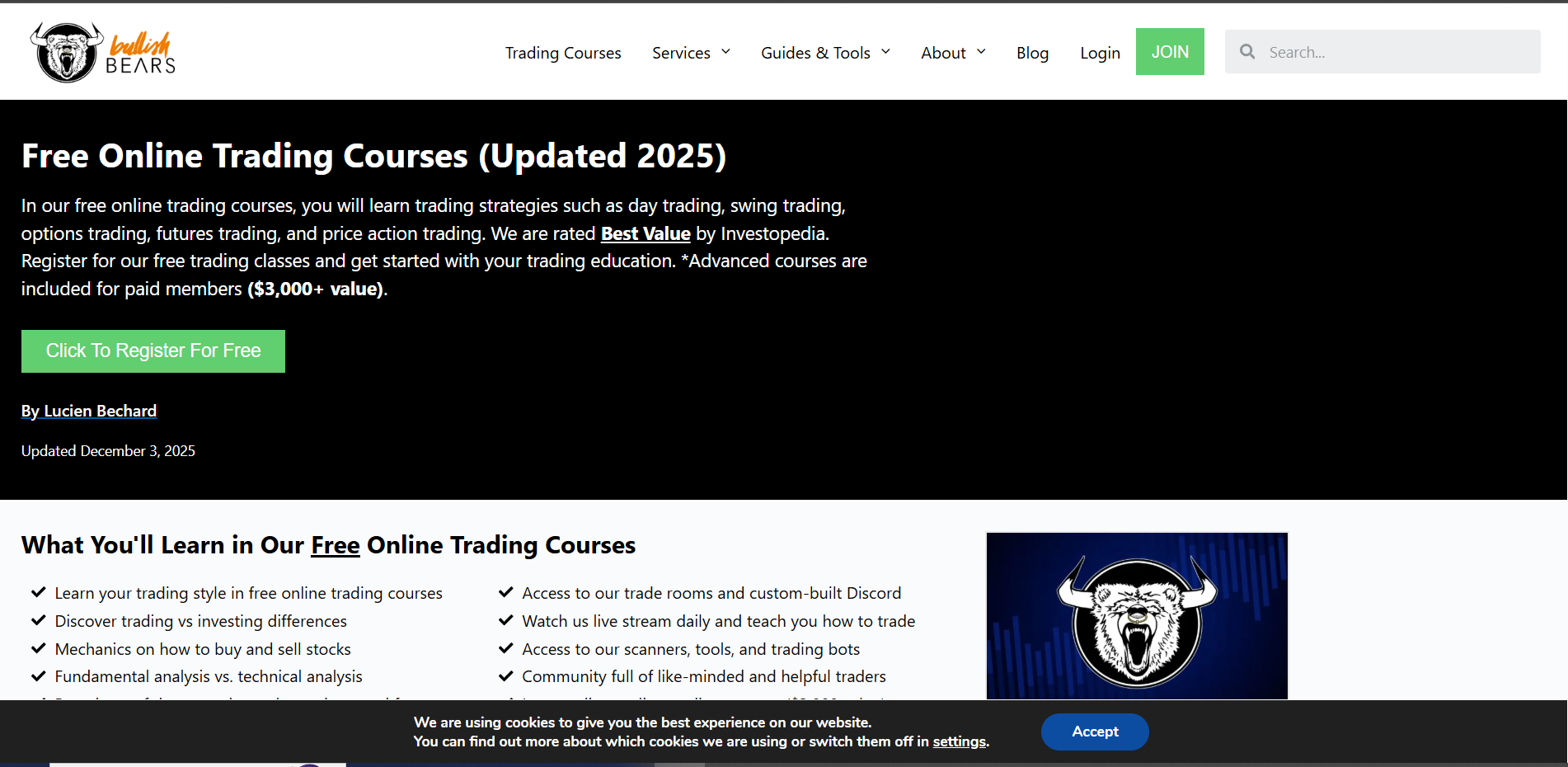
If money’s tight but you’re serious about learning, Bullish Bears offers serious value for just $47/month. They’re not cutting corners – you’re getting comprehensive resources at a fraction of what other platforms charge.
Course Overview
Bullish Bears covers day trading fundamentals, technical analysis, chart patterns, and strategies for trading options, penny stocks, and futures. The platform includes daily live streams from trading experts, in-depth courses, and access to active trading communities.
Platform & Instructor
Run by experienced traders who focus on making education accessible. The platform includes Discord channels and chatrooms where members connect with instructors and each other in real-time.
Skill Level
All levels. The content scales from beginner basics to advanced strategies so that you can grow with the platform.
Price & Duration
$47/month with a 7-day free trial. That trial lets you test the chatrooms, access courses, and see if the teaching style works for you before committing money.
Best For
Budget-conscious traders who still want quality education and community access. If you’re working with limited capital for both learning and trading, Bullish Bears makes sense.
Pros
- Very affordable at $47/month
- 7-day free trial to test everything
- Daily live streams from experts
- Active community via chat and Discord
- Covers multiple asset types, including options
- No huge upfront investment required
Cons
- Less extensive course library than premium platforms
- Smaller community compared to larger platforms
- May not have as many one-on-one mentorship opportunities
- Lower price sometimes correlates with less personalized support
6. Humbled Trader: Best for mentorship
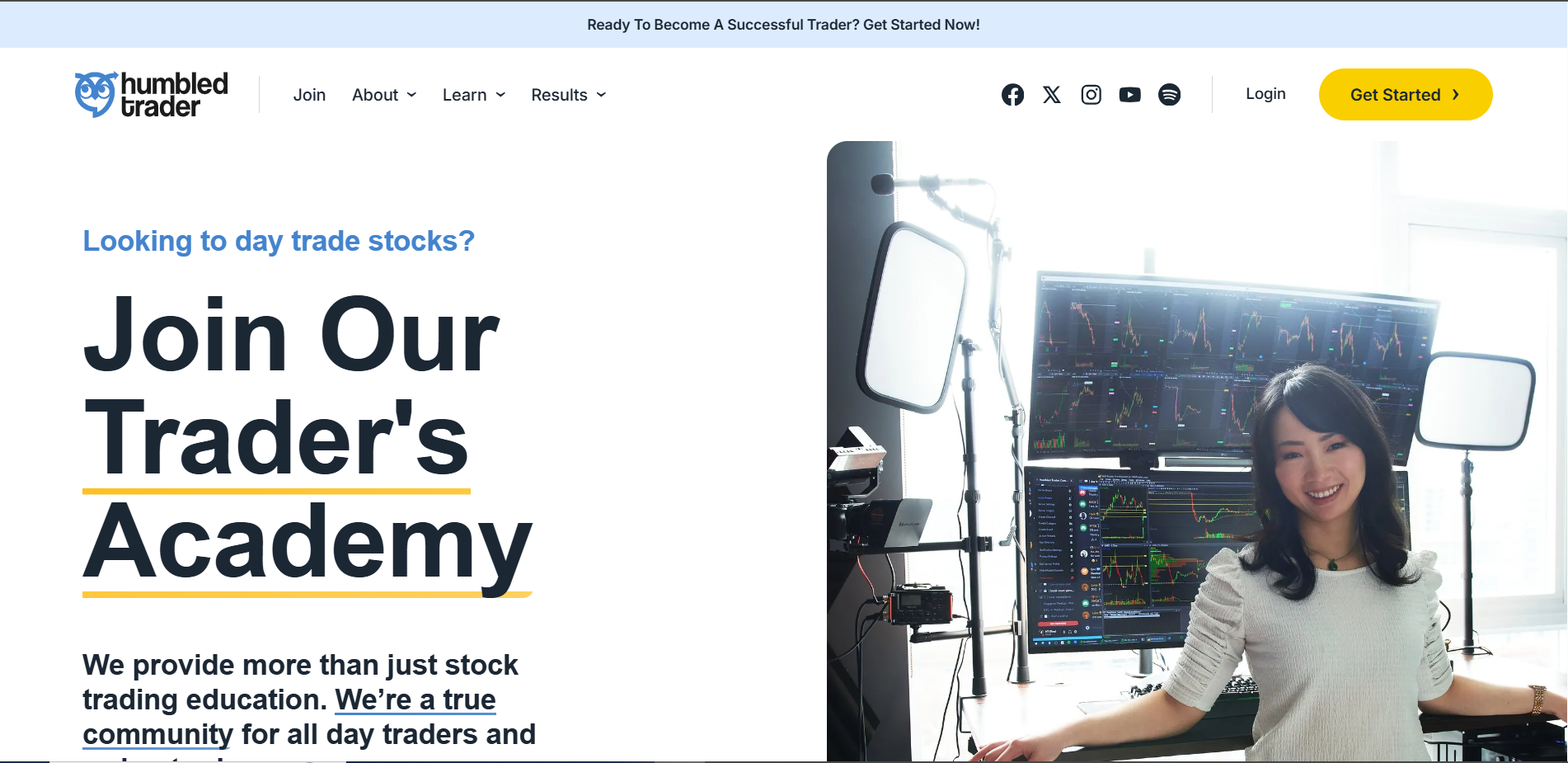
Humbled Trader offers something different – a single Pro-level membership that emphasizes personalized mentorship over tiered subscriptions. If you want direct guidance from experienced traders, this is worth looking at.
Course Overview
The focus here is on developing sustainable trading strategies while managing the psychological aspects that destroy most traders. You’ll learn technical analysis, risk management, and how to build trading plans that actually work for your personality and risk tolerance.
Platform & Instructor
The platform emphasizes quality over quantity – fewer students per mentor means more personalized attention. Instructors are active traders who provide feedback on your trades and help you develop your individual approach.
Skill Level
Intermediate to Advanced. This isn’t where you learn what a candlestick chart is – it’s where you refine strategies and get personalized coaching to fix what’s not working.
Price & Duration
Pricing varies (check their current rates), but you’re paying for mentorship access, not just course videos. It’s an investment in personalized guidance.
Best For
Traders who’ve tried learning on their own may have lost some money, and need experienced mentorship to level up. If you learn better with direct feedback than watching generic videos, this approach works.
Pros
- One-on-one mentorship opportunities
- Focus on trading psychology and discipline
- Personalized strategy development
- Active trader instructors
- Smaller, more focused community
Cons
- Higher cost than self-paced video courses
- Single membership tier – no “starter” option
- Requires more commitment and engagement
- It may be overwhelming for complete beginners
7. Investors Underground: Best for a community
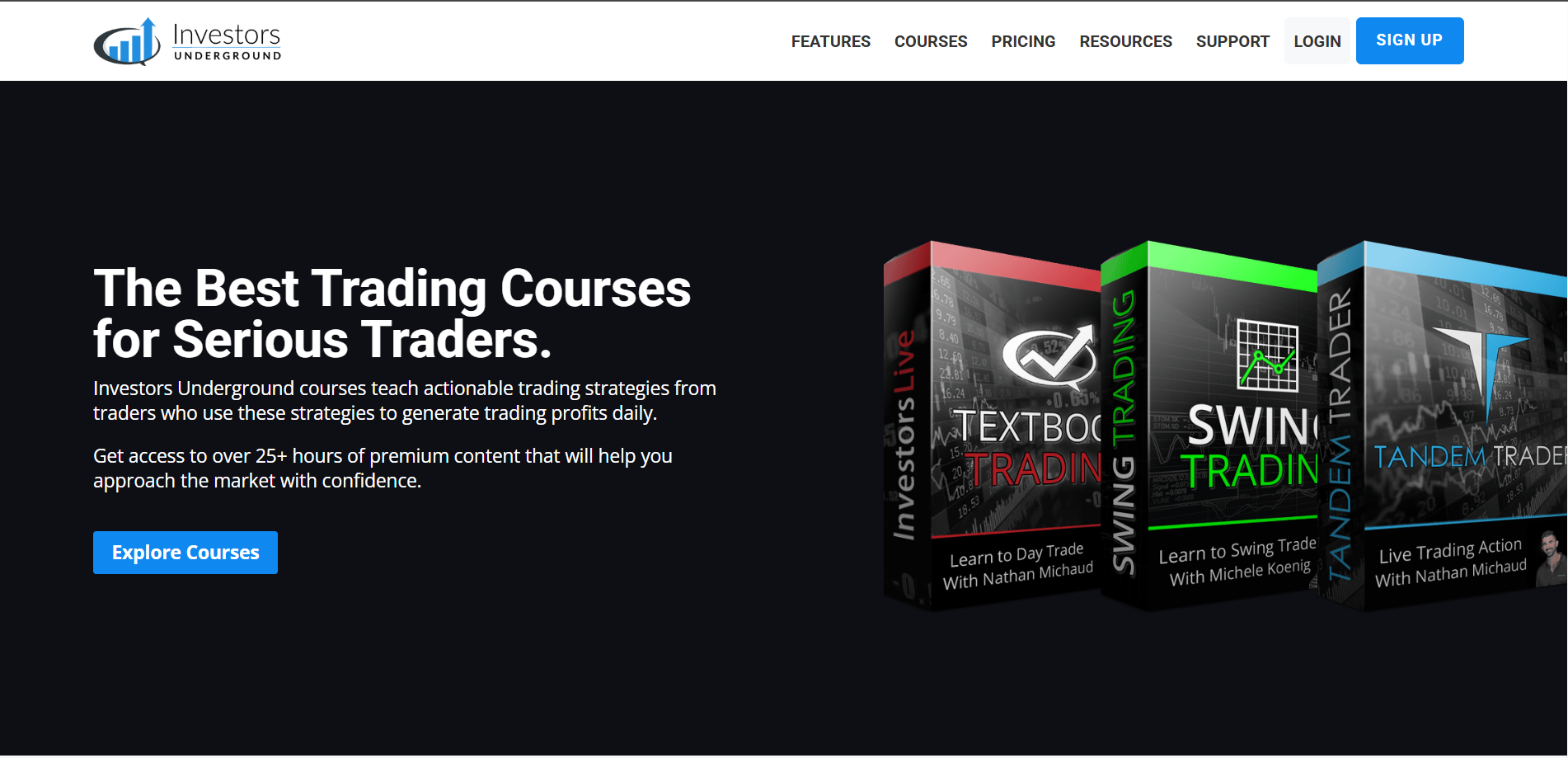
Investors Underground has built one of the strongest trading communities in the industry. If you believe in learning from other traders as much as from instructors, this platform delivers.
Course Overview
IU teaches short-term trading strategies with emphasis on technical analysis, pattern recognition, and risk management. But what really sets it apart is the active community where members share ideas, trades, and lessons learned daily.
Platform & Instructor
Founded by experienced traders who remain active in the community. The platform features live trading sessions, educational courses, and most importantly, an engaged member base that collaborates rather than just consumes content.
Skill Level
Intermediate to Advanced. You should understand the basics before joining. This is the place where you learn to execute and refine, not where you learn what “support and resistance” means.
Price & Duration
Pricing varies by membership level. Check their site for current rates, as they occasionally offer promotions for new members.
Best For
Traders who thrive in collaborative environments. If you want to connect with other serious traders, share ideas, and learn from a community of people at similar skill levels, IU is ideal.
Pros
- Extremely active trading community
- Live trading sessions to see strategies in action
- Members share real trades and lessons learned
- Focus on collaboration and peer learning
- Strong emphasis on risk management
Cons
- Can be intimidating for beginners
- Requires active participation to get full value
- Community-focused approach won’t appeal to solo learners
- May be information overload with so many member contributions
8. Crypto Trading Course for Beginners-AvaAcademy
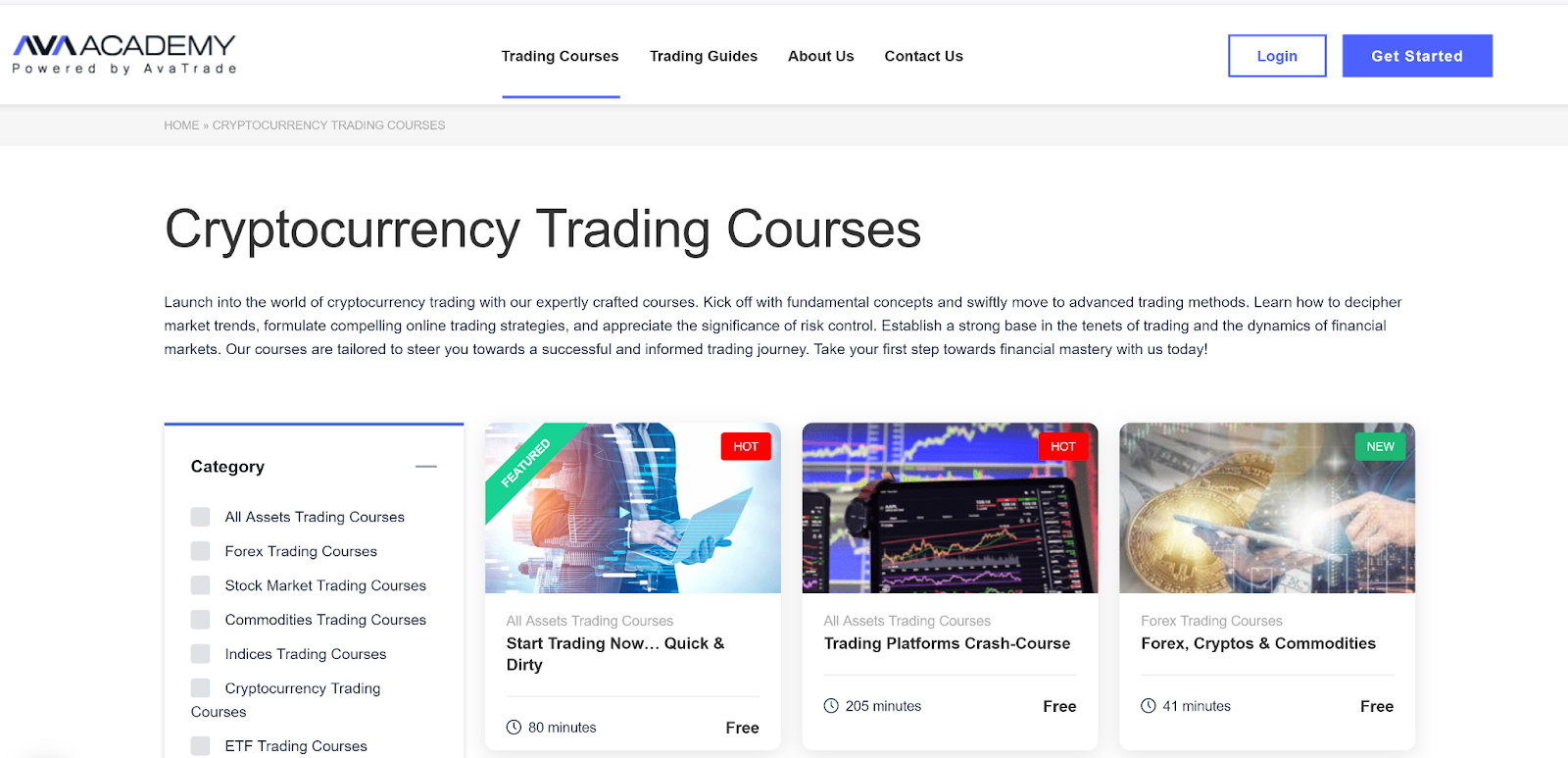
Ava Academy uniquely targets people who are new to crypto and trading. This is a good starting point for those who have no idea about Bitcoin.
Course Overview
The curriculum covers all the foundational concepts, such as blockchain basics, how cryptocurrencies work, setting up wallets and exchange accounts. It is designed to take someone with zero knowledge and prepare them for their first trades.
Platform & Instructor
Ava Academy focuses on beginner-friendly explanations and practical steps. The teaching style avoids excessive jargon and breaks down complex concepts into digestible pieces.
Skill Level
Pure beginner. This is crypto trading 101 – no prerequisites required.
Price & Duration
Pricing varies (check current rates on their platform). Duration depends on the specific course track you choose.
Best For
Complete beginners who need to start from the absolute basics. If terms like “blockchain,” “wallet,” or “exchange” are still fuzzy, start here before jumping to advanced trading strategies.
Pros
- Extremely beginner-friendly
- Crypto-specific focus
- Covers essential setup (wallets, exchanges)
- No assumed prior knowledge
- Practical, step-by-step approach
Cons
- May be too basic for those with any crypto experience
- Less depth on advanced trading strategies
- Smaller community compared to major platforms
- Need to supplement with advanced courses later
9. Day Trading Academy (DTA)
Day Trading Academy markets itself as a detailed and professional training platform. They are not here to mess around. This is for people who treat trading as a potential career, and not just a side hobby.
Course Overview
DTA provides its learners with intensive training that includes topics like technical analysis, trading strategies, risk management, as well as trading psychology. The program also includes mentorship, live trading sessions. Plus, there is ongoing support to help students obtain a consistent level of profitability.
Platform & Instructor
Professional traders teach it with years of experience. The academy focuses on proven strategies plus professional-level discipline.
Skill Level
It is for all levels, but it’s really suited for serious students. You can start as a beginner, but the program expects serious commitment and treats trading as a professional skill to be mastered.
Price & Duration
There is premium pricing, which reflects the comprehensive nature of the program. Expect this to be one of the more expensive options, but it includes mentorship and ongoing support.
Best For
People who want professional-level training and are considering trading as a career. If you’re dabbling, this is overkill. If you’re all-in on learning to trade professionally, DTA provides that level of education.
Pros
- Serious, professional-level training
- Includes one-on-one mentorship
- Focuses on real, consistent profits—not quick money schemes
- Support doesn’t end when the course does
- Active community of actual traders
Cons
- Expensive
- Takes serious time and effort
- Probably overkill if you’re just casually curious
- Expects you to actually put in the work
Things You Can Learn from Taking a Day Trading Course
Here are the things that a day trading course can teach you.
- Chart reading and technical analysis
You will learn how to read candlestick patterns and identify trends. Moreover, you will understand what price action is telling you and how to assess support and resistance levels, moving averages, and volume analysis. You’ll learn all the tools that professional traders are using to make sense of price movements.
- Risk management that actually protects your capital
This is the unsexy stuff that beginner traders overlook, but it’s so important. You need to do proper risk management by understanding things like position sizing, stop-loss placement, risk-reward ratios, and portfolio management.
- Trading psychology and emotional control
Every trader has to deal with emotions such as fear, greed, overconfidence and revenge trading. The courses will help you recognize emotional trading patterns, enabling you to stick to your strategy even when emotions are screaming. This is, at times, even more important than technical skills.
- Strategy development and backtesting
Courses will teach you how to create trading strategies and test them out on historical data so that you can refine them before risking any real money. So, you will understand what works and why it does so.
- Market structure and order flow
For any trader, it is important to know how markets actually work. The courses will help you gain a thorough understanding of market makers, liquidity, order types. You will know what is actually happening behind the price movements that you see on the charts. This deeper understanding enables you to make better trading decisions.
- Entry and exit timing
In crypto day trading, timing is everything! You need to know when to enter a trade, when to take profits, and when to cut your losses. Courses teach you to spot high-probability setups rather than just randomly jumping in and experimenting.
- Different trading strategies
You will learn the different trading strategies that are out there, such as momentum trading, breakout strategies, scalping techniques and reversal plays. You can try out different strategies and see which one matches your style the most.
- Technical indicators and how to use them
Courses will explain what technical indicators are and how to use them effectively. There are some popular tools that these courses explain such as RSI, MACD and Bollinger Bands.
- Trading plan development
The courses will help you form a concrete trading plan that clearly defines your strategies, risk tolerance, goals and the rules. Having a solid plan helps you remain disciplined and motivated when the markets get out of control.
How to create a concrete trading plan that defines your strategies, risk tolerance, goals, and rules. Having a plan keeps you disciplined when markets get chaotic.
- Adaptation and continuous improvement
In the crypto world, the markets are always changing. The strategies that worked last year may not work today. So, good courses will teach you how to adapt and recognize when conditions have changed, allowing you to evolve your approach.
Free vs Paid Crypto Day Trading Courses – Which Should You Choose?
There are free and paid crypto day trading courses available! Both have their unique advantages and drawbacks. Let’s take a look at them.
Free courses
Free courses are really great when you are just starting on your crypto journey. Some platforms, like Udemy, offer free crypto basics courses that you can try out. Plus, there are thousands of trading videos freely available on YouTube. You can also go for Coinbase, which offers free earn-while-you-learn programs. These are ideal for you if you are not sure trading is for yo,u but want to simply learn about it. You can learn about it for free to see if it’s something you want to do.
But it must be noted that free courses have limits. They just cover the basics, such as what crypto is, basic chart reading, and some simple strategies. It won’t cover advanced techniques or risk management in depth. There is also no personalized support here. The instructions are generic, and not tailored to your unique learning needs.
Paid courses
The paid courses help give learners structure as well as accountability. When you are paying money, you are more likely to actually complete the course. The content is also a lot more detailed and better organized. It is also updated regularly. Plus, the great thing about paid courses is that you get access to communities as well as live sessions. Some courses even offer mentorship!
Having community access and ongoing support is really useful when you’re feeling stuck or confused during trading. Having people and mentors you can ask for advice from really helps when you’re starting your crypto journey.
So, we’ve covered the pros and cons of both types of courses. Which one should you choose? The sensible approach is to use free resources to learn the basics and see if crypto trading is something you want to pursue. Watch some YouTube videos and take free Udemy courses, and read articles on it. Once you know that crypto day trading interests you and you want to invest in it, look for a high-quality paid course with community access. The money you save by avoiding beginner mistakes will more than pay for the course!
Moreover, you should also consider your budget. If you cannot afford a course at the moment, then maximize free resources first. If you can afford to pay $50-200 per month, you should opt for a paid course. Paid courses will definitely accelerate your learning and help save you from expensive trading mistakes.
Considerations for Choosing the Right Crypto Day Trading Course For Yourself
After going through this guide, you can come to one conclusion: not all courses are equal. Here is what actually matters.
- Skill Level
You have to be honest about where you stand. Beginners need beginner courses. But if you already know the basics, then you can skip to intermediate and even advanced ones.
Not all courses are equal. Here’s what actually matters:
- Focus Area
You should know your goals when you’re searching for a course. Is it crypto-specific or just general trading? Do you need to know technical analysis or trading psychology? Pinpoint your focus area and choose accordingly.
- Platform reputation
Whenever you are choosing a course, make sure to check the legitimacy and reputation of the platform. See how long they have been around and read real reviews (not simply sales page testimonials). You should also make sure that the instructors of the course actually trade and have real experience.
- Community access
It’s always a good idea to opt for courses that have active communities and support. That helps make learning a more engaging and fruitful experience for the learners.
- Learning style
You should know your unique learning style and match the format according to that. For instance, if you are a visual learner, then you can opt for a course that has a video format.
- Cost vs. Value
Just because a course is expensive, it doesn’t mean it’s better. You should consider what you are actually getting for the money that you pay. For example, a $997 course with a live mentorship and lifetime community access may be a better value than a $50 course with only video lectures and no support.
- Time commitment
You should be realistic when opting for a course. Select one that you can actually finish, and not just the most detailed one that you end up abandoning.
- Real trading application
Let’s be honest! Theory without practice is basically useless. The best courses should help you apply the concepts they teach. The course should include paper trading, simulations, as well as guidance on doing real trades.
- Trial options
You should be able to try out the course before fully committing. The platforms that offer 7-day trials or money-back guarantees show that they are confident in their product and give you a risk-free way to test out the courses.
Bottom line: Don’t just opt for the first or most expensive course. You should carefully consider your situation, goals, and how you learn best.
How Dypto Crypto Makes Learning Fun and Engaging
Most of the crypto education out there is either boring technical documentation or just hyped-up promises of getting rich quick. Dypto Crypto avoids doing both those things and does something different; they make learning fun and engaging.
What sets Dypto Crypto apart is that the platform focuses on making learning an interactive and fun experience! It is not just dry lectures and boring technical details. Here at Dypto, keeping the people engaged is actually half the battle. Because let’s face it, if you are bored, then you won’t retain any information, no matter how good it is.
That’s why Dypto Crypto focuses on making learning engaging and insightful. The platform combines crypto fundamentals with practical applications in DeFi and Web3. With Dypto Crypto, you won’t just learn how to trade but rather how the entire crypto ecosystem works. This broad perspective will help you become a smarter trader because you will actually know what you are investing in!
So, if you’re ready to start learning crypto in a way that won’t put you to sleep, let’s get started today! Sign up for Dypto Crypto here and learn about the fascinating world of crypto!
FAQs (Frequently Asked Questions)
What’s the difference between a stock day trading course and a crypto day trading course?
The basics are the same: chart reading, technical analysis, and risk management. But crypto’s different: markets never close (24/7 trading), it’s way more volatile, and there’s less regulation. Stock courses give you solid fundamentals, but crypto courses cover unique stuff like exchange differences, wallet security, and the wild psychology of crypto trading.
Do I need prior trading experience to take a crypto day trading course?
Nope. Most beginner courses start from zero. If you can use a computer and do basic math, you’re good. Look for courses that say “no experience needed,” and you’ll be fine.
Can I make a living from crypto day trading after taking a course?
Honestly? Most traders lose money, even after courses. A course teaches skills, but consistent profits take time, practice, and plenty of mistakes along the way. Don’t expect to quit your job after one course. If you eventually become consistently profitable, great—but treat it as a long-term learning process, not a quick money scheme.
Do I need a large budget to start crypto day trading after taking a course?
You can start with a few hundred bucks, but your profits will be small too (and you might lose it while learning). Many experts recommend $1,000-2,000 for real trading after practicing. Bottom line: only risk money you can actually afford to lose.
Disclaimer
This article is for educational and information purposes, and should not be considered financial advice. For more information visit our disclaimer page
About the Author