

The crypto IRA landscape in 2026 offers more options than ever for investors looking to add digital assets to their retirement portfolio. With tax advantages similar to traditional IRAs, these specialized accounts let you hold Bitcoin, Ethereum, and other cryptocurrencies while deferring or eliminating capital gains taxes.
Choosing the right provider requires careful consideration of three critical factors: fees, custody control, and security measures. The difference between providers can mean thousands of dollars in costs over your retirement timeline. Some platforms charge minimal transaction fees with no monthly maintenance, while others take a more expensive full-service approach.
This guide evaluates 9 leading crypto IRA companies to help you find the right match for your retirement strategy.
What Is a Crypto IRA (and Why Do People Use One)?
A crypto IRA is a self-directed individual retirement account that holds cryptocurrencies rather than traditional stocks and bonds. The IRS categorizes digital currencies as property, making them eligible for inclusion in retirement accounts just like real estate or precious metals.
People use crypto IRAs primarily for the tax advantages. In a traditional crypto IRA, your investments grow tax-deferred. You contribute pre-tax dollars, and you only pay taxes when you withdraw funds in retirement. With a Roth crypto IRA, you pay taxes upfront on contributions, but your gains grow completely tax-free.
Beyond tax benefits, crypto IRAs offer long-term exposure to digital assets without the hassle of managing multiple exchange accounts or wallets. Trades within the IRA do not trigger taxable events, letting you rebalance your portfolio without worrying about capital gains.
The retirement account structure also enforces discipline. Early withdrawals before age 59.5 face penalties, which discourages emotional selling during market volatility. For investors who believe in the long-term potential of cryptocurrency, a crypto IRA provides a structured approach to accumulation.
9 Best Crypto IRA Companies for 2026
When evaluating crypto IRA providers, we focused on transparent fee structures, security measures, asset selection, and custody arrangements. Each company listed below offers legitimate services that comply with applicable regulations.
| Company | Minimum | Trading Fee | Monthly Fee | Best For |
| iTrustCapital | $1,000 | 1% | $0 | Low fees, precious metals |
| Alto CryptoIRA | $10 | 1% | $10 | Wide crypto selection |
| BitIRA | $5,000 | 5% purchase | $0 | Maximum security |
| Coin IRA | $5,000 | 1.25% buy, 1% sell | $0 | Simple fees |
| Swan Bitcoin | No min | 0.99% | $20 or 0.25% | Bitcoin-only |
| Equity Trust | Varies | Varies | Varies | Alternative assets |
| TradeStation | Varies | 0.50% + $1 | $0 | Advanced traders |
| Unchained | $2,000 | 1.50% | $250/year | Self-custody |
| IRA Financial | Varies | Low/none | Varies | Maximum flexibility |
1. iTrustCapital

iTrustCapital serves over 250,000 account holders with access to 90-plus cryptocurrencies and physical gold and silver. The platform supports Traditional, Roth, and SEP IRAs.
The company charges no setup or monthly maintenance fees. You pay a flat 1% transaction fee on cryptocurrency trades. For precious metals, gold costs $125+ over spot per ounce.
iTrustCapital offers 24/7 trading with instant execution and staking options on select cryptocurrencies. The platform works with institutional storage providers, including Coinbase Custody and Fireblocks. Assets are held in cold storage with FDIC-insured USD balances.
Best for investors seeking low-cost access to both cryptocurrencies and precious metals, with no monthly fees.
2. Alto CryptoIRA
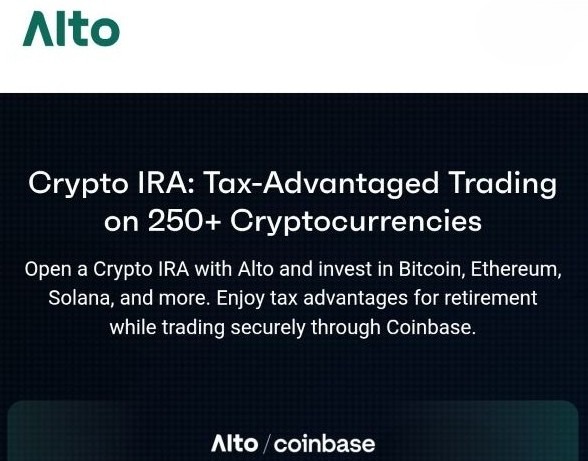
Alto CryptoIRA provides access to 250-plus cryptocurrencies through its Coinbase partnership. The platform supports Traditional, Roth, and SEP IRAs with just a $10 minimum to open.
Alto charges a flat 1% trading fee on all transactions, plus $10 per month or $100 annually for account maintenance. The platform offers 24/7 trading with market and limit orders. Cryptocurrency custody is handled by Coinbase Custody Trust Company. Cash receives FDIC insurance up to $250,000.
Best for investors who want access to hundreds of cryptocurrencies without a large upfront investment, particularly those exploring altcoins.
3. BitIRA

BitIRA focuses on security-first cryptocurrency storage with access to 17 major cryptocurrencies. The platform offers Traditional, Roth, SEP, and SIMPLE IRAs with a $5,000 minimum.
BitIRA charges no monthly or setup fees. The platform charges a 5% fee on purchases with no fees on sales. Cryptocurrency is stored in military-grade cold storage with Hardware Security Modules and end-to-end insurance coverage.
Best for security-conscious investors with larger balances who plan to buy and hold.
4. Coin IRA
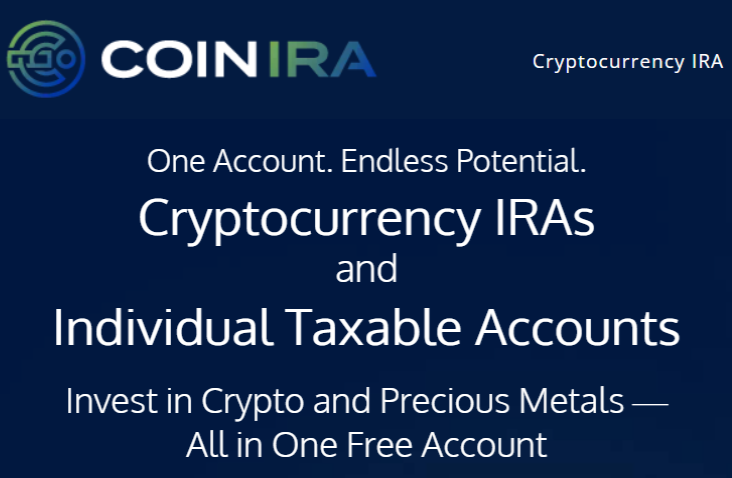
Coin IRA provides a straightforward approach with 17 cryptocurrencies available. The platform requires a $5,000 minimum and charges 1.25% on purchases and 1% on sales with no monthly fees.
Best for investors who want simplicity without excessive fees.
5. Swan Bitcoin IRA

Swan Bitcoin offers Bitcoin only with no minimum investment. The platform charges 0.99% on transactions plus $20 monthly (or 0.25% for accounts over $100,000). Bitcoin is held in segregated custody with BitGo Trust.
Best for Bitcoin believers who want to avoid altcoin complexity.
6. Equity Trust Company
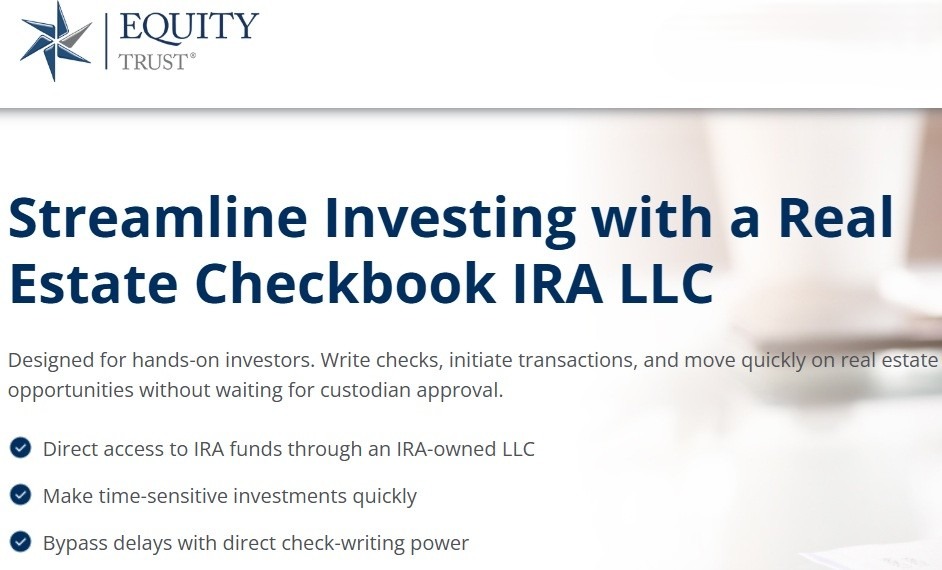
Equity Trust is a large self-directed IRA custodian facilitating cryptocurrency through partner platforms. The company also enables real estate, precious metals, and other alternative investments. Fees vary based on the partners used.
Best for investors wanting multiple alternative asset classes.
7. TradeStation

TradeStation charges 0.50% plus $1 per transaction on 11 cryptocurrencies. The platform offers advanced charting tools and the ability to trade traditional securities alongside crypto.
Best for active traders wanting professional-grade tools.
8. Unchained IRA

Unchained offers collaborative custody using a 2-of-3 multi-signature setup where you hold one key. The platform charges no setup fee, $250 annually, and 1.50% on trades. Each contribution requires a minimum of $2,000.
Best for Bitcoin holders wanting partial self-custody.
9. IRA Financial Group

IRA Financial provides access to 45+ cryptocurrencies and alternative assets, such as real estate. The platform uses Bitstamp custody with optional self-custody pathways. Trading fees are low to nonexistent.
Best for sophisticated investors wanting maximum flexibility.
Choosing the Right Crypto IRA for Your Needs
Selecting the right crypto IRA provider depends on your specific situation. Start by evaluating your account size. If you have less than $5,000 to invest, platforms like Alto CryptoIRA or Swan Bitcoin IRA that accept small minimums make sense. For accounts above $50,000, providers offering premium support and enhanced security might justify higher fees.
Consider your trading frequency. Active traders should prioritize platforms with low transaction fees and 24/7 trading access. Long-term holders benefit more from providers charging no monthly fees, even if trading costs are slightly higher.
Your cryptocurrency preferences matter. Bitcoin-only believers may prefer Swan Bitcoin IRA’s focused approach, while those wanting to explore altcoins may prefer platforms like Alto CryptoIRA or Bitcoin IRA, which offer broader selections.
Evaluate your comfort level with technology and custody. Traditional custodial arrangements offer simplicity and insurance. Collaborative custody models like Unchained IRA require more engagement but provide greater control.
Calculate total costs over your expected holding period. A provider with no monthly fees and 1.5% trading fees could cost less than one charging 1% trades plus $20 monthly if you trade infrequently.
Common Types of Crypto IRAs
Crypto IRAs come in several varieties that serve different financial situations and retirement strategies. The main differences lie in how contributions are taxed, when you pay taxes on gains, and who qualifies to use each account type.
Understanding these structures helps you choose the right setup for your goals. Some prioritize immediate tax deductions while others eliminate taxes on future gains. Eligibility rules and contribution limits vary significantly between account types.
Traditional Crypto IRA
Traditional crypto IRAs use pre-tax contributions that reduce your taxable income in the year you contribute. Your cryptocurrency investments grow tax-deferred inside the account. You pay ordinary income taxes on withdrawals during retirement.
This structure works well if you expect to be in a lower tax bracket during retirement. For 2026, contribution limits are $7,500 for those under 50 and $8,600 for those 50 and older.
Roth Crypto IRA
Roth crypto IRAs use after-tax contributions with no immediate tax benefit. However, your investments grow tax-free, and qualified withdrawals in retirement are tax-free as well.
This structure benefits those who expect to be in the same or higher tax bracket during retirement. If cryptocurrency appreciates substantially, you avoid taxes on all those gains. Roth IRAs also have no required minimum distributions.
SEP & Self-Directed Crypto IRAs
SEP IRAs:
- Work for self-employed individuals and small business owners
- Allow much larger contributions than Traditional or Roth IRAs
- Permit up to 25% of compensation with substantial dollar limits
Self-Directed IRAs:
- Give you control over investment decisions within IRS rules
- Allow cryptocurrency, real estate, private equity, and other alternative assets
- Provide access to investments that traditional IRA providers do not offer
SIMPLE IRAs:
- Serve small businesses wanting to offer retirement benefits
- Provide simpler administration than 401(k) plans
- Works well for companies with fewer than 100 employees
Security Risks and Protections in Crypto IRAs
Cryptocurrency IRAs face unique security challenges. Understanding these risks helps you evaluate the protections offered by providers.
Custodial Risk: When a third party holds your cryptocurrency, you face custodial risk. Choose providers with established custodians, such as BitGo Trust or Coinbase Custody. Verify that custodians maintain separate insurance and do not commingle client assets.
Exchange Exposure: Some crypto IRA providers purchase assets through exchanges, creating temporary exposure to exchange risks. Platforms using over-the-counter desks or direct settlement to cold storage minimize this exposure.
Key Management: Lost private keys mean lost Bitcoin. Traditional custodial arrangements handle key management professionally but create single points of failure. Multi-signature setups distribute risk across multiple parties.
Common Protections: Leading crypto IRA providers implement multiple security layers. Cold storage keeps private keys offline and disconnected from internet-connected systems. Insurance policies cover various risks, including theft and hacking. Multi-signature technology requires multiple parties to authorize transactions. Regular security audits and SOC 2 certification verify that providers follow stated procedures.
Final Thoughts
Choosing a crypto IRA provider in 2026 requires balancing fees, control, and security based on your individual needs.
Low-fee platforms like iTrustCapital and Alto CryptoIRA appeal to cost-conscious investors who want broad cryptocurrency access. Security-focused options like BitIRA and Bitcoin IRA justify higher costs through comprehensive insurance and premium support.
Innovative models like Unchained IRA give technically capable investors elements of self-custody within IRA rules. Bitcoin-only platforms like Swan Bitcoin IRA eliminate the complexity of altcoins and regulatory uncertainty.
The right choice aligns with your risk tolerance, investment size, technical skill, and long-term goals. An investor with $10,000 who wants to explore various cryptocurrencies has different needs than one with $250,000 focused solely on Bitcoin.
Frequently Asked Questions
What fees do crypto IRA companies charge?
Crypto IRA fees vary significantly by provider. Most charge transaction fees ranging from 0.50% to 5% on cryptocurrency purchases. Some platforms charge monthly or annual maintenance fees from $10 to $360, while others have no ongoing costs. Setup fees can range from $0 to $995. Always calculate total costs based on your expected trading frequency and account size.
What is the difference between a Traditional and Roth crypto IRA?
Traditional crypto IRAs use pre-tax contributions that reduce your current taxable income. Your cryptocurrency grows tax-deferred, but you pay ordinary income taxes on withdrawals in retirement. Roth crypto IRAs use after-tax contributions with no immediate tax benefit. However, qualified withdrawals in retirement are completely tax-free, including all investment gains.
Can I self-custody crypto in an IRA?
Traditional IRS rules require a qualified custodian to hold IRA assets, making full self-custody difficult. However, collaborative custody models like Unchained IRA allow you to hold one key in a multi-signature setup while still meeting IRS requirements. True self-custody without any third-party involvement does not currently comply with IRS regulations.
What cryptocurrencies can you hold in a crypto IRA?
Cryptocurrency selection varies by provider. Bitcoin and Ethereum are available through all major platforms. iTrustCapital offers over 90 cryptocurrencies. Alto CryptoIRA provides access to 250-plus through Coinbase. Bitcoin IRA supports 75-plus digital assets. Some platforms like Swan Bitcoin IRA offer Bitcoin only.
How are crypto IRAs taxed when you withdraw?
Traditional crypto IRA withdrawals are taxed as ordinary income at your marginal tax rate in the year you withdraw. Roth crypto IRA withdrawals are tax-free if you meet the requirements: account open for at least five years and you are at least 59.5 years old. Early withdrawals before 59.5 typically face a 10% penalty plus applicable taxes. Trades within the IRA do not trigger capital gains taxes.
Disclaimer
This article is for educational and information purposes, and should not be considered financial advice. For more information visit our disclaimer page
About the Author