
Your daily commute could be earning you cryptocurrency.
Drive-to-earn apps reward drivers for sharing data while navigating roads. Download an app, drive like you normally would, and earn crypto tokens with real value.
This guide explains how drive-to-earn works, which platforms actually pay rewards, realistic earning potential, and the risks to understand before sharing your GPS data with blockchain networks.
What is Meant by “Earn Crypto While Driving”?
Earning crypto while driving means using apps or hardware devices that track your driving and reward you with cryptocurrency.
These platforms collect data, including GPS location, road conditions, traffic patterns, or mapping imagery. This data builds decentralized mapping networks, improves navigation systems, or trains AI models for autonomous vehicles.
In exchange for sharing data, you earn native platform tokens. MapMetrics pays MMAPS. Hivemapper rewards HONEY. DIMO distributes DIMO tokens.
The difference from traditional gig work is that you are not driving for Uber or DoorDash. You drive your normal routes while an app runs in the background, passively collecting data and compensating you with crypto you can sell, hold, or stake.
Drive-to-earn connects decentralized physical infrastructure networks (DePIN) with data monetization. Instead of tech companies taking your data for free, you get paid directly in tokens with market value.
How Drive-To-Earn Models Work
Drive-to-earn platforms use different technical approaches but follow the same basic pattern.
Download an app and connect a crypto wallet. Drive with the app active. The app tracks your movement and collects specific data based on network needs.
After each trip, the platform validates your contribution and credits tokens to your wallet. Some apps pay instantly. Others calculate rewards weekly.
Earnings depend on geographic location (some areas require more coverage), data quality and freshness, and leveling systems that reward consistent contributors.
Here are the three main drive-to-earn models.
Mapping And Navigation Data Sharing
Apps like MapMetrics and Hivemapper turn daily driving into crowdsourced map data.
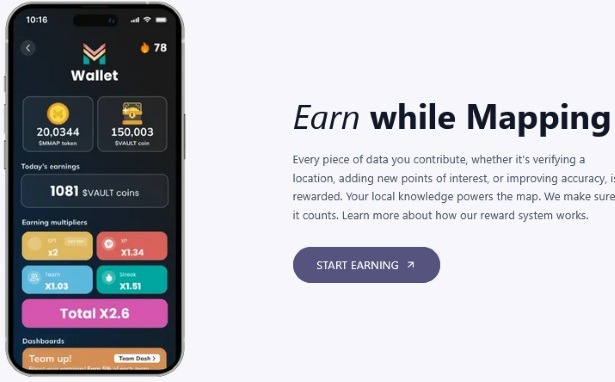
MapMetrics tracks GPS coordinates, speed, traffic conditions, road signs, and speed limits. Users can manually report accidents, roadwork, or hazards for bonus rewards. All information feeds into a decentralized map database competing with Google Maps and Waze.
You earn MMAPS tokens on Solana based on time spent driving, not distance. An XP system increases earning rates as you level up through consistent use.

Hivemapper uses specialized dashcams instead of apps. The dashcam captures 4K road imagery similar to Google Street View. Contributors upload footage to create constantly updated street-level maps.
HONEY tokens are rewarded based on coverage (mapping new roads), freshness (updating previously mapped routes), and quality (clear imagery). Higher rewards go to regions needing more coverage.
Geomining And Location Rewards
Geomining rewards users for moving through different geographic zones.
Apps (like COIN) divide the world into virtual grids or hexagons. When you enter a new zone, you earn tokens for that location. Reward amounts vary based on how recently that zone was visited and activity levels.
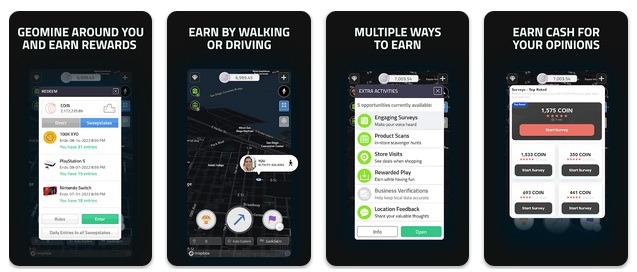
Some platforms require actively claiming rewards by tapping when entering zones. Others track movement automatically and distribute rewards based on unique locations visited.
This model works best for people with varied driving patterns. Rideshare drivers, delivery workers, and frequent travelers can earn more by covering more ground.
Vehicle And Sensor Data For DePIN Networks
DIMO focuses on vehicle telematics rather than mapping.
Users install a hardware device into their car’s OBD-II port, standard on most vehicles after 2008. Newer cars with native connectivity can connect directly through the DIMO app without hardware.
The device collects data about vehicle performance, diagnostics, battery health, driving patterns, and location. This information feeds a decentralized network where app developers and researchers build automotive applications.
DIMO token rewards go to vehicle owners who consistently share data. The platform connects over 170,000+ vehicles globally as of early 2026.
You monetize information about your specific vehicle rather than contributing to a shared map. The data powers predictive maintenance apps, usage-based insurance, and vehicle valuation tools.
Why This Data Is Valuable (And Who Pays For It)
Crypto rewards come from companies and organizations that need accurate, real-time data on roads and vehicles.
Autonomous vehicle companies need constantly updated maps to train self-driving systems. Current providers like Google or HERE Technologies charge premium prices for data that is often months or years old. Decentralized mapping networks solve this by crowdsourcing updates from thousands of drivers daily.
Logistics companies use this data for route planning and efficiency optimization. Delivery firms save millions in fuel costs with real-time traffic and road condition information.
Insurance companies want vehicle data to price policies accurately based on actual driving behavior rather than demographics.
AI and machine learning companies need massive datasets for training computer vision and predictive algorithms.
The traditional model has tech giants collecting data for free and selling it at high markups. Drive-to-earn flips this by paying contributors directly and creating open data marketplaces.
Revenue flows from customers buying data access. That revenue converts into native tokens distributed to contributors. Some platforms burn tokens when customers make purchases, creating deflationary pressure that can increase token value.
Drive-to-Earn vs Move-to-Earn: What’s the Difference?
Move-to-earn and drive-to-earn operate on similar principles but target different activities.
Here is a side-by-side comparison:
| Aspect | Move-to-Earn | Drive-to-Earn |
| Examples | STEPN, Sweatcoin | MapMetrics, Hivemapper |
| Required Activity | Walking, running, or physical activity tracked by steps | Vehicle movement (car, truck, motorcycle) at driving speeds – walking doesn’t count |
| Effort Level | Requires physical activity that takes energy and time | Mostly passive since you drive anyway for work, errands, or other reasons |
| Earning Potential | Lower earning potential | Higher earning potential |
| Upfront Costs | No costs beyond app downloads | Varies by platform – MapMetrics is free (hardware boosts earnings), Hivemapper offers $19/month subscription or $449-$549 dashcam purchase (as of October 2025), DIMO devices range from $99 (Macaron) to $169 (LTE R1) to $349 (AutoPi) |
| Sustainability Model | Faced criticism when token prices collapsed due to unsustainable reward emissions | Stronger fundamentals – enterprise demand for data creates revenue supporting token buybacks and burns |
| Target Audience | Fitness-focused people who see crypto as a bonus | People who already drive regularly and want to monetize their existing activity |
Platforms You Can Use to Earn Crypto While You Drive
MapMetrics
MapMetrics is a free navigation app paying MMAPS tokens for using the service while driving. The app works globally with offline maps and rewards based on drive time, not distance.
Earn higher rewards by contributing traffic updates, reporting hazards, and leveling up through consistent use. Available on iOS and Android, with a Solana wallet required.
Hivemapper
Hivemapper operates the largest decentralized mapping network with over 100,000 devices deployed globally. Specialized AI dashcams capture 4K road imagery to build a Google Street View competitor.
Contributors earn HONEY tokens on Solana. Rewards are based on coverage quality, route freshness, and regional demand. Dashcams originally cost $449 to $549 upfront, though a $19 monthly subscription model launched in October 2025.
Bee Maps
Bee Maps launched a subscription model in October 2025 for $19 monthly, providing access to the Bee AI dashcam, LTE data plan, and fleet software. This replaces previous upfront hardware costs and improves accessibility. The platform raised $32 million in October 2025 funding.
How Much Crypto Can You Really Earn While Driving?
Drive-to-earn provides supplemental income, not a primary source of income for most users.
Earnings vary dramatically based on location, driving frequency, platform choice, and engagement level. Someone driving two hours daily in high-demand areas earns significantly more than weekend drivers in well-covered regions.
MapMetrics rewards vary by level and activity. The platform uses time-based rewards: longer drives earn more tokens. Users who actively contribute map updates and maintain high XP levels maximize earning rates.
Hivemapper contributors have reported monthly earnings of several hundred dollars for active mappers. One early contributor reported 3,000 HONEY tokens in their first week, worth around $300 at $0.10 per token.
However, earnings fluctuate with token prices. Your dollar-equivalent earnings decrease when token values drop, even if you receive the same number of tokens.
The original Hivemapper dashcam upfront cost of $449 to $549 required earning back that investment before seeing a profit, which could take months to over a year, depending on activity levels. The newer $19 monthly subscription model (Launched October 2025) significantly changes the cost structure.
Privacy, Security, and Data Risks You Should Know
Here is a list of all the privacy, security, and data risks you should know about:
• Sharing location and driving patterns with blockchain networks creates legitimate privacy, security, and data risks.
• Every drive-to-earn app tracks GPS coordinates, revealing where you live, work, shop, and spend time.
• This information gets stored on blockchain networks designed to be transparent and permanent.
• Most platforms claim they anonymize location data, but researchers have shown movement patterns can often be de-anonymized by cross-referencing with other public data.
• Privacy risk increases with vehicle data platforms like DIMO and similar services that collect detailed information, including make, model, VIN, diagnostic codes, and performance metrics.
• Your crypto wallet holds keys to earned tokens. If someone gains access through phishing, malware, or social engineering, they can steal everything.
• Use a secure wallet with two-factor authentication.
• Never share your seed phrase or private keys with anyone, including people claiming to be from platform support teams.
• Use a separate wallet just for drive-to-earn rewards to minimize exposure.
• Consider using a privacy-focused email for accounts.
• Think carefully about whether earning potential justifies the data you share.
Final Thoughts
Earning crypto while driving represents a genuine opportunity to monetize an activity most people already do daily.
The technology works. Real platforms pay real rewards to contributors building decentralized mapping and vehicle data networks. Companies pay for data access, generating sustainable revenue to support token rewards.
However, expectations need to stay realistic. This is not passive income that makes you rich. Earnings are supplemental at best, with most users earning $20 to $100 per month, depending on driving patterns and platform choices.
Upfront costs for hardware-based platforms like Hivemapper require careful calculation of breakeven timelines. Token price volatility means earnings fluctuate with crypto markets. Privacy tradeoffs are real, even with anonymity promises.
For rideshare drivers, delivery workers, and frequent commuters, drive-to-earn apps can be worth exploring. You drive those miles anyway. Why not collect tokens?
For occasional drivers or short commuters, earning potential might not justify setup effort.
Approach drive-to-earn as an experiment rather than a guaranteed income. Start with free platforms like MapMetrics to test the concept without upfront investment. If it works for your driving patterns, consider hardware devices to boost rewards.
The drive-to-earn sector is still young and evolving. New platforms will launch. Existing platforms will adjust reward structures. Token prices will fluctuate. Regulatory changes could impact operations.
Stay informed, manage expectations, and never invest more than you can afford to lose in hardware or hope.
Frequently Asked Questions
Q: Do I need special hardware to earn crypto while driving?
A: It depends on the platform. MapMetrics works through a mobile app with no hardware required, though you can purchase their Special Position Tracker to boost earnings. Hivemapper requires a dashcam ($449-$549 upfront or $19/month subscription as of October 2025). DIMO offers the Macaron at $99, LTE R1 at $169, or AutoPi at $349, though newer vehicles can connect directly through their native app without hardware.
Q: Can rideshare or delivery drivers earn more crypto?
A: Yes, rideshare and delivery drivers have significant advantages for drive-to-earn rewards. They spend more hours on the road covering more ground, which typically translates to higher token earnings. They also naturally visit diverse locations rather than repeating the same commute routes, which helps with platforms that reward coverage of new areas. However, drivers should check if their rideshare or delivery company policies allow running additional apps while working.
Q: Is earning crypto while driving passive income?
A: Mostly passive, but not hands-off. The app must run while driving with GPS enabled, and you need to transfer tokens periodically. Some platforms offer higher rewards for active reporting. You are not doing extra work beyond normal driving, but it requires more management than staking or dividend stocks.
Q: Are drive-to-earn apps safe to use?
A: The apps are generally safe from official app stores. However, they track your location and driving patterns, creating privacy risks. This data could be de-anonymized or exposed in a breach. Only use established platforms with transparent teams and real partnerships. Never share your wallet private keys or seed phrases with anyone.
Q. Who pays for the crypto rewards?
A: Companies purchase access to the data you collect. Autonomous vehicle companies pay for mapping data, insurance firms buy vehicle telematics, and logistics companies purchase traffic and routing data. This enterprise revenue converts into tokens distributed to contributors. Some platforms burn tokens when customers make purchases, creating deflationary pressure.
Metadata:
Writer, please populate the meta description field.
Publisher, please populate these fields in the CMS before pushing the page live.
| Meta Title HTML: <title>55-68 charactersInclude the target keyword | Earn Crypto While Driving: How Does It Work? |
| Meta Description 130-160 charactersInclude the target keywordEntice the user to click through and consume the content | Earn crypto just by driving? Discover how drive-to-earn works, where rewards come from, real earning potential, and the risks you should know before starting. |
Disclaimer
This article is for educational and information purposes, and should not be considered financial advice. For more information visit our disclaimer page
About the Author