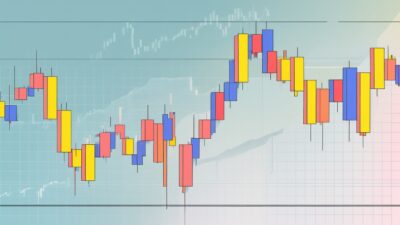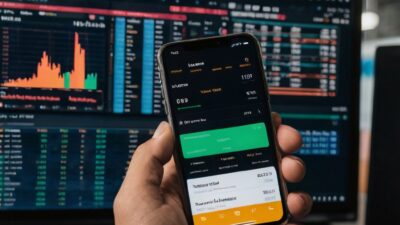


In the lightning‑fast world of crypto trading, scalping has become the go‑to method for those chasing quick wins in volatile markets. Unlike swing traders who wait days or weeks for setups to unfold, scalpers thrive on rapid entries and exits, aiming to capture small profits that compound over dozens of trades. This high‑speed approach suits active traders with sharp focus, discipline, and a taste for adrenaline, rather than those who prefer slow, patient investing.
In 2026, scalping is growing in popularity because crypto markets remain highly liquid and volatile, offering numerous micro‑opportunities throughout the day. With the right strategy, scalpers can turn volatility into consistent gains, provided they manage risk and stay disciplined. For traders seeking to sharpen their edge and capitalize on market volatility, scalping offers a powerful way to stay ahead.
How Crypto Scalping Works in Practice
Scalping in crypto is all about speed, precision, and discipline. A typical scalping session looks like this:
- Preferred Timeframes: Crypto scalping typically occurs on very short timeframes, most commonly on one‑minute to five‑minute charts. Traders are not looking for large swings but rather micro‑moves that last seconds or minutes. The objective is to capture tiny profits, often fractions of a percent, many times throughout a session, relying on repetition and consistency rather than big wins.
- Focus on Liquid Pairs: Scalpers primarily focus on highly liquid trading pairs such as BTC/USDT or ETH/USDT. Liquidity is essential because it ensures tighter spreads, faster execution, and less slippage. Attempting to scalp illiquid or exotic tokens is risky, as wide spreads and thin order books can erase any potential gains before they materialize.
- Watching Order Books & Volume: During a session, scalpers closely monitor the order book and trading volume. They watch for large buy-or sell-wall formations that may act as short‑term support or resistance, and they monitor sudden spikes in volume that can signal momentum opportunities. Tools such as depth‑of‑market views, tick charts, and volume overlays are often used to identify fleeting opportunities.
- Trade Execution: Execution is rapid and repetitive. A scalper may place dozens or even hundreds of trades in a single day, each with predefined take‑profit and stop‑loss levels. For example, a trader might enter a long position at $40,000 in BTC, set a take‑profit at $40,050, and a stop‑loss at $39,950. The risk per trade is deliberately small, but the cumulative effect of many successful trades can add up to meaningful gains.
- Critical Factors: Several technical factors determine whether scalping is profitable. Latency is critical; milliseconds matter, so traders often invest in fast internet connections, low‑latency exchanges, or even colocated servers. Spreads must be minimal, because even a 0.05% spread can consume most of the profit margin when targeting moves of 0.1–0.2%. And perhaps most importantly, trading fees can make or break the strategy.
- How Fees Eat Profits: Fees are the silent killer of scalping. Consider a $10,000 trade with a 0.2% profit target: the gross gain would be $20, but if the exchange charges 0.1% per side, the entry and exit fees total $20, wiping out the profit entirely. At a 0.5% target, the trader nets only $30 after fees, and at 1%, the net is $80. This demonstrates why scalpers must either trade on low‑fee exchanges, qualify for VIP tiers, or act as market makers to earn rebates rather than pay taker fees.
In essence, crypto scalping is high‑frequency, low‑margin trading that requires discipline, speed, and careful cost management. Success depends less on predicting major market moves and more on exploiting micro‑inefficiencies in liquidity and order flow. Without strict control of spreads and fees, even the best setups can quickly turn unprofitable.
Core Building Blocks of Any Crypto Scalping Strategy
Here is a scalper’s checklist that captures the core building blocks of any crypto scalping strategy. Think of it as a pre‑trade framework to ensure discipline and consistency before diving into rapid‑fire sessions:
- Market Type: Decide whether you are trading spot markets (simpler, no leverage) or derivatives/futures (more flexibility but higher risk). Futures allow shorting and leverage, but they magnify both profits and losses.
- Pair Selection: Stick to high‑liquidity pairs like BTC/USDT or ETH/USDT. These pairs have tighter spreads, deeper order books, and faster execution. Avoid low‑volume tokens where slippage and wide spreads can destroy profitability.
- Timeframe: Operate on 1‑minute to 5‑minute charts. Scalping thrives on micro‑moves, so longer timeframes dilute the edge. Use higher timeframes (15m–1h) only for context, not for execution.
- Indicators: Choose a small, focused toolkit. Common picks include Moving Averages (MA/EMA) for trend bias, Volume indicators to spot momentum bursts, RSI/Stochastics for overbought/oversold signals, and VWAP or Bollinger Bands for intraday mean reversion. Keep it simple, as too many indicators slow decision‑making.
- Entry Rules: Define precise triggers before entering a trade. Examples include a breakout above resistance with volume confirmation, a bounce from VWAP, or an order book imbalance indicating strong buy/sell pressure. Entries must be rule‑based, not impulsive.
- Exit Rules: Always set take‑profit (TP) and stop‑loss (SL) levels in advance. TP should be realistic (0.1–0.5% per trade), while SL must limit downside risk. Never widen stops mid‑trade, as discipline is key.
- Risk Per Trade: Limit exposure to 1–2% of account balance per trade. Scalping is about survival and repetition, not oversized bets. Small risks allow multiple attempts without blowing up the account.
- Daily Loss Limits: Set a maximum daily drawdown (e.g., 3–5% of the account balance). If hit, stop trading immediately. Scalping under emotional stress can lead to revenge trades, the fastest way to wipe out gains.
Effective Crypto Scalping Strategies To Improve Profits
Crypto scalping is not a one‑size‑fits‑all approach. Different strategies work better depending on market conditions, liquidity, volatility, and the trader’s skill level. Some methods thrive in sideways markets, while others are designed to capture explosive moves or exploit inefficiencies across exchanges. By understanding and testing a range of scalping techniques, traders can build a toolkit that adapts to changing environments.
Below is a breakdown of popular and effective scalping strategies, each explained with practical examples to help traders visualize how they work in real sessions.
1. Range Trading
Range trading in scalping involves identifying tight support and resistance zones where the price repeatedly bounces between two levels. In a sideways market, scalpers buy near the lower boundary of the range and sell near the upper boundary, aiming to capture small but consistent profits. Tools like volume indicators and the Relative Strength Index (RSI) help confirm entries by signaling whether momentum supports a reversal at the range edges.
For example, if BTC oscillates between $40,000 and $40,200, a scalper might buy at $40,010 when RSI indicates oversold conditions and sell at $40,190 when RSI indicates overbought conditions. This method works best in low‑volatility environments where price respects boundaries, but traders must remain alert for breakouts that invalidate the range.
2. Bid‑Ask Spread
Bid‑ask spread scalping focuses on profiting from the spread between the bid and ask prices in highly liquid assets. On exchanges with deep order books, spreads can be as tight as 0.01%, but scalpers who execute quickly can capture these micro‑profits repeatedly. The key is speed and low fees: even a small spread becomes unprofitable if trading costs are high.
For instance, a trader might place a buy order for ETH at $2,500.00 and immediately sell at $2,500.50, pocketing the spread. This strategy requires platforms with minimal latency and fee discounts, as well as the discipline to exit instantly without waiting for larger moves. It is most effective on assets such as BTC and ETH, where liquidity provides consistent opportunities.
3. Breakout Trading
Breakout scalping targets sharp price movements that occur when a coin breaks out of consolidation zones. Traders watch for price compression patterns, such as triangles or rectangles, and enter on the first breakout. Volume spikes and candlestick patterns, like bullish engulfing or hammer candles, serve as confirmation signals.
For example, if ETH consolidates between $2,480 and $2,500, a breakout above $2,500 with strong volume may trigger a quick scalp trade targeting $10–$20. The challenge lies in distinguishing genuine breakouts from false ones, which can trap traders. Scalpers often use tight stop‑losses just below the breakout level to minimize risk while capitalizing on the initial surge.
4. Momentum Scalping
Momentum scalping relies on indicators such as RSI, MACD, or stochastic oscillators to identify strong short‑term trends. Traders enter trades in the direction of momentum and exit quickly once the move begins to fade. For instance, if BTC shows a bullish MACD crossover on the one‑minute chart with the RSI trending upward, a scalper may enter a long position and ride the momentum for a few points before closing.
The goal is not to capture the entire trend but to profit from its most explosive part. This strategy works best in volatile markets where momentum builds rapidly, but traders must avoid chasing moves too late, as reversals can be sudden.
5. Arbitrage Scalping
Arbitrage scalping exploits price differences across exchanges or trading pairs. Spatial arbitrage involves buying a coin on one exchange at a lower price and selling it on another at a higher price. Triangular arbitrage, on the other hand, uses three pairs to profit from inefficiencies, for example, trading BTC/ETH, ETH/USDT, and BTC/USDT in sequence to lock in a small gain.
A trader might notice BTC priced at $40,000 on Exchange A and $40,050 on Exchange B, allowing a quick arbitrage scalp. While opportunities are often fleeting, automated bots can help execute these trades faster than humans. The main risks are latency, withdrawal times, and fees, which can erode profits if not carefully managed.
6. Chart Pattern Scalping
Chart-pattern scalping focuses on micro‑patterns that form on short timeframes, such as flags, pennants, and double tops and bottoms. These patterns often signal quick price movements that scalpers can exploit. For example, a bullish flag on the one‑minute chart may indicate continuation, prompting a trader to enter long and exit after a small upward push. Similarly, a double bottom pattern could signal a short‑term reversal, offering a chance to scalp a bounce.
The advantage of this strategy is that patterns repeat frequently, providing multiple opportunities in a single session. However, traders must act decisively, as these setups can resolve within minutes.
7. Margin Trading with Leverage
Margin trading allows scalpers to amplify profits by using borrowed funds, but it also magnifies risk. Even small moves can result in significant gains or losses when leverage is applied. For example, a trader using 5x leverage on a $10,000 position could earn $250 from a 0.5% move, compared with $50 without leverage. However, the same move against them would result in a $250 loss.
Beginners are advised to use low leverage, such as 2x or 3x, to reduce risk as they learn. Risk control is paramount, as stop losses must be tight, and traders should avoid overexposure. Leverage can be powerful in scalping, but it should be treated with caution.
8. Trend-Following Scalping
Trend‑following scalping involves entering trades in the direction of short‑term trends and exiting on minor pullbacks. Moving averages, such as the 9‑EMA or 20‑EMA, are commonly used to identify trend direction. For example, if BTC is trending upward and the price consistently bounces off the 9‑EMA, a scalper may enter long positions during each bounce and exit after small gains.
This strategy works well in strong trending markets, where momentum provides multiple entry points. The key is discipline: traders must avoid counter‑trend trades and stick to setups aligned with the prevailing direction. Trend‑following scalping is simple yet effective, especially for beginners who prefer structured rules.
9. Bot-Based and Grid Crypto Scalping Strategies
Bot‑based and grid scalping strategies automate the placement of multiple small orders around the current price. Bots can execute trades faster than humans, ensuring consistency and discipline. Grid trading, for example, involves placing buy and sell orders at fixed intervals above and below the market price to profit from price oscillations. A bot might place dozens of orders around $40,000 for BTC, capturing micro‑profits as the price fluctuates. The benefits include speed, reduced emotional bias, and scalability.
However, risks arise from poor configurations or from ignoring external events, such as news shocks, which can invalidate the grid. Platforms like Dypto offer bot solutions tailored for scalping, but traders must test settings carefully before deploying them live.
Risk Management for Scalp Trading Crypto
Managing risk is the cornerstone of successful crypto scalping. Because scalping involves placing a high volume of trades with thin profit margins, even small losses can accumulate rapidly and wipe out gains if strict controls are not in place. Unlike swing trading, where a single winning trade can offset several losers, scalping relies on precision and consistency. This makes risk management not just important, but absolutely essential.
Scalpers must recognize that every trade carries inherent risk, and without discipline, the sheer number of trades can magnify mistakes. For example, losing just 0.2% per trade across ten trades in a session can result in a 2% drawdown, which is significant when profits are typically measured in fractions of a percent. The key is to minimize losses, cap exposure, and enforce limits so that no single mistake spirals into a session‑ending disaster.
- Predefine Stop‑Losses: Always set a stop‑loss before entering a trade. Never widen it mid‑trade.
- Limit Risk Per Trade: Keep exposure small, typically 1–2% of account balance per trade.
- Use Take‑Profit Targets: Lock in gains quickly; scalping is about repetition, not chasing big moves.
- Control Daily Loss Limits: Stop trading if losses reach 3–5% of account balance in a day. Walking away prevents emotional “revenge trading.”
- Watch Fees and Spreads: High fees or wide spreads can turn winning trades into losers. Choose low‑fee, high‑liquidity exchanges.
- Avoid Over‑Leverage: Leverage magnifies both profits and losses. Beginners should stick to low leverage (2x–3x).
- Track Performance: Keep a trading journal to identify patterns in wins and losses. Adjust strategy based on data, not emotion.
- Stay Disciplined: Scalping requires fast decisions, but discipline is more important than speed. Consistency beats impulsiveness.
In scalp trading, risk management is the real edge. Strategies and indicators matter, but without strict controls, fees, spreads, and small losses will erode profits. By enforcing stop‑losses, limiting exposure, and respecting daily drawdowns, scalpers can protect their capital and ensure their edge compounds over time rather than eroding through undisciplined trading.
Psychology and Mindset You Need to be Successful in Scalping
Scalping demands not only technical skill but also the right mindset. Because trades happen quickly and profits are thin, your psychology becomes the deciding factor in long‑term success. Staying disciplined, managing emotions, and following structured habits are what separate consistent scalpers from those who burn out. Below are the key mental practices to keep in mind:
- Fast Decision‑Making: Scalping requires split‑second decisions; hesitation often results in missed opportunities. Train yourself to act quickly but only within predefined rules.
- Handling Winning Streaks: Avoid overconfidence after consecutive wins. Stick to the same position sizing and risk rules. Don’t increase exposure impulsively.
- Managing Losing Streaks: Accept losses as part of the process; don’t chase them. Prevent “revenge trading” by pausing after multiple consecutive losses.
- Emotional Neutrality: Treat each trade as independent, regardless of past outcomes. Stay balanced, and don’t turn euphoric after wins or devastated after losses.
- Set Trading Sessions: Define clear trading windows (e.g., 2 hours in the morning, 2 hours in the evening). Avoid overtrading and burnout by limiting active hours.
- Pre‑Defined Stop Times: Establish rules to stop trading after hitting daily profit or loss limits. Walking away protects capital and prevents emotional decision‑making.
- Rules After Big Wins: Stop trading after a large gain to avoid overconfidence. Protect profits rather than risking them on unnecessary trades.
- Rules After Big Losses: Step back after a significant loss to reset mentally. Review mistakes calmly before returning to the market.
- Journaling and Review: Keep a trading journal to track emotions, decisions, and outcomes. Use data to identify patterns and improve discipline over time.
Tools You Can Use For Smoother Crypto
Scalping thrives on speed, precision, and discipline. To achieve this, traders rely on a set of core tools that streamline execution and reduce friction. Each tool helps scalpers react quickly, manage risk, and remain consistent across dozens of trades.
- Charting Platforms: Advanced charting platforms, such as TradingView and exchange‑native charts, provide real‑time price action, technical indicators, and customizable layouts. They enable scalpers to spot micro‑patterns, track momentum, and generate clear, fast entry-and exit-decision signals.
- Fast Exchanges: Execution speed is critical in scalping. Using exchanges with low latency, deep liquidity, and competitive fee structures ensures trades are filled instantly, and profit margins aren’t eroded by slippage or costs.
- Order‑Book / DOM Views: Depth of Market (DOM) and order‑book views show live buy/sell pressure. Scalpers use these to identify imbalances, spot large walls, and anticipate short‑term moves. This visibility helps refine entries and exits with precision.
- Alerts and Notifications: Price alerts, volume triggers, and indicator‑based notifications keep traders ahead of sudden moves. Alerts reduce the need to constantly watch charts, allowing scalpers to act immediately when conditions align.
- Mobile Apps: Mobile trading apps provide flexibility to monitor and execute trades on the go. For scalpers, this means they can react to opportunities without being tied to a desktop setup, maintaining discipline even outside their main trading station.
- Trading Bots: Bots automate scalping strategies, placing multiple small orders around price levels or executing rule‑based trades faster than humans. They enforce discipline by removing emotional bias, though traders must configure them carefully to avoid losses during unexpected market events.
Together, these tools create a scalping ecosystem that maximizes speed, discipline, and consistency. The right combination ensures traders can focus on strategy rather than being hindered by execution issues or missed signals.
Want to Get Better at Crypto Scalping? Join Our Community for Fun and Engaged Learning
If you are serious about sharpening your scalping skills, the journey doesn’t have to be a solo grind. At Dypto Crypto, we have built a community where traders of all levels, whether you are just starting out or already running advanced strategies, can learn, share, and grow together.
Dypto Crypto offers engaging learning experiences across every trading style, from long‑term investing to high‑speed scalping. You will find practical guides, live discussions, and peer support designed to help you master the mental discipline, risk management, and technical execution required for scalping. By joining, you’ll gain access to insights, tools, and strategies that make your trading smoother and more profitable, while connecting with others who share the same passion for crypto markets.
Don’t just read about scalping; practice it with guidance, feedback, and community support. Join Dypto Crypto today and take your trading to the next level with fun, engaged learning that empowers you to succeed.
Frequently Asked Questions
Is crypto scalping good for beginners?
Crypto scalping is generally not ideal for beginners because it demands fast decisions, strict discipline, and careful fee management. Thin profit margins mean small mistakes or costs can quickly erase gains. Beginners should first build skills over longer timeframes before attempting high‑frequency strategies such as scalping.
Which is the best time frame for crypto scalping?
The best time frame for crypto scalping is typically 1–5 minutes, as these charts capture micro‑price movements ideal for quick trades. Short intervals allow scalpers to exploit volatility, but they require fast execution, strict discipline, and careful fee management to ensure small gains aren’t erased by costs.
Can I use trading bots for scalping crypto?
Yes, you can use trading bots for crypto scalping. Bots automate rapid trades, enforce discipline, and react faster than humans. They are especially useful for high‑volume strategies, but success depends on careful configuration, low‑fee exchanges, and monitoring. Poor setups or ignoring market news can quickly turn automation into losses.
Which cryptocurrencies are best for scalping?
The best cryptocurrencies for scalping are highly liquid, widely traded assets like Bitcoin (BTC), Ethereum (ETH), and stablecoin pairs such as USDT. Their deep order books, tight spreads, and consistent volatility make them ideal for rapid trades, ensuring faster execution and reducing slippage compared to low‑volume tokens.
Disclaimer
This article is for educational and information purposes, and should not be considered financial advice. For more information visit our disclaimer page
About the Author