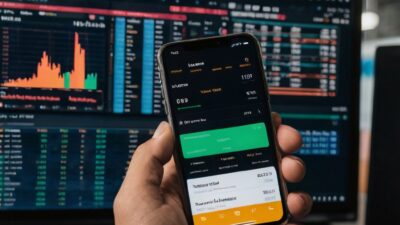


The cryptocurrency market can move at a relatively high rate compared to other financial markets. Prices may fluctuate within minutes, driven not only by technical indicators but also by emotions, online discussions, hype, fear, and news spreading rapidly. It is this emotional aspect of crypto trading that makes sentiment analysis a strategy that is becoming more and more essential in investment (both new and experienced). Effective crypto sentiment analysis software helps traders understand market sentiment and how to respond emotionally, based on online discussions, market movements, search results, and community responses. By understanding traders’ emotional states and potential behaviors, they can minimize the risk of emotionally driven decisions and rely on data-driven insights.
This blog will discuss what sentiment analysis is, why it is necessary given the volatility of cryptocurrency markets, and which tools are most valuable for gaining insights to make more intelligent and consistent trading decisions.
What is Crypto Sentiment Analysis?
Crypto sentiment analysis is the process of measuring public sentiment toward a cryptocurrency, project, or the overall market. It uses data from social media, news, forums, on‑chain activity, and trading behavior to determine whether the crowd is:
- Bullish (positive sentiment)
- Bearish (negative sentiment)
- Neutral (mixed or uncertain)
Think of it as reading the market’s emotional temperature. In crypto, where markets move fast and retail psychology is powerful, sentiment often drives price more than fundamentals. Sentiment analysis typically combines three layers:
- Data Collection: Tools collect large volumes of real‑time information from social platforms such as X, Reddit, Telegram, news websites, Google Trends, and on‑chain activity, including wallet inflows and outflows.
- Natural Language Processing: Once this data is collected, natural language processing (NLP) models analyze the text to determine whether the overall tone is positive, negative, or neutral. For example, enthusiastic posts about a token’s potential are classified as positive, while panic‑driven messages about selling or fear are marked as negative.
- Market Behavior Indicators: Beyond words, sentiment analysis also considers actual market behavior, things like funding rates, exchange inflows, volatility spikes, and the Fear & Greed Index. These indicators help reveal whether traders are acting bullish, bearish, or uncertain, giving a more complete picture of market psychology.
A simple example of sentiment analysis in action is when Bitcoin receives positive news, such as an ETF approval. Headlines turn optimistic, influencers share bullish opinions, Google searches for “Buy Bitcoin” increase, and funding rates rise as traders open long positions. All these signals reflect strong positive sentiment, which often leads to upward price movement.
On the other hand, consider a scenario where a crypto project suffers a major hack. News outlets report the exploit, social media fills with fear and frustration, and on‑chain data shows large amounts of tokens being moved to exchanges. This combination of negative sentiment and defensive behavior typically results in sharp sell‑offs and declining prices.
Why Is Crypto Analysis Important?
Crypto analysis is essential because the market is fast, emotional, and highly reactive to news, hype, and fear. Unlike traditional markets, crypto trades 24/7 and is dominated by retail psychology, which means prices can swing violently in minutes. Without proper analysis, traders often make emotional decisions, buying tops during hype or panic‑selling bottoms during fear. Good analysis acts like a stabilizer: it helps you understand what’s actually happening beneath the noise so you can make decisions based on data, not impulses.
- Navigating Extreme Volatility: Crypto markets move fast and can swing dramatically within minutes. Analysis helps you understand why the price is moving, rather than reacting blindly. It gives structure in a market where emotions often overpower fundamentals.
- Avoiding Emotional Trading: Without analysis, traders fall into classic traps like FOMO buying and panic selling. Data‑driven decisions reduce impulsive reactions to hype, fear, or sudden dips. Analysis acts as a filter, helping you separate real signals from noise.
- Spotting Market Trends Early: Sentiment indicators often shift before prices do. Recognizing early signs of trend reversals helps you position ahead of the crowd. Combining sentiment, technicals, and on‑chain data gives a clearer picture of momentum.
Sentiment plays a powerful role in shaping crypto price movements because the market reacts emotionally long before fundamentals change. When fear takes over, often triggered by negative news, sudden price drops, or panic spreading across social media, traders rush to exchanges and increase sell pressure. This creates a self‑reinforcing cycle in which fear drives more selling, pushing prices even lower.
On the opposite end, hype can drive prices upward just as quickly. Bullish headlines, influencer excitement, or viral posts generate FOMO, spiking retail interest and driving buying pressure. In these moments, prices rise not because the asset’s value changed, but because sentiment shifted.
News events amplify these emotional swings. Positive developments such as ETF approvals, major partnerships, or regulatory clarity can instantly boost confidence and spark rapid pumps. Meanwhile, negative events such as data breaches, lawsuits, or policy crackdowns can trigger sharp declines as uncertainty spreads. In every case, sentiment acts as the spark that ignites market movement, making it one of the most important forces to understand when navigating crypto’s volatility.
The 8 Best Crypto Sentiment Analysis Tools for Traders
Numerous tools help traders understand market psychology, but not all are accurate, reliable, or insightful. Below are eight of the most effective crypto sentiment analysis tools traders use to understand market sentiment and make more successful trading decisions.
1. Fear and Greed Index
One of the most widely used indices for gauging investor sentiment toward the crypto market is the Fear and Greed Index. It aggregates data on social media, volatility, market momentum, and Google search trends to indicate whether the market is in fear or greed. Extreme fear usually means investors are concerned and selling wildly, and in some cases, it can create buying opportunities.
Conversely, excessive greed usually indicates that markets are overbought or about to enter a correction. Traders can gauge the emotional climate by monitoring the index daily and making decisions based on quantified market psychology rather than emotional bias.
2. Bear and Bull Index
The Bear and Bull Index indicates the direction of the crypto market, either toward a bearish or bullish outlook. It examines discussions on forums, news sites, and other social media to learn how investor sentiment is trending overall.
Bullish activity is generally positive when the index signals high confidence and purchasing power. Where bearishness is prevalent, it can indicate market uncertainty, selling pressure, or anticipation of a market decline. Traders rely on this index to verify trends, validate chart patterns, and gain a clear understanding of how the broader market is responding to market events.
3. LunarCrush
LunarCrush is a powerful social intelligence service focused on crypto-related discussions. It examines millions of posts in the platforms and measures community engagement, influencer activity, social volume, and sentiment for more than 3,000 cryptocurrencies.
The Galaxy Score is one of this platform’s best features: the company has combined social and market data into a single predictive score that helps traders identify trending coins before they become popular. LunarCrush is particularly beneficial to altcoin traders, as buzz and hype often start on social platforms well before they appear on price charts.
4. Augmento.ai
Augmento.ai is an artificial intelligence-based sentiment engine that will identify emotion patterns in crypto-related conversations. It applies the latest machine learning models to classify emotions such as fear, optimism, anger, confidence, and uncertainty. Augmento.ai can detect early-stage changes in emotion by analyzing discussions on social networks, forums, and communities, which can serve as indicators of future market trends.
Traders use it to identify when crowds shift toward fear or excitement, which is usually indicative of a powerful price move. Augmento has predictive capabilities, making it one of the more advanced tools for sentiment analysis.
5. Santiment
Santiment is an all-in-one analytics system that integrates sentiment analysis with on-chain analytics to provide traders with a deeper view of market action. It monitors social sentiment, funding rates, community discussions, and FUD patterns, and tracks whale activity, token circulation, and exchange inflows.
The social and technical data presented in Santiment will make it an effective tool for detecting early market indicators and understanding how community behavior correlates with on-chain activity. Several sophisticated traders rely on Santiment’s reversal forecasts and distinguish between market action driven by actual opportunities and purely speculative activity.
6. On-chain Analytics Tools
Glassnode, CryptoQuant, Nansen, and IntoTheBlock will process on-chain analytics data essential to traders, enabling them to interpret sentiment more effectively using blockchain data. In these platforms, wallet activity, whale behavior, token inflows and outflows, network growth, and active addresses are monitored. For example, when whales suddenly increase the volume of tokens transferred to exchanges, it most often signals fear or sell-off expectations.
Conversely, when crypto is moved out of exchanges into large wallets, it would indicate accumulation and long-term confidence. This information on the blockchain, combined with sentiment data on social media, would give traders a view of the market that is not only emotional but also behavioral.
7. StockGeist.ai
StockGeist.ai is a free, open-source tool that provides real-time social sentiment monitoring and can identify discussions about platforms such as Twitter, Telegram, and Reddit. It pays attention to the rapid fluctuations in the volume of debate, emotional swings, either positive or negative, and new trends in the coin.
This tool can be useful for detecting hype early in a project or when it is losing communal interest. StockGeist.ai enables traders to respond quickly to developments on social platforms, where most crypto pumps and dumps originate, and to see what is being discussed in the community at any given time.
8. Google Trends
Google Trends is a straightforward yet powerful sentiment analysis tool that shows the search frequency for specific crypto-related issues. The search interest of a coin tends to rise when it experiences a surge in search interest. A steadily declining search volume may indicate dwindling popularity or a loss of steam.
Technical indicators are usually used with Google Trends to suggest that a wider audience is following a potential market move. For long-term trends, it will provide a clear view of whether interest in Bitcoin, altcoins, or new technologies is growing or declining.
How to Leverage Sentiment Analysis to Improve Your Trading Strategy
Sentiment analysis can be highly effective when used alongside disciplined trading strategies. Sentiment enables traders to spot trend reversals before they appear on charts and to validate technical indicators such as breakout patterns and support and resistance levels. Monitoring sentiment also helps traders refine their timing, entering trades when sentiment shifts are in their early stages and exiting before crowds panic. Sentiment analysis also reinforces emotional discipline by enabling traders to recognize when the market is behaving irrationally, so that when it hypes up, they can avoid the FOMO trap. When it sinks, they can prevent the panic-selling trap. Sentiment analysis, when used regularly, provides a better, more reliable trading experience.
- Spot Early Trend Shifts: Sentiment often changes before price does, making it a powerful early indicator. When social sentiment turns increasingly bullish while price is still consolidating, it can signal that momentum is building beneath the surface. Likewise, when sentiment becomes sharply negative despite stable price action, it may indicate early distribution or weakening demand. Monitoring shifts in funding rates, Google Trends, influencer tone, and community chatter helps you detect these transitions before the crowd reacts.
- Confirm Trading Signals: Sentiment analysis is an excellent confirmation tool for technical setups. For example, if you spot a bullish breakout on the chart but sentiment remains fearful or neutral, the move may lack conviction. On the other hand, if a breakout aligns with rising positive sentiment, increasing open interest, and strong social engagement, the probability of continuation is much higher. Using sentiment as a second layer of confirmation reduces false signals and improves trade quality.
- Time Entries and Exits More Effectively: Sentiment extremes often mark turning points. When fear dominates, negative headlines, social media panic, and heavy inflows of capital may indicate that markets are close to the bottom. This is where patient traders look for entry opportunities. Conversely, when hype peaks, when influencers are overly bullish, retail FOMO is surging, and euphoric sentiment is everywhere, it often signals that a top is forming. Recognizing these emotional extremes helps you enter when others hesitate and exit before the crowd gets trapped.
- Avoid FOMO and Panic Selling: Sentiment analysis acts as a psychological anchor. By understanding the emotional state of the market, you’re less likely to chase pumps or dump during dips. When you see that a sudden price spike is driven purely by hype rather than real demand, you can avoid FOMO entries. Similarly, when fear spreads but on‑chain and technical data remain strong, you are less likely to panic sell. This emotional discipline is one of the key advantages of sentiment analysis.
- Identify News-Driven Opportunities: Crypto reacts quickly to both good and bad news. Sentiment analysis helps you gauge the impact of that news. A positive announcement with strong social traction can create short‑term momentum trades. A negative event with limited sentiment reaction may present a buy‑the‑dip opportunity. Understanding how the market feels about news is just as important as the news itself.
- Build a More Complete Trading Framework: When combined with technical analysis, on‑chain data, and risk management, sentiment becomes a powerful layer in a holistic strategy. It helps you understand not just what the market is doing, but why it is doing it. This deeper context leads to smarter decisions, better timing, and fewer emotional mistakes.
Combining On-Chain Data and Sentiment Analysis for Stronger Trading Decisions
The combination of on-chain data and sentiment analysis is usually the most successful trading strategy. On-chain data shows what investors are up to, whether more or less crypto is flowing in and out of exchanges, whale behaviour, and whether there is an increase or decrease in network activity.
Sentiment analysis reveals investors’ thoughts and feelings. A combination of the two viewpoints provides traders with a complete picture of market behavior. For example, positive sentiment and rising on-chain buying indicate strong upward potential.
On the other hand, bearishness, combined with massive inflows in most cases, can signal forthcoming sell-offs. This two-step strategy can help traders avoid erroneous signals, enhance precision, and make decisions supported by both emotional and structural data.
Impact of AI In Transforming Crypto Sentiment Analysis
AI has significantly elevated sentiment analysis in the crypto market, making it faster, smarter, and far more precise. Traditional sentiment tracking relied on manual review of news, social media posts, and market reactions, a slow and subjective process. AI changes this by using natural language processing (NLP), machine learning, and real‑time data processing to analyze massive amounts of information instantly and objectively.
- NLP: AI‑powered NLP can scan millions of tweets, Reddit threads, Telegram messages, and news articles in seconds. It doesn’t just count positive or negative words; it understands context, sarcasm, urgency, and emotional tone. This allows AI to detect subtle shifts in sentiment long before humans notice them. For example, a sudden rise in anxious language around a token can signal early fear, even if the price hasn’t moved yet.
- Machine Learning: Machine learning models learn from historical data, such as past price movements, sentiment spikes, whale activity, and news reactions. Over time, they identify patterns that humans often miss, such as sentiment patterns that precede major pumps or dumps, repeated influencer behavior before market shifts, early warning signs of coordinated FUD or hype, and correlations between on‑chain activity and social sentiment. These models continuously improve, becoming more accurate as they process more data.
- Real-Time Data Processing: Crypto moves fast, and AI’s ability to process data in real time gives traders a major advantage. AI can instantly detect breaking news, whale movements, sudden spikes in social chatter, shifts in funding rates, and rapid changes in sentiment polarity. This speed allows traders to react within seconds rather than minutes or hours, often the difference between catching a move early and missing it entirely.
AI reduces human bias and emotional interpretation. It evaluates sentiment objectively, using data rather than assumptions. It spots micro‑changes in sentiment that humans overlook, the kind of subtle signals that often precede major price moves. Because AI processes data in real time, traders can act on sentiment shifts before the broader market reacts. AI alerts traders to rising fear, excessive hype, or abnormal activity, helping them avoid FOMO entries and panic exits.
AI doesn’t replace human judgment; it enhances it. By combining AI‑driven sentiment insights with technical analysis and on‑chain data, traders gain a powerful edge in navigating crypto’s volatility.
Conclusion
Crypto markets move fast, and understanding sentiment, on‑chain behavior, and market psychology gives traders a real edge in navigating that constant volatility. When you combine data‑driven insights with emotional discipline, you make smarter decisions, avoid common traps, and position yourself ahead of major moves instead of reacting to them. The more you learn how these signals work together, the more confident and consistent your trading becomes.
If you enjoy learning in a fun, practical, and community‑driven way, Dypto Crypto is the perfect place to grow. Join us to explore real examples, sharpen your skills, and stay ahead of the market with insights that actually make sense.
Frequently Asked Questions
Does sentiment analysis forecast crypto price movements?
Sentiment analysis cannot provide certainty about price movements, but it can give strong initial signals that often precede significant price movements. It is a formidable trend-finding indicator when used alongside technical and on-chain data.
What is the data that sentiment tools are analyzing?
The majority of sentiment tools examine social media chatter, crypto news stories, investor forums, search engine rankings, trading reactions, and, in some cases, on-chain activity to identify the emotional color of the market.
Is it worth it to use paid sentiment tools?
The use of paid tools is typically more insightful, wide-ranging, and precise in detecting emotions. For active traders and long-term investors, the investment can easily be justified, as it enhances decision-making and timing.
Disclaimer
This article is for educational and information purposes, and should not be considered financial advice. For more information visit our disclaimer page
About the Author