


Imagine turning your idle crypto into a steady stream of passive income, without selling a single coin. That’s the power of crypto lending, where you can put your digital assets to work and earn attractive returns. Whether you prefer the simplicity and oversight of CeFi platforms or the autonomy and higher yields of DeFi protocols, there’s an option tailored to your goals and risk profile.
In this blog, we will explore the safest and most rewarding platforms to help you maximize earnings while staying in control of your strategy.
What is Crypto Lending?
Crypto lending is when you deposit your cryptocurrency (such as Bitcoin, Ethereum, or stablecoins) with a platform that lends it to borrowers. In return, you earn interest, as in a traditional savings account. Borrowers use their crypto as collateral to secure loans, often in stablecoins or fiat currencies, without selling their assets.
There are two types of crypto lending.
- CeFi (Centralized Finance): Platforms such as Nexo and BlockFi manage the lending process. They act like banks: you trust them to hold your crypto and pay you interest. It is easier for beginners, but it requires trust in the company.
- DeFi (Decentralized Finance): Protocols such as Aave and Compound operate on smart contracts. There is no intermediary, as everything is automated on the blockchain. You retain more control, but it requires technical expertise and entails risks associated with smart contracts.
Crypto lending is gaining popularity because it allows long-term holders to earn passive income without selling their assets, while borrowers can access liquidity by using their crypto as collateral. This means investors can keep exposure to potential price growth while still unlocking value from their holdings.
The flexibility of lending with both major cryptocurrencies and stablecoins makes it attractive to a wide range of users, from casual investors to active traders. As the crypto market matures, more people are turning to lending to maximize returns and participate in the broader financial ecosystem.
Keep the following risks in mind when closing your crypto account.
- Platform risk: Centralized platforms can fail or freeze withdrawals.
- Smart contract risk: Bugs or exploits in DeFi protocols can cause losses.
- Market volatility: Collateral can drop in value, leading to liquidation.
In short, crypto lending is like earning interest on your digital money. You can do it through CeFi (trusted companies) or DeFi (blockchain protocols). It is popular for its passive income and liquidity, but it is important to understand the risks before investing.
How Does Crypto Lending Work?
Here is a clear beginner-friendly breakdown of how crypto lending works behind the scenes.
- Depositing Crypto (Lender’s Role): Lenders deposit their crypto (such as Bitcoin, Ethereum, or stablecoins) into a lending platform or protocol. This crypto is pooled together and made available for borrowers.
- Locking Collateral (Borrower’s Role): Borrowers deposit their own crypto as collateral (often more than the loan amount). This protects lenders: if the borrower defaults, the collateral can be liquidated.
- Interest Generation (Platform/Protocol Role): Borrowers pay interest on the loan. That interest is distributed to lenders as earnings, much as banks pay savings account holders. Rates vary depending on supply and demand for each asset.
- Repayment Terms: Borrowers must repay the loan, including interest, within the agreed timeframe. Once repayment is complete, their collateral is unlocked and returned. If the collateral’s value declines significantly, the platform may liquidate it to protect lenders.
In crypto lending, each participant plays a distinct role. Lenders are investors who supply their cryptocurrency to earn passive income. At the same time, borrowers are individuals or businesses that lock up their own crypto as collateral to access funds without selling their holdings.
The platform or smart contract acts as the middle layer, ensuring that the process runs smoothly by enforcing rules, managing collateral, and distributing interest payments. Together, these roles create a system in which lenders can generate returns, borrowers can gain liquidity, and platforms or protocols maintain trust and security in transactions.
CeFi vs. DeFi Lending: The Difference Between the Two
CeFi (Centralized Finance) and DeFi (Decentralized Finance) lending differ mainly in who controls your funds, how secure they are, and the level of responsibility you assume. CeFi feels more like traditional banking, while DeFi gives you full control but also full responsibility.
| Feature | CeFi (Centralized Finance) | DeFi (Decentralized Finance) |
| Control | Managed by a company or exchange, you trust them to handle funds | Controlled by smart contracts, you interact directly with blockchain code |
| Custody of Assets | The platform holds your crypto in custodial wallets | You keep custody in non-custodial wallets; funds are locked in smart contracts |
| Regulation & Oversight | Often regulated, with compliance requirements | Largely unregulated, it operates outside traditional financial systems |
| KYC (Know Your Customer) | Mandatory identity verification (passport, ID, etc.) | Usually, no KYC; anyone with a wallet can participate |
| Yields & Returns | Generally stable but lower; influenced by company policies | Often higher yields, but fluctuate with supply/demand and market conditions |
| User Responsibility | The platform manages risks, security, and liquidations | Users must manage wallets, understand smart contracts, and accept risks of hacks or bugs |
CeFi Lending is better for beginners or those who prefer a familiar, bank-like experience. You don’t need deep technical knowledge, but you must trust the company with your funds.
DeFi Lending suits experienced crypto users who value independence and higher yields. It offers more freedom but requires careful risk management, since you’re responsible for your own security and understanding of protocols.
8 Best Crypto Lending Platforms for the Highest Returns
Crypto lending platforms allow you to earn interest on your digital assets or borrow against them. Some are centralized (CeFi), offering convenience and regulation, while others are decentralized (DeFi), giving you more control and potentially higher yields. Below are 8 notable platforms explained.
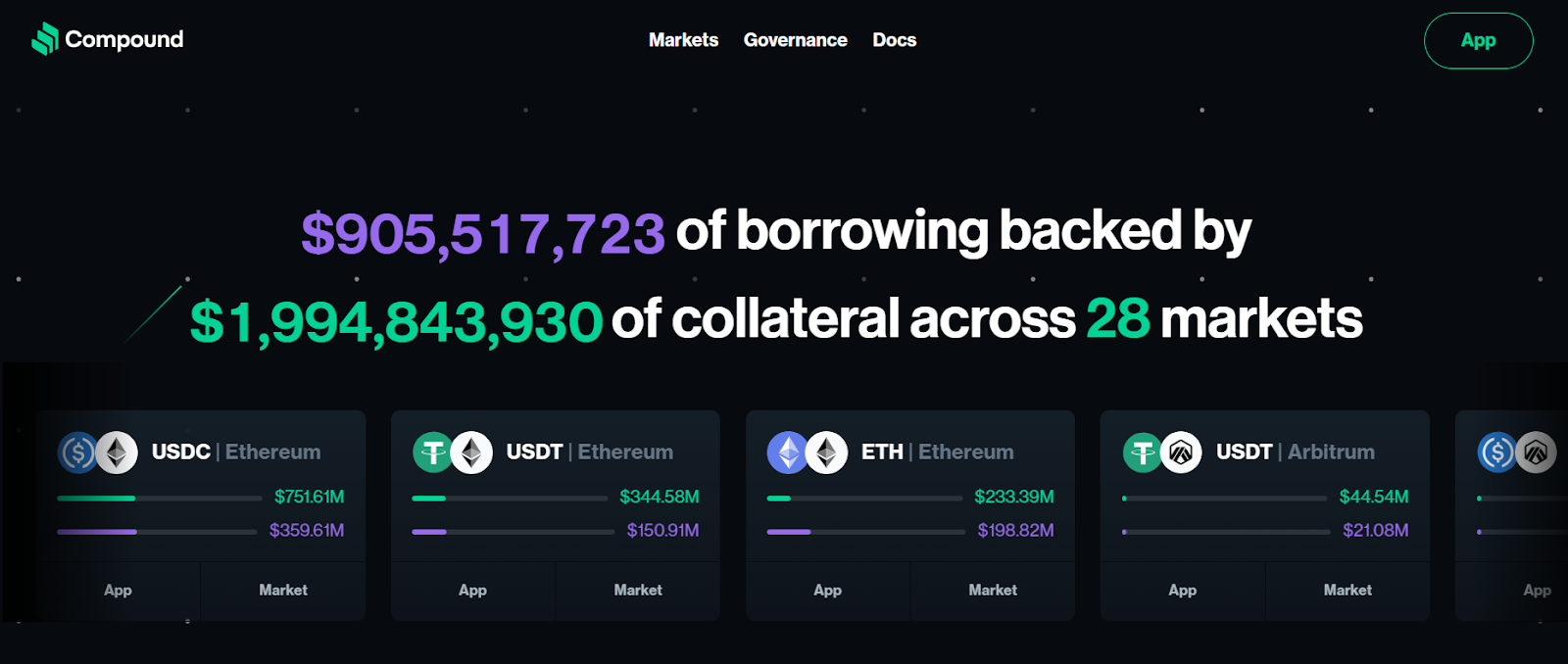
1. Compound
Type: DeFi
Best for: DeFi users comfortable with wallets, gas fees, and variable on-chain interest.
Key features:
- How it works: Algorithmic money market on Ethereum (and some L2s), with supply/borrow rates set by smart contracts based on utilization.
- Assets and tokens: Supports assets like ETH, stablecoins, and select ERC‑20s; depositors receive cTokens that accrue interest automatically.
- UX: Non-custodial; connect through wallets (e.g., MetaMask). Interfaces such as Compound’s app and third-party dashboards simplify management.
- Risks: Smart contract risk, oracle volatility, borrower liquidation risk, and variable yields driven by market demand.
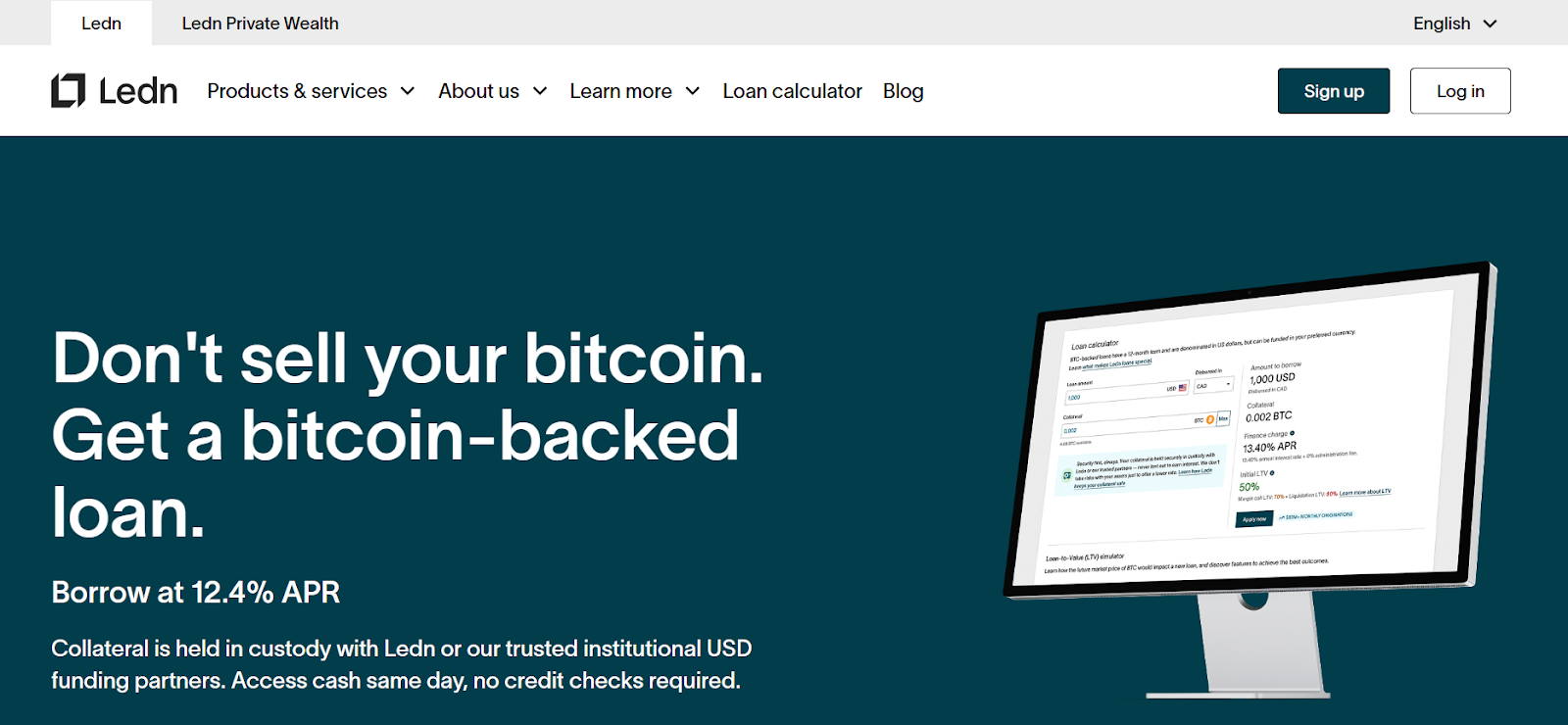
2. Ledn
Type: CeFi
Best for: Bitcoin-first users seeking straightforward interest accounts and BTC-backed loans.
Key features:
- Products: BTC and stablecoin savings, BTC/USDC loans, and mortgage-style products tailored to crypto holders.
- Custody and audits: Custodial service with periodic proof‑of‑reserves attestations aimed at transparency.
- KYC and coverage: Full KYC/AML for account creation; geographic availability can vary.
- UX: Clean mobile/web experience with clear LTVs and terms; yields are policy‑driven and may change with market conditions.
- Risks: Counterparty/platform risks, jurisdiction-specific regulatory changes, and rate adjustments that impact returns.
3. YouHodler

Type: CeFi
Best for: High‑yield seekers who want a broad asset list and simple borrowing.
Key features:
- Products: Interest accounts for many coins and stablecoins; crypto‑collateralized loans with flexible LTVs; basic trading tools.
- Custody and compliance: Custodial model with KYC; claims of multi‑jurisdiction registrations, but always verify your country’s eligibility.
- UX: Beginner-friendly app and web platform; quick deposit/withdraw flows and portfolio views.
- Risks: Elevated yield often implies higher platform/counterparty risk; terms and supported assets can change rapidly.
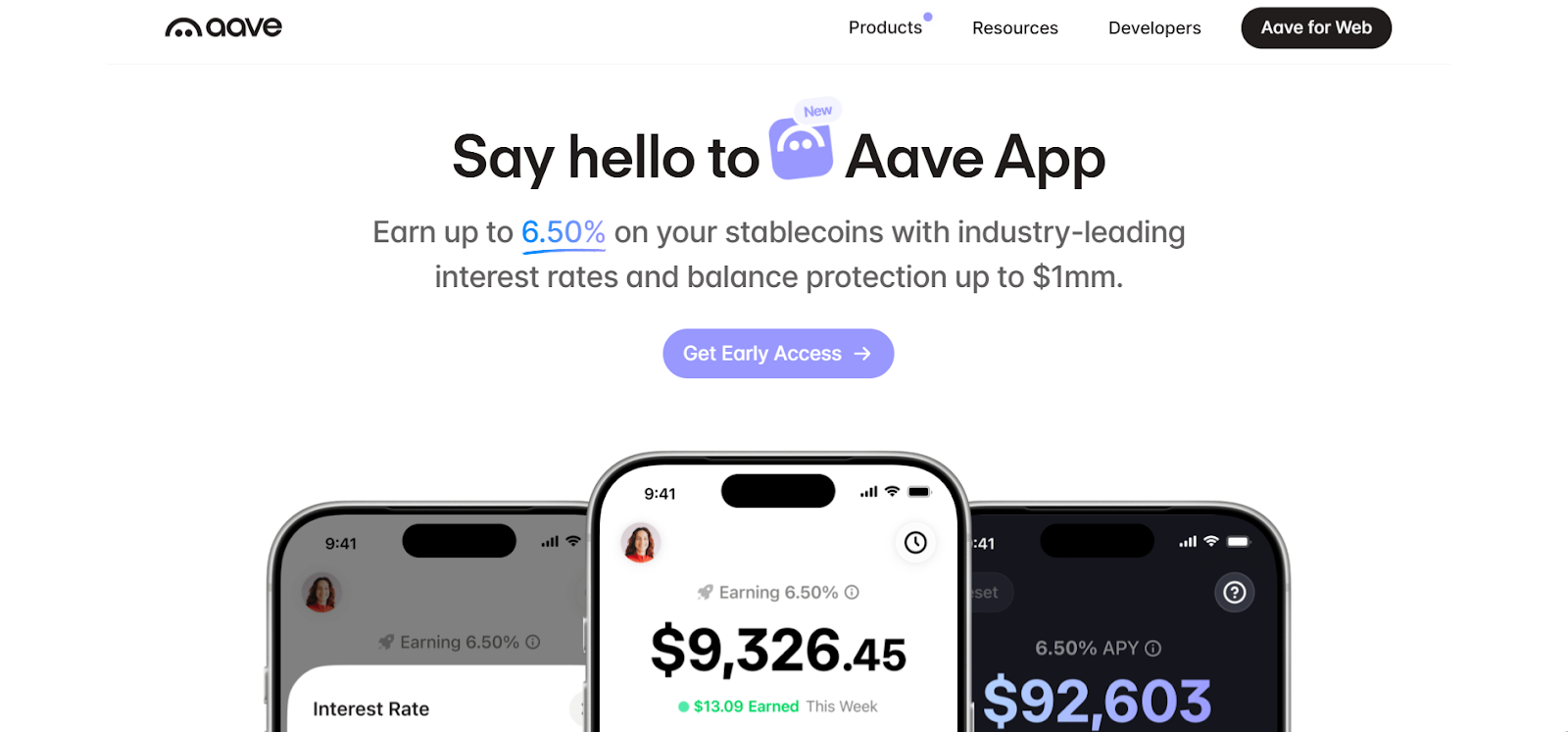
4. Aave
Type: DeFi
Best for: DeFi users wanting non‑custodial lending with robust governance and broad asset support.
Key features:
- How it works: Liquidity pools across Ethereum and multiple chains; depositors earn variable interest; borrowers post collateral and can use features like stable/variable rates.
- Asset support: Wide range of major tokens and stablecoins, curated per deployment and risk framework.
- Governance and safety: Decentralized governance via AAVE token; risk parameters, isolation mode, and caps aim to reduce systemic exposure.
- Risks: Smart contract and oracle risk, liquidation upon collateral drawdown, and chain‑specific considerations (bridges, L2s).
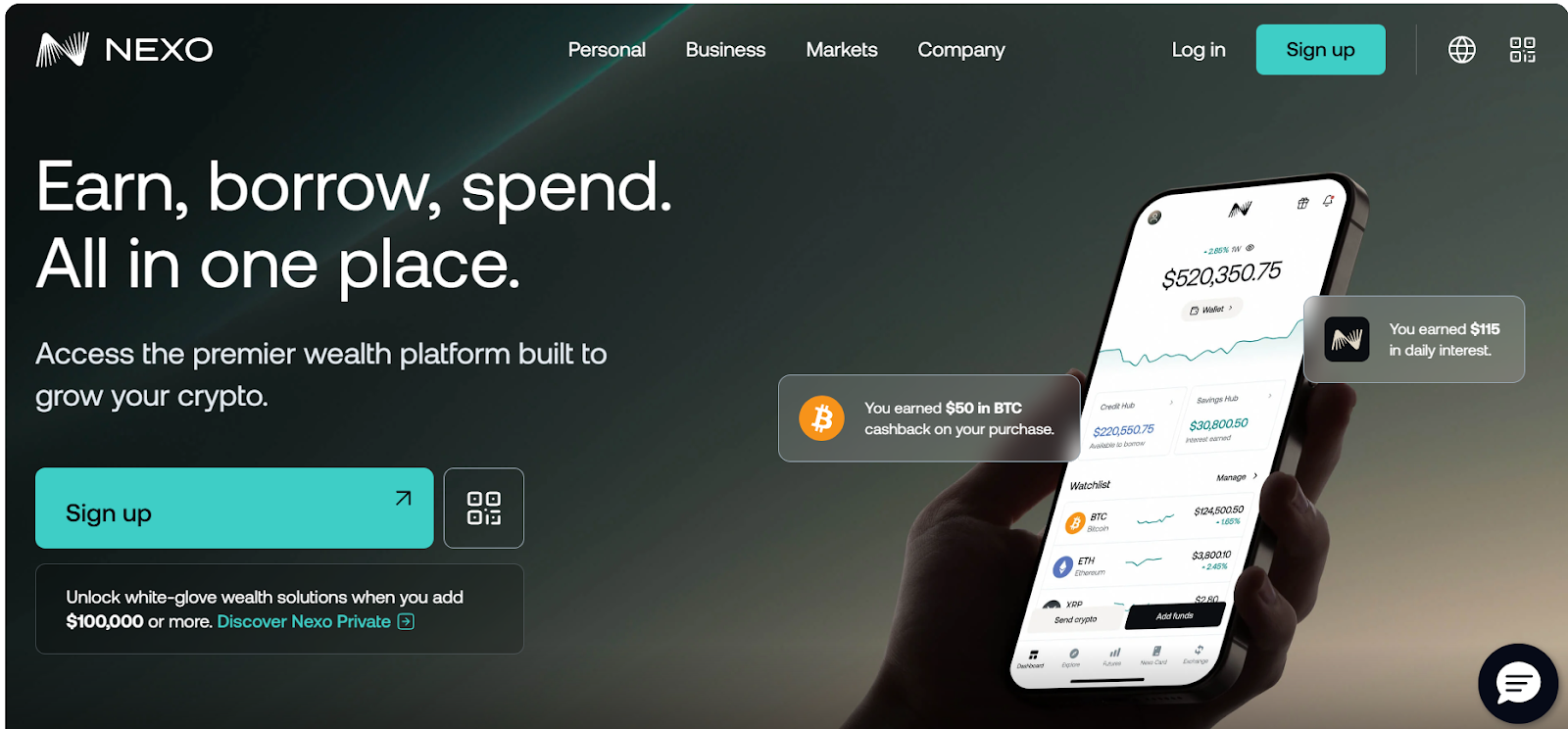
5. Nexo
Type: CeFi
Best for: Beginners and intermediate users who want a familiar fintech experience with extra perks.
Key features:
- Products: Interest accounts, crypto‑backed loans, exchange, card, and portfolio tooling in a single app.
- Custody and KYC: Custodial accounts with identity verification; compliance standards vary by region.
- Yield mechanics: Rates depend on asset type, loyalty tiers, and promotional campaigns; stablecoins often feature headline APYs.
- Risks: Platform risk, changes in terms/tiers, and regulatory shifts that affect availability or yields.
6. Unchained Capital

Type: CeFi (Bitcoin‑focused, collaborative custody)
Best for: Security‑conscious BTC holders and businesses that prioritize multisig control.
Key features:
- Custody design: Collaborative 2‑of‑3 multisig vaults as clients retain keys alongside Unchained, improving self‑custody assurances.
- Loans: BTC‑backed loans with conservative LTVs, tailored underwriting, and clear collateral management.
- UX and services: Emphasis on security education, key management, and enterprise‑grade processes; geographic limitations may apply.
- Risks: Counterparty risk remains; borrowers face liquidation risk in the event of price declines; operational responsibility for key security.
7. Coinbase
Type: CeFi with selective DeFi integrations
Best for: Newer users who want a reputable onboarding experience, a simple UX, and selective lending/borrowing features.
Key features:
- Products: Historically offered staking/earn programs and limited borrowing against certain assets; availability varies by region and regulation.
- Custody and compliance: Fully custodial with strict KYC/AML and a strong security track record.
- UX: Highly polished mobile/web app; easy fiat on/off ramps and portfolio management.
- Risks: Program availability can change quickly due to regulation; yields and supported assets are policy‑dependent.
8. Alchemix
Type: DeFi
Best for: DeFi users seeking “self‑repaying” loans that harvest yield to cover principal over time.
Key features:
- How it works: Deposit collateral (often stablecoins) into yield strategies; borrow synthetic assets up to a set cap as yield auto‑repays your debt.
- Liquidation design: Structured to minimize liquidations on supported strategies; borrowing capacity is conservative to preserve safety.
- UX: Non‑custodial; connect via wallets; requires understanding of yield sources and protocol mechanics.
- Risks: Strategy/yield risk, smart contract risk, peg/oracle issues for synthetic assets, and protocol parameter changes.
How to Evaluate Crypto Lending Platforms: Key Factors to Consider
Evaluating a crypto lending platform means balancing your appetite for risk, the type of platform you prefer, the assets you want to lend or borrow, the yields offered, the lock-up terms, regulatory requirements, and the overall user experience. CeFi offers convenience and oversight, while DeFi provides autonomy and potentially higher returns. The right choice depends on your personal goals and comfort level with technology.
Choosing the right crypto lending platform can make the difference between safe passive income and unnecessary risk. Here is a structured guide to help you evaluate platforms before committing your assets.
Risk Tolerance
When choosing a crypto lending platform, the first consideration is your risk tolerance. If you are comfortable with higher risk, explore decentralized finance (DeFi) protocols, which often offer higher yields but also carry risks such as smart contract vulnerabilities and market volatility.
On the other hand, if you prefer lower risk, centralized finance (CeFi) platforms may feel safer, as they are regulated and sometimes offer insurance, though they still carry counterparty risk. A good rule of thumb is to diversify across multiple platforms rather than putting all your assets in one place.
Platform Type
Another important consideration is the type of platform you want to use. CeFi platforms operate like traditional fintech companies, managing asset custody and handling compliance requirements. They are easier for beginners but require you to trust the company with your funds.
DeFi platforms, by contrast, are non-custodial and run entirely on smart contracts. They give you greater control and transparency but require technical knowledge and personal responsibility.
Supported Assets
You should also review the platform’s supported assets. Some services focus primarily on Bitcoin and Ethereum, while others offer lending and borrowing for stablecoins or niche tokens. Stablecoins are often preferred for predictable yields, whereas volatile assets can offer higher returns but carry greater risk.
APY Rates
The APY rates offered are another key factor. CeFi platforms typically set their own interest rates, which are generally more stable but lower than those of centralized exchanges. DeFi platforms, however, use algorithmic models where rates fluctuate based on supply and demand in liquidity pools. While high APYs can be attractive, extremely high rates may signal unsustainable practices, so it’s wise to approach them with caution.
Lock-Up Terms
You’ll also need to consider the lock-up terms. Some platforms allow flexible withdrawals at any time, though they usually offer lower yields. Others require fixed lock-up periods, offering higher returns but restricting access to your funds for weeks or months. It’s important to match these terms with your liquidity needs so you don’t lock away assets you might need urgently.
KYC Requirements
Another factor is KYC requirements. CeFi platforms almost always require identity verification, such as providing a passport or government-issued ID, which adds regulatory protection but reduces anonymity. DeFi platforms generally do not require KYC, allowing anyone with a wallet to participate, which appeals to users who value privacy but may limit legal protections.
User Experience
Finally, the user experience can make or break your decision. CeFi platforms often offer polished mobile apps and web dashboards, along with customer support, making them beginner-friendly. DeFi platforms rely on wallet integrations and decentralized applications, which are more complex but offer transparency and autonomy. Beginners should prioritize intuitive platforms, while advanced users may prefer customizable DeFi dashboards that offer greater control.
Understanding the Risks Associated with Crypto Lending
Crypto lending can be an attractive way to earn passive income or access liquidity without selling your assets. Still, it comes with significant risks that every user should understand before participating.
- Platform Insolvency: Centralized lending platforms (CeFi) hold custody of your assets, which means you rely on the company’s solvency. If the platform mismanages funds, faces liquidity issues, or goes bankrupt, as seen with Celsius and CoinLoan, users may lose access to their deposits. This highlights the importance of researching a platform’s financial health, transparency, and history before trusting it with your crypto.
- Smart Contract Exploits: In decentralized lending (DeFi), funds are managed by smart contracts. While these eliminate the need for intermediaries, they are vulnerable to coding bugs, exploits, or malicious attacks. A single vulnerability can drain liquidity pools, resulting in losses for lenders and borrowers. Always check whether a protocol has undergone reputable security audits and consider the risks of interacting with unaudited contracts.
- Market Volatility: Crypto assets are highly volatile, and sudden price swings can impact both lenders and borrowers. For borrowers, a sharp drop in collateral value can trigger liquidation. For lenders, volatility can reduce loan demand or destabilize interest rates. Using stablecoins for lending can reduce exposure to extreme price fluctuations, but risks remain.
- Collateral Liquidation: Borrowers must secure loans with collateral. If the value of that collateral falls below a certain threshold, the platform automatically liquidates it to protect lenders. This can result in borrowers losing their assets at unfavorable prices. Understanding loan-to-value (LTV) ratios and maintaining healthy collateral buffers is essential to avoid forced liquidations.
- Regulatory Uncertainty: Crypto lending operates in a rapidly evolving regulatory environment. Governments are increasingly scrutinizing lending platforms, and sudden policy changes can restrict services, freeze accounts, or render certain products illegal. CeFi platforms are more exposed to regulatory crackdowns, while DeFi protocols face the risk of indirect restrictions or targeted enforcement.
The key to navigating these risks is due diligence and risk management. Research platforms thoroughly, diversify across multiple services, avoid chasing unsustainably high yields, and only lend assets you can afford to lose. For borrowers, maintain conservative collateral ratios and monitor market conditions closely. Whether you choose CeFi or DeFi, understanding the risks upfront helps protect your capital and ensures you use crypto lending responsibly.
Tips to Maximize Your Crypto Lending Earnings
Maximizing returns from crypto lending isn’t just about chasing the highest APY; it is about balancing yield with safety and smart portfolio management. Here are practical strategies explained in detail:
- Diversify Across Platforms: Instead of committing all your assets to a single platform, spread them across multiple CeFi and DeFi services. This reduces exposure to platform insolvency or smart contract risks. For example, keep part of your stablecoins on a CeFi platform with insurance coverage and another portion in a DeFi protocol that offers higher yields. Diversification ensures that even if one platform faces issues, your entire portfolio isn’t compromised.
- Compare APYs Regularly: Interest rates in crypto lending are dynamic and can change quickly with shifts in supply and demand. CeFi platforms adjust their policies, while DeFi protocols automatically rebalance rates through smart contracts. By regularly checking APYs across platforms, you can move funds to where they earn the most without locking in outdated rates. Think of it as shopping around for the best savings account, but in the crypto world.
- Rebalance Assets: Crypto markets are volatile, and your portfolio can drift away from your intended allocation. Periodically rebalancing, such as shifting profits from volatile assets into stablecoins or redistributing between platforms, helps maintain your risk profile. Rebalancing also allows you to capture gains and reinvest them into safer or higher-yielding opportunities.
- Use Stablecoins for Lower Risk: Stablecoins such as USDC, USDT, and DAI are pegged to fiat currencies and generally offer more predictable yields. Lending stablecoins reduces exposure to extreme price swings compared with assets such as Bitcoin or Ethereum. While the APYs may be lower, the stability makes them ideal for conservative investors or those seeking steady passive income.
- Track Fees and Lock-Up Periods: High yields can be eroded by hidden fees or restrictive lock-up terms. Some platforms charge withdrawal fees, while others require you to lock assets for weeks or months to access premium APYs. Always read the fine print and match lock-up periods with your liquidity needs. Tracking these details ensures you don’t lose flexibility or pay unnecessary costs that eat into your earnings.
To maximize crypto lending earnings, combine smart diversification, active monitoring of APYs, disciplined rebalancing, and a preference for stablecoins when seeking lower risk. Always account for fees and lock-up terms so your returns remain both profitable and accessible.
How Crypto Lending Compares to Staking and Yield Farming
Crypto lending, staking, and yield farming are all ways to earn passive income from your crypto, but they differ in risk, returns, complexity, liquidity, and accessibility. Lending is more straightforward, staking is relatively safe and predictable, while yield farming is complex but potentially the most rewarding.
Risk
Crypto lending carries moderate risk depending on whether you use a centralized (CeFi) or decentralized (DeFi) platform. CeFi platforms expose you to the possibility of insolvency, while DeFi protocols can suffer from smart contract exploits. Borrowers also face the risk of collateral liquidation if asset prices fall.
Staking is generally considered lower risk because you are simply locking tokens to help secure a blockchain, though slashing penalties and token price volatility can still affect your returns. Yield farming is the riskiest option, as it often involves multiple smart contracts, exposure to volatile tokens, and the possibility of impermanent loss in liquidity pools.
Returns
Crypto lending typically offers steady interest rates, often ranging between 4–12% APY, depending on the asset and platform. Staking offers predictable returns tied to network inflation and validator rewards, typically 5–15% APY.
Yield farming, on the other hand, can deliver extremely high returns, sometimes exceeding 20–100% APY, but these yields are often short-lived and come with significant risk.
Complexity
Crypto lending is the simplest of the three methods, especially on CeFi platforms, where you only need to deposit assets to start earning interest. Staking requires a more technical setup, such as choosing validators and locking tokens, though many exchanges now make it easy for beginners.
Yield farming is the most complex, involving liquidity pools, token swaps, and constant monitoring of multiple protocols. It demands a deeper understanding of DeFi mechanics and active management.
Liquidity
Liquidity in crypto lending depends on the platform’s lock-up terms. Some services allow flexible withdrawals, while others require fixed periods to access higher yields. Staking usually involves locking tokens for a set duration, such as 21 days on Ethereum, which reduces liquidity.
Yield farming can offer high liquidity if pools allow quick withdrawals, but impermanent loss can reduce the actual value of your holdings even if you withdraw at any time.
Accessibility
Crypto lending is widely accessible through both CeFi apps and DeFi protocols. CeFi platforms require KYC verification, while DeFi platforms allow anyone with a wallet to participate. Staking is also easy to access, especially through exchanges or wallets, though it requires holding specific tokens. Yield farming is technically accessible to anyone with a DeFi wallet, but its complexity makes it better suited for experienced users who can manage the risks.
Which One Fits Your Goals?
For beginners or conservative investors, crypto lending and staking are better choices because they offer predictable returns and simpler processes.
Staking is particularly appealing to those who believe in the long-term value of a blockchain and want to support its security while earning rewards.
Yield farming is best suited for advanced, risk-tolerant users who are comfortable with complex DeFi strategies and willing to actively manage their positions for potentially high returns.
Level Up Your Crypto Earning Skills With Dypto Crypto
If you are serious about growing your crypto knowledge and maximizing your earning potential, Dypto Crypto is the perfect place to start. It’s not just another learning hub; it is a fun, engaging platform designed for both beginners and seasoned enthusiasts who want to sharpen their skills in lending, staking, yield farming, and beyond.
Dypto Crypto makes complex topics like wallet security, DeFi protocols, and trading strategies easy to understand. With step‑by‑step guides and practical examples, you will quickly move from theory to action. Whether you are exploring passive income options or advanced yield strategies, the platform helps you build confidence in every aspect of crypto.
One of Dypto Crypto’s key strengths is its community-driven approach. You are not learning in isolation; you are part of a vibrant network of crypto learners, traders, and builders worldwide. The community shares insights, reviews platforms, debates strategies, and supports each other in navigating the fast-changing crypto landscape. This collective wisdom makes learning more dynamic and trustworthy.
Dypto Crypto is all about leveling up your earning skills while connecting with a supportive global community. If you want to grow smarter, safer, and more strategic in crypto, this is where you will find the tools and people to help you succeed.
FAQs (Frequently Asked Questions)
Is crypto lending safe?
Crypto lending is not entirely safe as it carries risks like platform insolvency, smart contract exploits, market volatility, and collateral liquidation. CeFi platforms require trust in the company, while DeFi protocols rely on code that can be vulnerable. With proper due diligence, diversification, and conservative strategies, you can reduce risks, but it’s never risk‑free.
How much can you earn from crypto lending?
Earnings from crypto lending vary depending on the platform, asset, and market conditions. Typically, returns range from 4–12% APY on major coins and stablecoins, with some DeFi protocols offering higher but riskier yields. CeFi platforms typically offer more stable rates, whereas DeFi rates fluctuate with supply and demand. Always balance potential earnings with the risks involved.
Is KYC mandatory for lending crypto?
KYC is not always mandatory for crypto lending, as it depends on the type of platform. CeFi platforms almost always require identity verification to comply with regulations, so you will need to provide documents such as an ID or passport. DeFi protocols, however, usually don’t require KYC, allowing anyone with a wallet to participate. The choice comes down to whether you prefer regulatory protection or anonymity.
What happens if my collateral value drops?
If your collateral value drops below the required threshold, the platform may trigger liquidation to protect lenders. This means part or all of your collateral could be sold to repay the loan. Borrowers often lose assets at unfavorable prices, so maintaining a healthy collateral buffer is essential to avoid forced liquidation.
Are crypto lending platforms regulated?
Regulation of crypto lending platforms varies widely by region and platform type. CeFi platforms are often subject to financial regulations that require KYC and compliance with local laws. DeFi protocols, however, typically operate without direct regulation, relying on smart contracts and community governance. Because rules are evolving quickly, users should always check the legal status of a platform in their jurisdiction before participating.
Disclaimer
This article is for educational and information purposes, and should not be considered financial advice. For more information visit our disclaimer page
About the Author