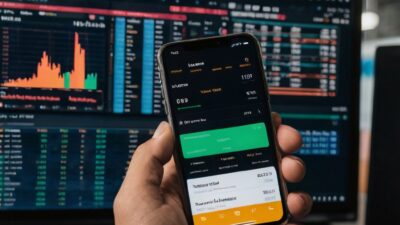


Have you ever thought about how some traders can easily catch every market move while you are sleeping? Or the fact that they can flawlessly execute dozens of trades without ever breaking a sweat? Well, the secret weapon is trading bots!
So, what are these trading bots?
These are automated programs that are quietly taking over the crypto trading space. The bots operate 24/7, scanning markets, executing strategies, and making split-second decisions faster than any human. Some traders actually swear by them, no matter what. Though others have lost money trusting them blindly.
That’s because some people do not understand that trading bots are not magic money machines. They are actually sophisticated tools that need a proper setup, constant monitoring, and very realistic expectations. This article will pull back the curtain on how they actually work, from connecting to market data to executing trades and managing risk.
What is a Crypto Trading Bot?
Let’s start simple. A crypto trading bot is software that automatically buys and sells cryptocurrency for you based on the rules you have set or the AI algorithms it runs.
Think of it like a tireless assistant that watches the crypto markets constantly and executes trades according to your strategy without you lifting a finger. While you’re sleeping, working, or binge-watching Netflix, the bot is working.
You tell it what strategy to follow (maybe buy when Bitcoin dips 5%, or sell when Ethereum hits a target price) and the bot does exactly that—no emotions, no second-guessing, just executing the plan.
Why are these getting popular? The crypto market never sleeps. It’s open 24/7/365, and prices can swing dramatically at 3 AM when you’re unconscious. Bots solve this by being constantly alert, ready to capitalize on opportunities whenever they appear.
How Crypto Trading Bots Work
Let us break down what actually happens when a trading bot operates. It’s not magic, but rather a systematic process that happens at lightning-fast speeds.
Connecting to Market Data
Before a trading bot can do anything, it needs information. Firstly, it connects to the crypto exchanges through APIs to get live market data like prices, trading volume, and order book details. Some even track the market mood from news or social media. The bot constantly refreshes this data, watching prices move and spotting big buy or sell orders that could hint at changes.
Moreover, many bots also link to multiple exchanges to find price gaps. For instance, if Bitcoin is $95,000 on one exchange and $95,400 on another, then that means there is a big arbitrage opportunity. Some use data aggregators to even see the whole market at once. The faster and more accurate the data, the better it is. Because after all, in crypto, even a few seconds of delay can mean missing the trade
Applying Strategy Logic
Once the bot has all the data, it can start making all the decisions. And this is when the strategy part kicks in. For rule-based bots, it follows simple instructions such as. “If the 50-day moving average goes above the 200-day one, you should buy.”
Moreover, it constantly checks the data and only acts when the conditions are met. AI-powered bots also go a step further! They use machine learning to spot complex patterns across hundreds of factors, such as market sentiment, trading volume, as well as time trends.
Then, the bot asks itself, “Should I make a move right now?” It also checks your risk settings, so it will not buy if you have hit your limit or the market is too volatile. Advanced bots can even mix in multiple strategies, balancing their signals to make smarter decisions. Plus, all of this happens in milliseconds! Meaning it is way faster than any human could react.
Generating Buy/Sell Signals
After analyzing the data and applying strategy logic, the bot will now generate clear buy or sell signals.
A signal is basically the bot making a decision: “I should buy 0.1 BTC now” or “I should sell all my ETH holdings.”
How does it create these signals? Well, it does so by the indicators and rules that you have defined. Common indicators include:
- Moving averages that smooth out price data to show trends
- The RSI (Relative Strength Index) shows if an asset is overbought or oversold
- MACD (Moving Average Convergence Divergence), which identifies momentum shifts
- Bollinger Bands that measure volatility and potential breakouts
- Volume indicators that show buying or selling pressure
The bot combines the indicators based on the strategy you have chosen. For example, if the RSI falls below 30 and the trading volume also increases, it may trigger a buy signal. AI bots handle this differently because they use machine learning to spot the patterns that often come before the pesky price changes.. Each signal includes details such as how much to trade, what price to target, and whether to execute immediately or wait for a specific price. However, not every signal leads to a trade. The bot can cancel it if the market changes or if the trade seems too risky.
Executing Trades Automatically
This is the stage where the bot actually takes action and places trades on the exchange. It connects through an API and automatically sends order instructions without you having to do anything. The exchange then processes the order and confirms whether it was completed.
Bots can place different types of orders: market orders that execute instantly at the current price, limit orders that wait for a specific price, stop-loss orders to cut losses, and take-profit orders to secure gains. Speed is crucial here because crypto prices can move fast. A bot can spot a signal, place an order, and complete it before you can even open the app.
It also handles issues like partial fills or slippage, adjusting its actions to keep things on track. Some advanced bots even split large trades across multiple exchanges or smaller chunks to get better prices. Once the trade is placed, the bot continues to monitor it, checking if it is filled and recording all the details for later analysis.
Managing Risk in Real Time
This is the less exciting but most important part, the stuff that keeps your account safe. Even the best trading strategies lose sometimes, and risk management decides whether those losses stay small or wipe you out.
Bots handle this automatically. They use stop-losses to close trades that move against you, preventing small losses from becoming big ones. Position sizing limits how much money goes into each trade, usually just a few percent of your total capital. Trade limits stop overtrading by capping the number of trades or pausing after a bad day. Volatility filters can pause trading when the market gets too wild. And diversification spreads your risk across multiple coins or strategies instead of putting everything into one.
All of this happens in real time without emotions getting in the way. If Bitcoin suddenly drops 5%, your bot reacts instantly and cuts losses while you stay calm. That’s one of the biggest advantages of bots: they follow the plan perfectly, every single time.
Tracking Performance & Making Adjustments
The bot does not just trade and move on; it keeps track of everything. It logs each trade’s entry, exit, profit/loss, and different conditions. It actually creates a full performance record. Most of the bots have dashboards that show stats like profit over time, the win rate, the average gains and losses, and performance by strategy or market type.
Basically, this data helps you spot what is actually working and what isn’t. Maybe the bot is doing great in trending markets, but struggles when the prices move sideways! Luckily, you can always tweak settings to fix that issue. Some bots stick to one particular strategy until you change it. However, there are smarter ones that can adjust automatically using machine learning technology.
It’s really important to review the performance regularly because the market conditions are always changing. A strategy that is doing well in a bull run may fail in a bear market. The best analogy is that of maintaining a car. The bot drives the car, but you still need to constantly check in and tune it. Plus, you need to keep updating it to keep it running smoothly.
Common Strategies Used by Crypto Trading Bots
Not all bots are built the same! They all trade differently. Each strategy fits the different markets and caters to the unique risk levels.
Here are the most common strategies that are used.
Trend-Following
The bot actually rides the momentum by buying when the prices trend up and selling when they trend down. There are indicators used, such as moving averages or momentum oscillators to spot direction. It works best in strong bull or bear markets. But this strategy struggles in sideways markets with false signals.
Arbitrage
The bot exploits the price gaps between the exchanges. It does so by buying low on one exchange and selling high on another. Multiple exchanges are monitored to act instantly before the prices actually equalize. The profits are small, and fees or transfer delays can erase the gains. This strategy works better on smaller exchanges or illiquid pairs. But it does require funds spread across platforms.
Scalping
In this strategy, the bot makes many tiny trades daily, aiming for small gains such as 0.1–0.5% each. Scalping relies a lot on quick execution and low fees. This means that it is focusing on short timeframes as well as high liquidity pairs like BTC/USDT. The profits add up through volume. However, one bad move can wipe out the day’s gains.
Mean Reversion
The bot assumes prices return to their average after sharp moves. It uses tools like Bollinger Bands or RSI to find overbought or oversold conditions. This strategy works best in the range-bound markets. But it fails in strong trends, so stop-losses are vital to avoid big losses.
DCA (Dollar-Cost Averaging)
In this strategy, the boy purchases a fixed amount of crypto at regular intervals, regardless of the price. It removes emotion and smooths out volatility. This is ideal for long-term believers who are looking for steady accumulation. The disadvantage is that continuing to buy through bear markets requires patience.
Market-Making
The bot profits from the bid-ask spread by placing the buy orders below and sell orders above the market price. It provides liquidity and earns small, consistent gains, but needs large capital and constant adjustments to manage price swings and inventory risk. This is actually best for experienced traders with strong setups.
Role of AI in Crypto Trading Bots
Thanks to AI, the crypto trading bots are being transformed from simple rule followers into adaptive learning systems. The traditional bots stick to fixed rules that state “If X happens, then do Y”. They are certainly reliable but quite rigid. Once the market conditions change, those rules can stop working. Meanwhile, AI bots use machine learning, which is trained on large amounts of historical data to spot complex and hidden patterns that humans simply can’t detect.
AI bots stand out in many different ways. First, they learn and adapt by tweaking strategies when the performance drops. At the same time, rule-based bots require more manual changes. They can actually process thousands of variables at once, such as price data, volume, sentiment, and news. Neural networks recognize subtle patterns and use predictive modeling to forecast future events. Some even use natural language processing to interpret the news and social media for sentiment analysis!
In practice, the results are mixed. AI bots sometimes achieve good trade accuracy, better than chance, but far from perfect. They can outperform basic strategies in tests but still struggle with sudden, unpredictable events like market crashes.
Looking ahead, AI trading definitely needs to improve as models advance and data sources expand, incorporating elements such as satellite or real-time supply chain data. Still, no AI can remove risk or guarantee profits since markets are driven by unpredictable human behavior. For now, AI bots are best seen as powerful assistants that help traders spot opportunities and manage risk more efficiently, not as magic money-makers.
Crypto Trading Bots Benefits
Let’s chat about why people actually use trading bots. The benefits are definitely real, even if sometimes they get a bit overhyped.
First off, crypto never sleeps. Big market moves can happen at any time, day or night. Bots trade 24/7, so you won’t miss out on opportunities just because you’re asleep or busy. They react lightning-fast, within milliseconds, snapping up chances before a human could even blink.
One of the best parts is that bots don’t have emotions. No fear, no greed. They just follow the plan exactly, which helps avoid the silly mistakes people make when feelings get involved. They’re super consistent too, sticking to the rules every single time, unlike us humans who tend to second-guess ourselves.
You can also run multiple bots with different strategies all at once, something that would be nearly impossible to do on your own. Plus, bots let you backtest strategies using past data, so you get a sense of how your ideas might perform before risking any real money.
They’re great at scaling, too, monitoring and trading dozens of assets without messing up. By avoiding impulsive trades and optimizing orders, they actually help cut down trading costs, sometimes even earning rebates.
Using bots can also be a learning experience. They force you to get clear on your rules and improve your understanding of what works in trading.
That said, it’s important to remember that none of this guarantees profits. A bot is only as good as the strategy it’s running.
What are the Risks?
First of all, technical failures may happen. There are bugs, API issues, internet outages, or just exchange downtime that can make your bot miss trades or place wrong orders. Moreover, misconfigurations are common. A small setup error, like a wrong position size or stop-loss, can lead to big losses. And the changing market conditions can make past strategies fail. Bots that are not adapting to the changes may keep executing outdated rules.
Another risk with AI bots is that of overfitting. A bot trained too specifically on historical data may perform well in backtests! However, it will lose money in live markets. Black swan events like hacks, regulatory changes, or crashes can cause bots to act in ways that worsen losses because they lack the necessary context.
Security vulnerabilities also matter a lot. The. API keys can be stolen, and some bots are scams designed to access your funds. Strategy leakage occurs when many users run the same bot strategy, reducing its effectiveness.
Another risk is that the costs can add up. There are subscriptions, trading fees, API fees, and server costs that may outweigh profits if the bot is not performing well. Overreliance is definitely dangerous. Bots need supervision!
Regulatory risk also exists. Rules for automated trading change, and violations can result in penalties or frozen accounts. Liquidity problems can prevent trades from filling at expected prices, especially in low-volume markets.
Best Practices for Using Crypto Trading Bots
Want to actually succeed with trading bots? Follow these rules.
Start Small
Don’t dump your life savings into a bot on day one. Start with a small amount you can afford to lose while you learn how the bot behaves and refine your strategy. Once you’ve proven the bot works consistently, gradually scale up.
Backtest Thoroughly
Before live trading, backtest your strategy on historical data. Most platforms offer this feature. If your strategy has lost money over the past year, it probably won’t magically make money now. Backtest across different market conditions – bull markets, bear markets, sideways markets.
Monitor Performance Religiously
Check your bot daily, at a minimum. Review trades it made, analyze performance metrics, and watch for anything unusual. Set up alerts for significant wins, losses, or technical issues. The bot is working for you, but you’re still responsible for supervising it.
Use Proper Risk Management
Never risk more than 1-3% of your capital on any single trade. Always use stop losses. Don’t let the bot trade with 100% of your account – keep some in reserve. Diversify across multiple strategies or assets rather than putting everything into one approach.
Secure Your API Keys
Use API keys with trading permission only – never enable withdrawal permissions unless necessary. Use two-factor authentication on both your Exchange and bot accounts. Keep your API keys encrypted and never share them. Consider whitelisting IP addresses that can use your API keys.
Keep Software Updated
Outdated bot software might have security vulnerabilities or bugs. You should regularly update to the latest version. Same with your computer or server running the bot, keep operating systems and security software current.
Understand What You’re Trading
Don’t just blindly set up a bot on random cryptocurrencies. Understand the assets you’re trading, their volatility characteristics, typical trading volumes, and any special considerations. Different cryptos behave differently.
Have an Exit Strategy
Define clear conditions under which you’ll stop using the bot or switch strategies. If daily losses exceed X %, you pause the bot and review what’s wrong. If the strategy fails to beat buy-and-hold over Y months, you should reconsider your approach.
Start with Simple Strategies
Resist the temptation to build ultra-complex strategies with 15 different indicators and conditions. Simple strategies are easier to understand, debug, and optimize—master simple approaches before adding complexity.
Test in Demo Mode First
Many platforms offer paper trading where the bot operates with fake money. Use this to learn the interface, test strategies, and build confidence before risking real capital.
Keep Emotions in Check
Ironically, even with a bot removing emotions from individual trades, you need to control your emotions about the bot itself. Don’t panic and shut it down after one bad day. Don’t get overconfident and over-leverage after a winning week. Stay rational about the tool.
Document Everything
Keep notes on strategy changes, why you made them, and results. This creates a record you can learn from. When something works or fails, you’ll remember the context and can apply those lessons going forward.
Avoid “Set and Forget”
This is the most common mistake. People think they can configure a bot, walk away for months, and come back to profits. Reality: markets change, strategies stop working, and technical issues arise. Regular engagement is mandatory for success.
Considerations for Choosing the Right Trading Bot
Thanks to AI, the crypto trading bots are being transformed from simple rule followers into adaptive learning systems. The traditional bots stick to fixed rules that state “If X happens, then do Y”. They are certainly reliable but quite rigid. Once the market conditions change, those rules can stop working. Meanwhile, AI bots use machine learning, which is trained on large amounts of historical data to spot complex and hidden patterns that humans simply can’t detect.
Features and Flexibility
Here’s the real question you need to ask yourself: Will the bot actually execute the strategies that you want to run? Some of the bots out there come with a handful of preset strategies, and that’s actually it. You take it or you leave it. The other bots actually let you tinker under the hood and build your own custom strategies from the ground up. The flexible ones give you more control, but they can be a real pain to set up if you’re not ready for the learning curve that comes with them.
Exchange Support
You need to make sure that the bot actually works with the exchanges that you’re using. A lot of the bots only play nice with the big names in the industry. The major ones like Binance, Coinbase, Kraken, you know the drill. If you’re actually trading on something that’s more niche, you need to double-check the compatibility first. Nothing is more frustrating than paying for the bot that won’t even connect to the account that you’re trying to use.
Ease of Use
If you’re staring at the dashboard that looks like the inside of a spaceship and you actually need a degree in Python just to get the thing started, you’re gonna have a bad time. You want to look for something with a clean interface and the actual help documentation that actually makes sense. The beginners especially need something intuitive. Don’t actually torture yourself with the complicated systems.
Security Track Record
You really need to do the homework here. Has the provider ever actually been hacked? How are they actually protecting the API keys and the personal data that you’re trusting them with? You want to see things like security audits, strong encryption, and transparency about the practices they’re using. If they’re actually being shady about the security measures, you should run.
Cost Structure
What’s the thing actually going to cost you in the long run? Some of the bots charge the upfront fee, others bill monthly, and some actually take a cut of the profits that you make. And don’t forget about the exchange fees and the API costs on top of that. You need to be realistic here. Can you make enough to cover all of the expenses and still profit? Do the math before you actually commit to anything.
Community and Support
The solid user community is actually worth its weight in gold when you’re stuck at 2 AM trying to figure out why the bot isn’t actually working. And when things break (because they will), you actually need the support that responds. Poke around the reviews and the forums to see if the people are actually getting help or just shouting into the void.
Performance Transparency
If someone’s actually promising you the guaranteed returns or showing you the charts that only go up, that’s your cue to walk away. The legit providers show you the whole picture—the wins, the losses, and how the strategies actually work in the real world. Nobody actually bats 1.000 in the trading game, and anyone who’s claiming otherwise is actually selling you a dream.
Backtesting and Analytics
You should actually be able to test the strategies on the historical data before you risk the real money. The good platforms give you the tools to backtest and the detailed analytics to see what’s actually working and what’s not. If you’re flying blind without the data, you’re basically gambling at that point.
Regulatory Compliance
This actually matters more if you’re trading with serious money. Is the bot provider actually following the rules in the country or the region where you live? Some of the places have strict regulations around automated trading, and you don’t want to accidentally find yourself on the wrong side of the law.
Update Frequency
Is anyone actually maintaining the thing? The regular updates ensure that the software is continually improved and kept secure. If it hasn’t actually been touched in two years, that’s a red flag. The outdated software is vulnerable, and the crypto world moves way too fast for the old tools.
Should You Create a Crypto Trading Bot Yourself?
There are plenty of pros in building your own bot. There is full control, no subscription fees, and total customization. It’s also a great learning experience and avoids third-party security risks . However, there are some disadvantages as well. It requires serious programming skills (usually Python). And the bots take a lot of time to develop and maintain. Plus, they may lack the polish of commercial bots. There are no-code platforms that offer a middle ground by letting you design strategies visually without having to write any code.
You should build your own if you’re a programmer with specific strategy needs, and you enjoy technical challenges, and have time for testing. If you are a beginner and want to start quickly, buy one or use a tested and supported product.
The reality is that building a reliable bot takes real effort. You’ll need to handle bugs, errors, and security issues. For most traders, buying an established bot is the more practical option.
Are Crypto Trading Bots Worth It?
The billion-dollar question. Let’s be real about this.
For active traders, yes! The bots save time, help boost consistency, and they execute strategies faster than humans.
For long-term holders, not really! Unless you use simple DCA bots for discipline.
For beginners, maybe! Start small and only after learning market basics.
For busy people, definitely! Bots can trade for you while you focus elsewhere.
For profit seekers expecting guarantees, no! Sorry, but bots aren’t magic.
Success depends on:
- The quality of your strategy (most important factor)
- Proper bot configuration and risk management
- Market conditions matching your approach
- Your ability to adapt when things change
- Realistic expectations about returns and risks
Bots are simply power tools. In skilled hands with the proper safety precautions, they are really useful. But in unskilled and careless hands, they can be dangerous. The tool itself is not good or bad. It’s just about how you use it!
Wrapping Things Up
Crypto trading bots are smart tools that automate the buying and selling using preset strategies or AI. They connect to the exchanges, analyze the data, generate the signals, place the trades, and manage the risk. This is all done faster and more consistently than humans can actually do it.
The popular strategies include trend-following, arbitrage, scalping, mean reversion, DCA, and market-making. Each one actually fits the different goals and the different market conditions. The AI is actually making the bots smarter with adaptive learning, but it’s not actually a magic fix for everything.
The benefits are actually clear: nonstop trading, emotional control, and speed. But the risks remain. The technical errors, weak strategies, security issues, and unpredictable markets are all still there. No bot actually guarantees the profit.
You need to start small, backtest the strategy that you’re using, monitor the performance, and secure the accounts. Pick the bots that actually fit your needs and skills. For skilled traders with good risk management, the bots are worth it. For the beginners who are chasing quick money, they’re not succeeding. The bots are actually tools, not shortcuts to the riches.
Do you want to understand what you’re trading? Dypto Crypto offers fun, practical courses on DeFi, Web3, and blockchain. It is perfect for anyone who actually wants to trade smarter.
FAQs (Frequently Asked Questions)
Q: Are crypto trading bots profitable?
It depends entirely on the strategy, configuration, and market conditions. Some bots are profitable consistently, while others lose money. No bot guarantees profits – they’re only as good as the strategy they execute and how well you manage them.
Q: Which exchanges support trading bots the best?
Binance, Coinbase, Kraken, KuCoin, and Bybit all offer strong bot support with APIs and even built-in bot features. They have good liquidity, multiple trading pairs, and reliable connections. Smaller exchanges often have API limitations or technical issues that hurt bot performance.
Q: How risky are crypto trading bots?
Risk varies based on your strategy and risk management. Bots can execute bad strategies consistently, leading to steady losses. Technical failures, misconfigurations, and security vulnerabilities add risk. With proper setup, testing, and monitoring, risks can be managed but never eliminated.
Q: What is the success rate of a trading bot?
There’s no universal success rate – it varies massively by strategy, market conditions, and configuration. Some research shows AI bots achieving 60-70% win rates, but that doesn’t mean profitability since losses can exceed wins. Most traders using bots don’t become consistently profitable.
Q: Are trading bots recommended for beginners?
Simple bots like DCA can help beginners build positions without timing stress. But complex trading bots are risky for beginners who don’t understand markets or strategy. Learn trading basics first, use demo modes extensively, and start very small if you try bots as a beginner.
Disclaimer
This article is for educational and information purposes, and should not be considered financial advice. For more information visit our disclaimer page
About the Author