TLDR
- TRM Labs recently released a report on illicit use of stablecoins.
- They found that 2025 was the highest stablecoin use by bad actors in five years.
- The top enterprise? Sanctions-related trades and swaps, most notably the A7A5 ruble stablecoin.
Stablecoins are digital dollars that don’t swing wildly like Bitcoin. They’re supposed to be the “safe” option in crypto. While stablecoins are becoming essential for everyday crypto users, they’re also attracting some seriously shady characters.
According to blockchain analytics firm TRM Labs, illicit entities pocketed around $141 billion through stablecoins in 2025. That’s the highest level we’ve seen in five years. Before you panic and close your crypto wallet, let’s break down what’s actually happening, why it matters to you as a beginner, and how you can stay safe while exploring the crypto world. Time to get after it.
A Brief Overview of Stablecoins
If you’re new to Dypto Crypto or the crypto scene in general, you may not know what a stablecoin is or why it’s important to the space.
Think of stablecoins as the boring cousin at the crypto family reunion. While Bitcoin and Ethereum are out there riding rollercoasters, stablecoins are chilling on the bench, maintaining a steady value pegged to real-world currencies like the US dollar.
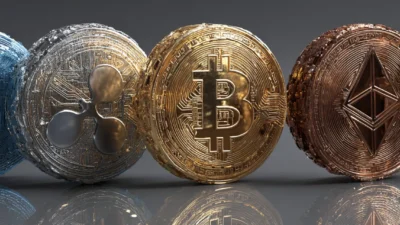
The most popular stablecoin is Tether (USDT), which aims to maintain a 1:1 ratio with the US dollar. Others include USD Coin (USDC) and DAI. People use them to:
- Move money quickly across borders without bank delays
- Avoid crypto price swings while keeping funds in the digital ecosystem
- Pay for goods and services without worrying about value changes
Stablecoin transaction volumes repeatedly crossed $1 trillion per month in 2025. They have become a legitimate payment infrastructure that everyday people rely on.
The Dark Side: Where Illicit Money Goes
The $141 billion in sketchy stablecoin activity isn’t spread evenly across all types of crime. TRM Labs found that different bad actors use stablecoins in very different ways.
Sanctions Evasion Takes the Crown
A whopping 86% of illicit crypto flows in 2025 were sanctions-related. That happens when individuals, companies, or entire countries are trying to dodge international financial restrictions.
About half of the $141 billion, roughly $72 billion, came from a Russian ruble-pegged token called A7A5. The token operates almost exclusively within networks trying to sidestep sanctions. Think of it as a parallel financial system built specifically to move money where traditional banks won’t touch it.
Russian networks like this don’t work alone. They connect with entities in China, Iran, North Korea, and Venezuela, creating what TRM calls “connective infrastructure for sanctioned actors”. Stablecoins let these networks move value quickly without dealing with traditional banking controls or worrying about crypto price crashes.
Guarantee Marketplaces and Money Laundering
Beyond sanctions, large-scale money laundering services love stablecoins. Platforms called “guarantee marketplaces” — basically escrow services for illegal transactions — saw their volumes surge to over $17 billion by late 2025.
Rughly 99% of this volume used stablecoins. These aren’t speculative trading platforms. They’re industrial-scale money laundering operations that need speed, reliability, and price stability. Stablecoins check all those boxes.
One major player, Huione-backed Haowang Guarantee, operated until a crackdown in October 2025. But for months before that, it processed billions in stablecoin transactions, helping criminals clean their dirty money.
Front-Company Exchanges Are the Middlemen
Sometimes what looks like a legitimate crypto exchange is actually a front for moving sanctioned money. TRM’s analysis of Zedcex and Zedxion, two entities that presented themselves as UK-based exchanges, revealed they were heavily tied to Iranian financial facilitators. Yikes!
About 83% of incoming transactions to these platforms used Tether (USDT). That’s not normal for a real exchange serving diverse customers. It’s a red flag that screams “money movement operation”.
In January 2026, the US Treasury sanctioned both platforms for operating in Iran’s financial sector and processing funds for Iran’s Islamic Revolutionary Guard Corps. This marked the first time digital asset exchanges faced sanctions specifically for supporting Iranian networks.
Why You Shouldn’t Freak Out Over this Report
Okay, so criminals are using stablecoins. Should you avoid them entirely? Absolutely not. Here’s some perspective:
If we approximate that $12 trillion in total stablecoin volume over 2025, the $141 billion in illicit activity represents about 1% of the total. Compare that to traditional finance: the United Nations estimates that 2-5% of global GDP ($800 billion to $2 trillion annually) involves money laundering.
In other words, stablecoins aren’t inherently more criminal than regular money — they’re just newer and getting more attention. Criminal enterprises are about making money and not paying taxes. Where there is a dollar or a stablecoin representing a dollar, there will undoubtedly be some kind of criminal mischief at play.
It is what it is.
How to Stay Safe as a Beginner
That being said, staying safe as a new crypto user should be your top priority. Here’s how you can do that:
Stick with reputable platforms. Use well-known exchanges with proper licensing and security measures. Avoid sketchy-sounding services promising amazing deals.
Understand where your stablecoins come from. Major stablecoins issued by legitimate issuers, like USDC and USDT, are fine. Be wary of obscure pegged tokens you’ve never heard of, especially those linked to sanctioned countries.
Don’t use guarantee marketplaces. If someone suggests using an escrow service you’ve never heard of for a crypto transaction, walk away. Legitimate exchanges have built-in protections.
Enable security features. Use multi-factor authentication, secure your wallet with strong passwords, and never share your private keys with anyone.
Start small. There’s no rush to move large amounts. Test the waters with small transactions as you learn how everything works.
Educate yourself continuously. The crypto world changes fast. Follow reputable news sources and stay updated on security best practices.
Regulation and the Future
We could have also used “Regulation Is the Future” as a header. But we didn’t want to get all 1984 on you guys. Governments worldwide are paying attention to these numbers. In the United States, policymakers are debating the future of stablecoins, including whether to allow interest-bearing stablecoin accounts. China has also renewed discussions about stablecoin regulation.
The fact that stablecoins have become critical financial infrastructure means they’ll face increasing regulatory scrutiny. That isn’t necessarily bad news. Clear regulations can help weed out bad actors while protecting everyday users like you (and us).
Don’t let these statistics scare you away from crypto. Every financial system — whether it’s cash, credit cards, or cryptocurrency — gets abused by criminals. What matters is understanding the landscape, using secure platforms, and following best practices.
Stablecoins offer real benefits: fast international transfers, protection from crypto volatility, and easy access to decentralized finance. Millions of people use them safely every day for legitimate purposes.
As you start your crypto journey, focus on learning the basics, using trusted platforms, and taking security seriously. The vast majority of stablecoin activity is perfectly legal, and with the right knowledge, you can use these tools safely and effectively.
Disclaimer
This article is for educational and information purposes, and should not be considered financial advice. For more information visit our disclaimer page
About the Author