TLDR
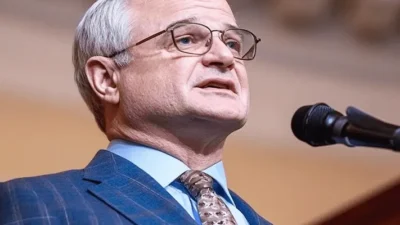
- SEC Chair Paul Atkins recently spoke at the Federal Reserve Bank of Philadelphia’s Fintech Conference.
- He laid out plans for what he calls “Project Crypto”.
- The project includes plans for clear regulation for tokens and many other issues that the crypto industry has been facing for years.
Another day, another regulator talking about crypto. But this time, it hit different.
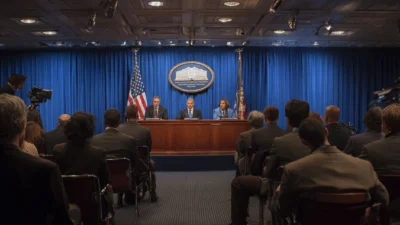
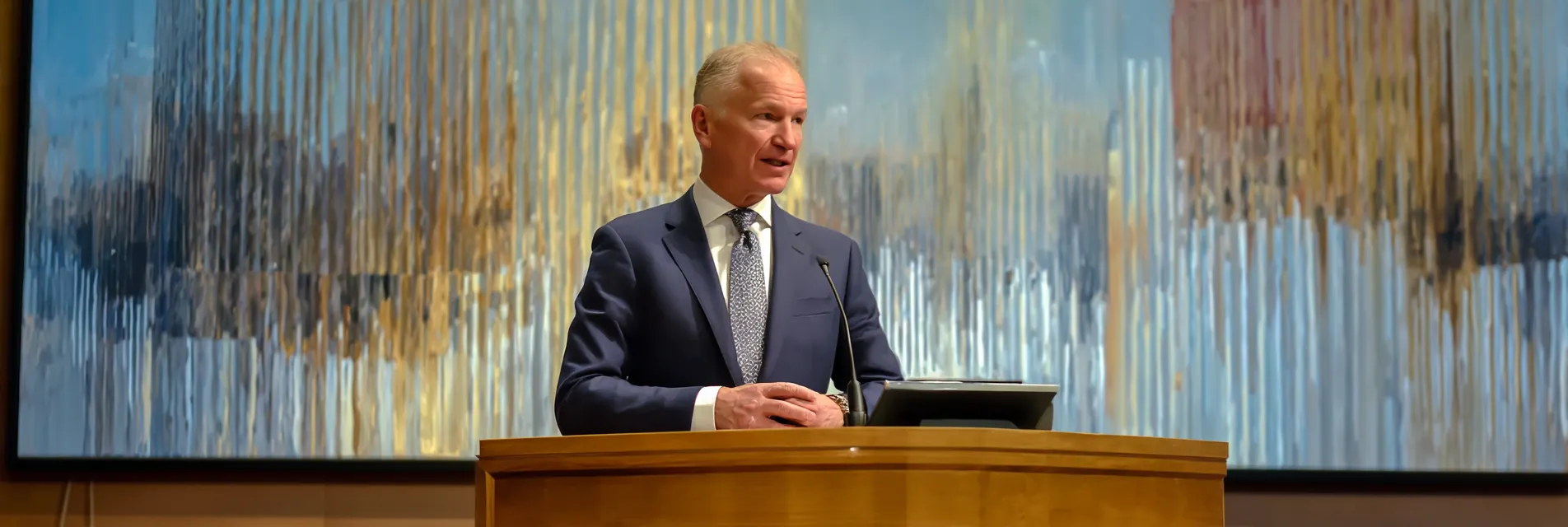
On Wednesday, SEC Chairman Paul Atkins took the stage at the Federal Reserve Bank of Philadelphia’s Fintech Conference and laid out a new vision for crypto regulation in the US. Dubbed “Project Crypto,” the plan seems to be a major shift away from the regulation-by-enforcement approach that has left the industry in a state of confusion for years.
Atkins’ speech was a direct acknowledgment of the uncertainty that has stifled American innovation and a promise to bring clarity. He outlined a plan to create a clear framework for digital assets, one that recognizes that not all tokens are securities and that investment contracts can, in fact, end.
So what exactly does “Project Crypto” mean for users? Good question. Let’s get after it.
A “Crypto Asset” Is Just a Tech Term
One of the most frustrating parts of the crypto regulation debate has been the question: “Are crypto assets securities?” Atkins sympathized with this frustration, pointing out that “crypto asset” is a technological description, not a legal one. It explains how value is transferred, but it doesn’t define the legal rights associated with an asset.
He made a crucial distinction: most crypto tokens trading today are probably not securities themselves. However, a token might have been sold as part of an investment contract, which is a security. This is a huge deal. For years, the prevailing view among regulators seemed to be that if a token was ever part of a securities offering, it would be considered a security forever.
Atkins called this view “flawed” and inconsistent with the law and common sense. He argued that it pushes innovation offshore and fails to recognize the different functions tokens can serve — as payment tools, governance mechanisms, or digital collectibles. His solution? Clear lines and clear terms.
Sorting Tokens: A New Taxonomy
The core of “Project Crypto” is a new token taxonomy, a system for classifying different types of digital assets. It’s something the industry has been begging for. Instead of lumping everything together, Atkins proposed four distinct categories, many of which align with legislation already being debated in Congress.
Digital Commodities
These are “network tokens” that get their value from the operation of a functional and decentralized crypto system. Think of tokens where the value originates from the network’s utility, rather than a central team managing it for profit. In Atkins’ view, these are not securities. Examples of this are BTC, BNB, SOL, and ETH.
Digital Collectibles
This category includes NFTs representing art, music, trading cards, or even memes. According to Atkins, people buying these are not expecting profits from the “essential managerial efforts of others”. Therefore, not securities.
Digital Tools
These are tokens with a practical function, like a membership pass, a ticket, a credential, or a title. Again, since the primary purpose isn’t investment for profit based on someone else’s work, these are not securities.
Tokenized Securities
If you take a traditional security, such as a stock or a bond, and represent it with a token on a blockchain, it remains a security. No surprises there.
The clear classification means builders and investors could finally understand the rules of the road from the start, rather than waiting for an enforcement action to find out they crossed an invisible line.
The Howey Test Can End
This might be the most groundbreaking part of the speech. Atkins tackled the infamous Howey test, the legal standard used for decades to determine if something is an “investment contract” security. He drew a brilliant analogy to the original case, which involved tracts of a Florida citrus grove.
The Howey company sold land to investors and offered to manage the groves for them, sharing the profits. The Supreme Court said this arrangement was an investment contract. But Atkins pointed out that today, that same land is home to golf courses and residential neighborhoods. No one would call a golf course a security just because the land it’s on was once part of an investment scheme.
The land was never the security; the arrangement was. And that arrangement ended.
Atkins applied this logic to crypto. A project might launch its token through an investment contract, promising to build a network and generate profits for early buyers. But what happens when the network is built, it becomes decentralized, and the founding team is no longer essential to its operation?
According to Atkins, the investment contract can be “understood to have run its course”. The token can continue to trade, but it’s no longer a securities transaction. This is the “sufficiently decentralized” argument that many have made, but hearing it from the SEC Chairman himself is a seismic shift.
What “Project Crypto” Means for All of Us
So, what does all this mean in practice? It’s not just legal theory; it has real-world implications for everyone in the crypto space.
First, it signals a move away from hostility and toward collaboration. Atkins repeatedly mentioned his support for Congressional action and his work with the CFTC. We could see a future where regulatory agencies collaborate to create a cohesive framework, rather than competing over jurisdiction.
Second, for innovators, it means a clearer path to build and launch projects in the US. Atkins mentioned creating a “tailored offering regime” for crypto assets that are part of an investment contract, making it easier for startups to raise capital without getting tangled in red tape designed for a different era.
Third, for investors, it promises more choice and clarity. Atkins even tasked his staff with finding ways to allow tokens that were once tied to an investment contract to trade on non-SEC-regulated platforms, like those overseen by the CFTC. That could open up access to a wider variety of assets within a regulated environment.
Project Crypto and the Path Forward
Chairman Atkins was clear that this new approach isn’t a free pass for bad actors. “Fraud is fraud,” he stated, and the SEC will still go after those who deceive investors. This framework is about providing “integrity and intelligibility” to the market, not abandoning oversight.
He concluded by emphasizing that the SEC’s role is to serve entrepreneurs, investors, and all Americans striving for prosperity. “Project Crypto” is a commitment to do just that — to create rules that are firm, fair, and fit for the digital age.
While this is just a speech, it represents a monumental shift in tone and substance from the top of the SEC. For a community that has felt stuck in regulatory limbo, it’s a powerful signal that a more sensible, pro-innovation future is possible. The journey is far from over, but the map looks clearer. We highly recommend you read the full transcript of his speech, which can be found here.
Disclaimer
This article is for educational and information purposes, and should not be considered financial advice. For more information visit our disclaimer page
About the Author