
TLDR
- President Trump announced that massive tariffs would be imposed on China.
- The event created extreme volatility in the crypto market.
- That volatility led to something called a “liquidation cascade”, further increasing selling pressure on every major token.
- By Sunday evening, most coins were already experiencing a decent amount of recovery from the weekend dip buyers.
Man…Uptober was going great, wasn’t it? The crypto world was riding high, everyone was feeling good, and it seemed like the only way was up. Then, Friday happened. If you glanced at your portfolio and choked on your coffee, you’re not alone. Bitcoin took a nosedive, and the entire market followed suit in a spectacular, gut-wrenching fashion.
What happened? It all boils down to political drama and crypto markets doing what they do best: being volatile. Let’s get after it.
What Sparked the Sell-Off?
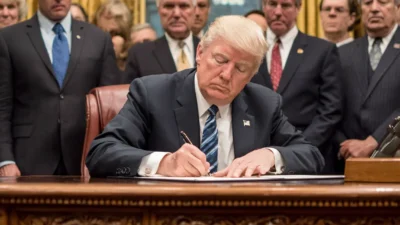
On Friday, President Donald Trump took to his social media platform, Truth Social, to announce a staggering 100% tariff on all Chinese imports.
He stated this was a direct response to China’s threats to restrict exports of rare earth minerals, which are vital components for manufacturing everything from smartphones to the computer chips that power the crypto mining industry.
The announcement sent immediate shockwaves through global markets, and crypto was hit particularly hard. That news reignited fears of a full-blown trade war between the two economic giants, creating a wave of panic among investors. When big-time investors get scared, they tend to sell off risky assets, and unfortunately, crypto is often first on the chopping block.
The timing couldn’t have been worse. The announcement came within the last two hours of the trading day for traditional stock markets and regulated crypto venues, and the blowback was nearly instantaneous. As institutional investors packed up for the weekend, the crypto market was left more vulnerable, with thinner order books and less trading volume to absorb the selling pressure. The stage was set for a weekend of pure chaos.
The Carnage: A Sea of Red
The fallout was swift and brutal. Across the board, crypto prices plummeted.
Bitcoin’s Big Plunge
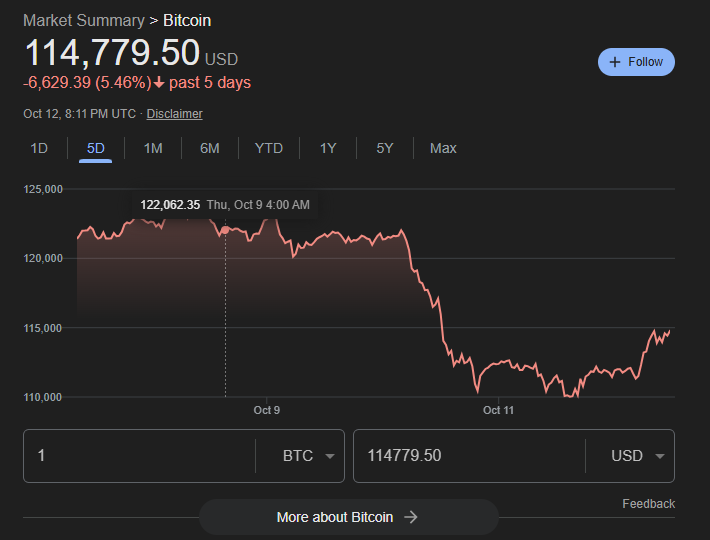
Bitcoin led the charge downwards. We’ve seen reports saying the following: On the Binance exchange, the BTC/USDT perpetual futures pair flash-crashed to a jaw-dropping $102,000. This was a level not seen since late June. On Coinbase, spot prices for Bitcoin hit an intraday low of $107,000.
We mostly use Google and Robinhood for quick price checks. Both Google and Robinhood list around $110,000 as the lowest price over the weekend.
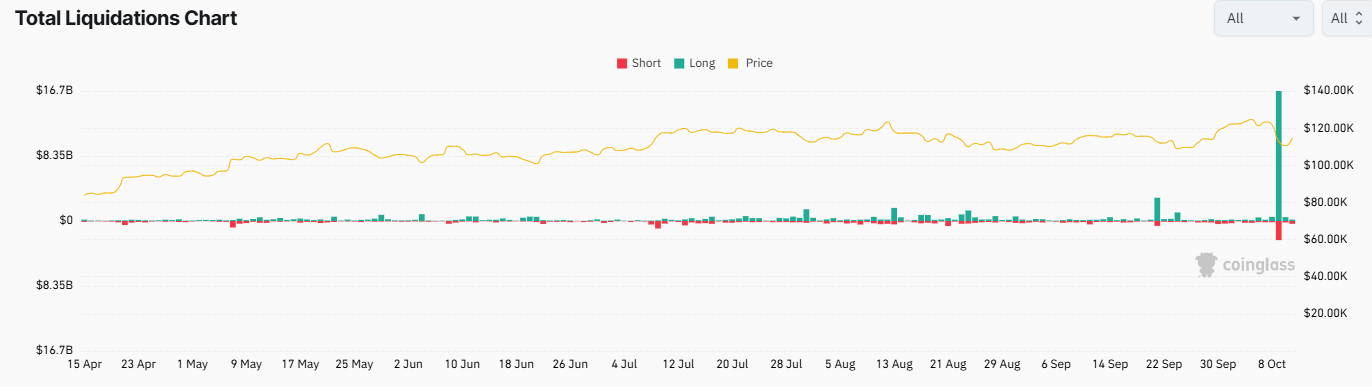
This wasn’t just a paper loss; it had real-world consequences. According to data from CoinGlass, a staggering $16 billion in total crypto market positions (CeFi and DeFi) were liquidated in just 24 hours.
Altcoins Weren’t Spared
If you thought you were safe holding altcoins, you were in for a rude awakening. The sell-off was market-wide, and major altcoins took a heavy beating.
- Ether (ETH), the second-largest cryptocurrency, dropped to around $3,700.
- Solana (SOL), a popular favorite, fell to around $175.
Decoding the Market Mayhem
So why did one announcement cause such a dramatic collapse? Let’s look at the underlying mechanics.
The Power of Leverage
Leverage is like a double-edged sword. It allows traders to amplify their potential profits by borrowing funds to make bigger bets. However, it also magnifies their losses.
When the price started to drop, it triggered a “liquidation cascade.” As positions were forcibly closed, the sell orders pushed the price down further, which in turn triggered the next batch of liquidations. It’s a vicious cycle that can cause prices to spiral downwards with terrifying speed.
Open Interest Takes a Hit
Another key indicator of market sentiment is “open interest,” which represents the total number of outstanding futures contracts that have not been settled. Following the crash, aggregate open interest in BTC showed a sharp decline, signaling that traders were hesitant to open new positions amidst the uncertainty.
But more realistically, we think that most traders don’t do much on the weekends, which explains the lack of open interest.
The Recovery
The weekend trading sessions are typically characterized by lower volume, which can lead to more volatility. However, at the time of this writing, BTC has already recovered to almost $115,000 and ETH to $4,139.
The real test will come when the US stock market opens on Monday morning. That’s when we’ll see day traders getting back into their luxury office chairs and institutional investors raising eyebrows to figure out if they want to buy the dip or let it ride.
The initial reaction from institutional traders will provide a clearer picture of how traditional finance (TradFi) is viewing the situation. If we see a rebound in open interest and a stabilization of prices, it could signal that the worst is over. However, if selling pressure continues, we could see further downside.
What Should Users Do?
Step 1. Don’t freak out. It’s easy to panic when you see your portfolio value get slashed. But making rash decisions based on fear is rarely a good strategy. Here are a few things to keep in mind:
- Don’t Panic Sell: Selling at the bottom of a crash is the easiest way to lock in your losses. Assess the situation calmly.
- Review Your Strategy: Is your portfolio diversified? Are you comfortable with the level of risk you’re taking? A crash can be a good wake-up call to re-evaluate your long-term goals.
- Keep Learning: Understanding concepts like leverage, liquidations, and open interest can help you make more informed decisions.
The recent crash was a brutal reminder of the volatility inherent in the crypto market. While “Uptober” hit a major road bump, it’s all part of the wild, unpredictable journey of crypto investing.
Your port graphs may look like a drawing from a six-year-old that just had their first soda, but at least you’ll never be bored!
Disclaimer
This article is for educational and information purposes, and should not be considered financial advice. For more information visit our disclaimer page
About the Author