
TLDR
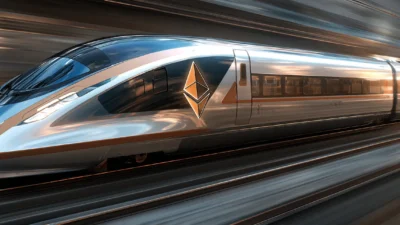
- Blockchain is quickly becoming the backbone of finance.
- Binance is now offering gold and silver futures contracts.
- BNY is tokenizing institutional banking.
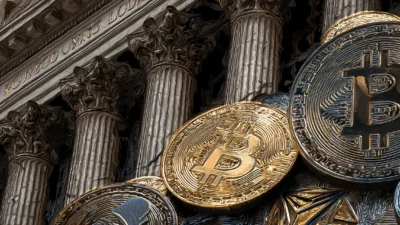
For the last decade, financial observers have generally divided the world into two distinct camps: Traditional Finance (TradFi) and Decentralized Finance (DeFi). On one side, you had centuries-old banks, stock exchanges, and physical commodities like gold. On the other, you had Bitcoin, Ethereum, and 24/7 digital exchanges.
That dividing line continues to vanish a bit more with every passing day. Two major announcements from opposite ends of the financial spectrum signaled a massive shift in how money moves.
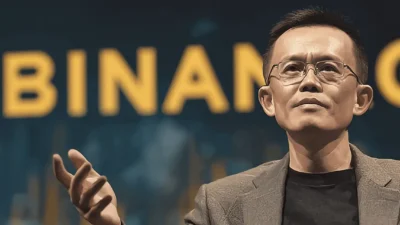
Binance, the world’s largest crypto exchange, began selling products usually reserved for commodities brokers. Simultaneously, BNY, America’s oldest bank, announced it is putting cash on the blockchain. Let’s get after it.
BNY Brings the Bank Account to the Blockchain
If you want to understand how seriously institutional players take crypto technology, look no further than BNY. As a custodian for over $57 trillion in assets, they aren’t known for taking reckless gambles. Yet, just last week, the banking giant announced a major leap forward: the tokenization of bank deposits.
What Are Tokenized Deposits?
To understand this news, you have to understand the friction of moving money. In the traditional banking system, sending money between institutions — especially across borders or outside of banking hours — is slow. Excruciatingly slow. It relies on a web of outdated messaging systems.
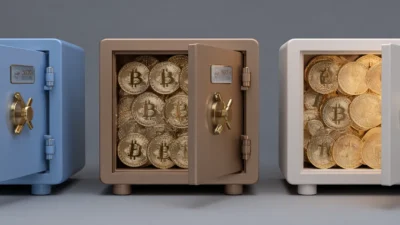
BNY’s new initiative creates a “digital twin” of a client’s bank deposit. If a large institution has $1 million in their BNY account, BNY creates digital tokens representing that value on a private blockchain.
Why It Matters
It’s a technical upgrade that also solves a massive problem for big investors (and has so for decades).
- 24/7 Settlement: Traditional banking sleeps on weekends and holidays. Blockchains do not. By tokenizing deposits, BNY allows its clients to move cash instantly, at any time of day.
- Programmability: These digital dollars can be “programmed” to execute complex transactions automatically, reducing the need for manual oversight and paperwork.
- Liquidity: It frees up cash that would otherwise be stuck in the “pending” phase of a transaction.
Carolyn Weinberg, BNY’s Chief Product and Innovation Officer, noted that this allows clients to operate with “greater speed across collateral, margin, and payments”.
Binance Enters the Metals Market
While BNY was busy bringing traditional money onto the blockchain, Binance was doing the inverse:bringing traditional assets into the crypto ecosystem.
Last week, the exchange launched some new products for its derivatives platform. For the first time, users on the crypto exchange could trade the price movements of traditional commodities — starting with Gold (XAU) and Silver (XAG) — using the same interface they use to trade Bitcoin.
How It Works
A perpetual contract is a type of derivative widely used in crypto. It allows a trader to bet on whether an asset’s price will go up or down without actually owning the asset.
These new contracts are settled in USDT (Tether), a stablecoin pegged to the US Dollar.
The Significance for Traders
The move represents an aggression by crypto platforms toward traditional brokerages. Previously, if a trader wanted exposure to Gold, they needed a traditional brokerage account. If they wanted Bitcoin, they needed a crypto exchange.
By listing Gold and Silver perpetuals, Binance is creating a one-stop-shop, something many platforms are trying to pull off right now. Users can now hedge their crypto portfolios against traditional safe-haven assets without ever leaving the app or converting their stablecoins back to fiat.
The Converging Trends
When viewed together, these two announcements reveal three critical trends that will define the financial landscape of 2026.
1. The 24/7 Market Standard
Both BNY and Binance are solving for the same variable: time.
Binance highlights “24/7 Traditional Market Exposure” as a key benefit of their new product. BNY highlights “always-on operating models” as the driver for their tokenized deposits. The era of financial markets opening at 9:30 AM and closing at 4:00 PM is coming to an end.
The technology now exists to keep money moving around the clock, and both sectors are racing to adopt it.
2. Blockchain as the Backend
For years, skeptics argued that blockchain was a solution in search of a problem. BNY’s adoption suggests the debate is settled.
When major clearinghouses like ICE and custodians like StoneX Digital sign on to support BNY’s initiative, they are acknowledging that blockchain is a better infrastructure for the backend of finance.
As Nathan McCauley, CEO of Anchorage Digital, put it, this is “money that moves at the speed firms need”.
3. The Everything Portfolio
For the average investor, the silos are breaking down. You no longer need to be a “crypto trader” or a “stock trader”.
Platforms are merging these capabilities. You can hold a tokenized representation of a bank deposit, use it to buy a fractional Bitcoin, and hedge that position with a Gold contract — all within the same digital ecosystem.
The Skinny for New Investors
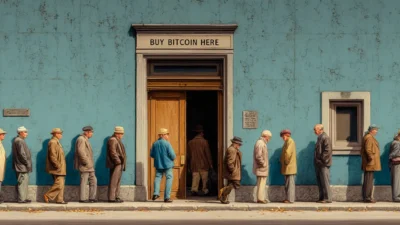
For those just starting their journey into digital assets, this news offers significant reassurance. But there’s also a bit of a twist. Right now, BNY’s offering is only available to institutional clients, and Binance doesn’t offer futures contracts to US investors. But it’s a start. With new CFTC leadership and retail demand for better banking services, who knows what the future holds? But it’ll probably involve blockchain.
In the early days of crypto, the industry was unregulated, chaotic, and separate from the real economy. That narrative is no longer accurate. When an institution like BNY, which oversees nearly all of the top 100 banks globally, integrates digital assets into its core strategy, it validates the technology’s permanence.
Furthermore, access is becoming easier. The complexity of managing multiple accounts across different asset classes is diminishing. Whether you are looking to secure your savings or try your hand at trading, the infrastructure is becoming more robust, more regulated, and more integrated than ever before.
The lines are being redrawn. Or flat out erased, depending on how you want to look at it. Crypto is no longer an alternative to finance. It is simply becoming finance.
Disclaimer
This article is for educational and information purposes, and should not be considered financial advice. For more information visit our disclaimer page
About the Author