
TLDR
- Chainlink is helping make international trade easier, cheaper, and faster.
- A new project utilizes Chainlink’s technology to connect and facilitate a transaction between a bank in Brazil and one in Hong Kong.
- Not only will using blockchain for imports/exports save money, but it also makes things easier and safer for all parties involved and will allow smaller businesses to enter international markets.
If you’ve been keeping an eye on crypto news/drama, you’ve probably heard a lot about blockchain solving “real-world problems”. Or as we like to call it…use cases. Chainlink, once again, is showing the world how it’s done.
Banco Inter and Chainlink have pulled off something remarkable with the central banks of Brazil and Hong Kong. They completed the first-ever blockchain-based international trade finance experiment that could change how businesses around the world buy and sell goods. Let’s get after it.
Chainlink Did What?
Banco Inter (a major Brazilian bank) teamed up with Chainlink to connect two central banks — Brazil’s BCB and Hong Kong’s HKMA. Together with partners like Standard Chartered, Global Shipping Business Network (GSBN), and 7COMm, they ran a test that allowed businesses to make conditional installment payments for imports using digital currencies.
This was part of Phase 2 of Brazil’s Drex initiative, which is exploring how a Central Bank Digital Currency (CBDC) could work in practice. The experiment tested two types of transactions: Delivery-versus-Payment (DvP) and Payment-versus-Payment (PvP).
The heck does that mean? Payments only occur when specific conditions are met — such as when goods are delivered or when a title transfer takes place.
Here’s the cool part: this was the first time a blockchain-based title registry and cross-chain payment infrastructure were integrated into a single, automated workflow. In other words, they proved you can settle international trade deals automatically, securely, and in real time across different blockchain networks.
Why Does It Matter?
Traditionally, international trade is complicated, expensive, and slow. Banks have to coordinate manually with shipping companies and other financial institutions. There’s a lot of paperwork, delays, and risk involved. And as we all know, the speed of business is fast, but the speed of TradFi…is not…
For small and medium-sized businesses (SMBs), these barriers often make it hard to compete in global markets.
The new platform changes the game. By utilizing tokenized payments and smart contracts, the process becomes faster, more cost-effective, and less risky. Small businesses can now sell commodities abroad without jumping through endless hoops or paying massive fees. It opens doors that were previously closed.
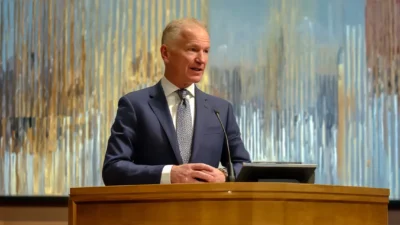
Bruno Grossi, Head of Digital Assets at Banco Inter, put it this way: “By leveraging Chainlink to connect the BCB, the HKMA, and trade finance platforms, we’re building a more connected financial ecosystem that has the ability to underpin the future of global trade.”
How Chainlink Powers the Whole Thing
Let’s be real. It’s only a matter of time before this protocol is powering pretty much everything. Per usual, it isn’t just a supporting actor here — it’s the backbone of the entire operation. Two key technologies made this experiment possible:
Chainlink Runtime Environment (CRE): Connected Brazil’s Drex platform with Hong Kong’s Ensemble Network and a trade finance platform. It routed payment instructions between the banks and translated messages into the correct format (like ISO 20022). It also triggered electronic Bill of Lading (eBL) transfers via GSBN’s API.
Chainlink Cross-Chain Interoperability Protocol (CCIP): Enabled secure communication between different blockchain networks. Events like contract execution or credit release were automatically synchronized, so everything happened smoothly without manual intervention.
Fernando Luis Vázquez Cao, President of Banking and Capital Markets at Chainlink Labs, said: “Programmable cross-border payments, conditional on supply chain updates, significantly streamline operations and unlock massive automation efficiencies.”
In plain English? Instead of waiting days or weeks for payments to clear while manually verifying that goods are on their way, everything happens automatically as soon as the conditions are met.
Another Day, Another Use Case for Chainlink
This solution isn’t just good for one group — it benefits everyone involved in international trade:
For banks: Automated settlement reduces operational costs and improves risk management. Less manual work means fewer errors and faster processing.
For exporters, importers, and shipping companies: Payments are released as goods approach delivery. It reduces delays and makes supply chains more agile.
For small and medium-sized businesses: Direct engagement with overseas buyers becomes possible. Faster settlement times mean better cash flow. Tokenizing commodities and automating title transfers can even help secure new lines of credit.
The experiment also introduced a real-world asset token backed by commodities. It gives counterparties instant liquidity and reduces both settlement risk and operational friction — things that usually slow down traditional trade deals.
The Big Picture
The success of this project has everyone excited about what’s possible. The BCB, HKMA, Banco Inter, Chainlink, GSBN, and 7COMm are already working on expanding the solution to support additional use cases like open account trade.
They’re also planning to integrate directly with financial institutions via APIs and extend interoperability with other eBL providers to support broader adoption. The goal is to make this technology accessible to more businesses around the world.
The Bigger Picture
If you’re new to crypto or blockchain technology, this might sound technical — but the takeaway is simple: blockchain isn’t just for trading meme coins or speculating on Bitcoin prices. It has real utility in industries like trade finance, supply chain management, and international payments.
Projects like this one demonstrate how digital currencies and smart contracts can make life easier for businesses (especially smaller ones) by cutting costs, reducing risk, and speeding up transactions. As more countries explore blockchain-based infrastructure, we’ll likely see more experiments like this one turn into everyday reality.
Why You Should Keep an Eye on Blockchain Tech
It’s the future. But also, stories like this one are worth paying attention to because they show where the technology is heading — and it’s not just about overpriced and overhyped JPEGs.
Global trade is a trillion-dollar industry that affects everything from the price of coffee to the availability of electronics in your local store. If blockchain can make that system more efficient and inclusive, it’s going to have a massive impact on the global economy.
So next time someone asks you what blockchain is good for, you can point to this experiment as proof: it’s making international trade faster, cheaper, and more accessible for everyone. But don’t thank Dypto Crypto. All we did was break it down. Thank Chainlink.
Disclaimer
This article is for educational and information purposes, and should not be considered financial advice. For more information visit our disclaimer page
About the Author