
TLDR
- ETH is already planning its next major upgrade, called Glamsterdam.
- BNB is hard at work, constantly striving to make its chain faster.
- Users will win. Everything ETH and BNB are doing will benefit the people. Cheaper, faster, more secure, and accessible, and eventually better than anything TradFi has to offer.
If you’ve been watching the crypto space lately, you might feel like you need a translator just to understand the headlines. We’ve got blobs, sharding, and upgrades named after cities that sound like indie bands. It’s a lot.
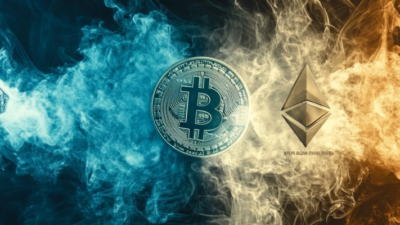
So let’s shave down the glitz and glam (old man humor for the win). The new year is shaping up to be a heavyweight title fight between two of the biggest names in the game — Ethereum and BNB Chain. They aren’t throwing hands. They’re throwing code. Both blockchains are racing to become faster, cheaper, and safer for users.
Whether you’re holding a tiny bit of ETH or BNB or curious about why your tech-savvy cousin won’t stop talking about gas fees, understanding where these giants are headed matters. Let’s break down the 2026 roadmap for Ethereum and BNB Chain without the X hype. It’s time for a blockchain battle. Let’s get after it.
Ethereum: The Architect’s Master Plan
Ethereum has always been the mad scientist of the crypto world. It’s big, it’s decentralized, and it’s constantly under construction. Last week, the developers released Checkpoint #8, a status update that sounds more like a sci-fi novel than a software patch.
The Fusaka Upgrade
First off, let’s talk about something that just went live: Fusaka. No, it’s not a new sushi roll. It’s a major upgrade that introduced Data Availability Sampling.
In plain English? It’s a way to help Ethereum scale up. Think of Ethereum like a busy highway. Fusaka just added a few express lanes specifically for Layer 2 networks (the faster, cheaper networks built on top of Ethereum).
The big star of this show is blobs. We know, it sounds funny. But in crypto, a blob is a chunk of data. Thanks to Fusaka, Ethereum can now handle more of these data blobs without waiting for a massive system overhaul. The goal is to hit 14 blobs per block. Translation? Faster transactions and more room for everyone on the network.
Next Stop: Glamsterdam
The Ethereum developers are currently working on the next big update, code-named Glamsterdam. (Seriously, who names these?)
The update focuses on two main things:
- Fairness for builders: There’s a technical feature called ePBS (enshrined Proposer Builder Separation). It’s a mouthful, but it separates the people who build the blocks of data from the people who propose them. It’s like separating the chef from the waiter to ensure nobody messes with your food before it gets to the table.
- Access Lists: Helps streamline how data is accessed, making the network more efficient.
The developers have whittled down a list of 50 potential features to just 17 high-impact ones. They are testing these on “devnets” (practice networks) right now to make sure nothing breaks when they push the button.
Looking Ahead to Hegota
Ethereum never sleeps. While working on Glamsterdam, they are already planning the following upgrade, named Hegota (a mashup of the star name Heze and the city Bogotá).
The headline feature here is censorship resistance. They are looking at a system called FOCIL. Without getting too technical, FOCIL ensures that no single person or group can block your transaction. In the world of crypto, being uncensorable is a huge deal — it’s what keeps the system free and open for everyone.
BNB Chain: The Speed Demon
While Ethereum is busy re-architecting its foundation, BNB Chain is focused on one thing: raw speed.
If Ethereum is a bustling city being renovated, BNB Chain is a Formula 1 car on a fresh track. Their 2025 performance was impressive — zero downtime, despite handling massive traffic spikes. Now, their 2026 roadmap is all about keeping that pedal to the metal.
Mee-Meep!
The Need for Speed and Low Fees
In 2025, BNB Chain reduced gas fees (transaction costs) from 1 gwei to 0.05 gwei. That’s a 20x reduction. For a new user, this is huge. It means you don’t have to worry about losing a chunk of your money just to move it from Point A to Point B.
Their goal for 2026? 20,000 transactions per second (TPS).
To put that in perspective, most traditional blockchains handle a tiny fraction of that. BNB Chain aims to be the go-to platform for high-frequency trading and large-scale applications. They aren’t just trying to be fast; they want to be instant. They are targeting sub-second finality, meaning your transaction is confirmed almost the moment you click “send”.
Reliability is King
One of the biggest bragging rights for BNB Chain is reliability. In 2025, they hit an all-time high of 31 million daily transactions without the network crashing.
For 2026, they are doubling down on this with Rust-based clients. Rust is a programming language known for its incredible stability and speed. By rebuilding parts of their engine in Rust, they aim to make the network bulletproof, even when millions of people use it at once.
The One Million TPS Dream
Every blockchain has a couple of things in common. This is one of them: becoming the TPS king.
BNB Chain isn’t looking at just next year; they are looking at 2028. They have outlined a plan to eventually support 1 million transactions per second.
To get there, they are redesigning how they store data (Scalable DB) so the network doesn’t get clogged as they grow. They are building a super-storage unit that organizes itself automatically so the network never slows down, no matter how much history it has to remember.
The Showdown: Which Approach Wins?
So, we have two different philosophies playing out in 2026.
Ethereum is taking the slow-and-steady route (relatively speaking). They are focused on decentralization, censorship resistance, and creating a robust layer for other networks to build on. It’s complex, it involves a lot of community voting and “proposals,” but it’s building a system designed to last for decades without a central authority.
BNB Chain is taking the performance-first route. CZ and Co. are already the biggest and, arguably, the best CeFi exchange in the world. They also want to be the fastest, cheapest trading chain in existence. They are optimizing their code to handle millions of users right now. If you want a smooth, app-like experience where you don’t notice the technology, this is what they are building.
What Do Blockchain Battles Mean for Users?
As a new crypto user, you don’t necessarily have to pick a side. You might use Ethereum for long-term savings or buying digital art, and use BNB Chain for trading or using apps that require fast, cheap updates.
The blockchain battles aren’t about one destroying the other. It’s about competition pushing the technology forward, improving the user experience, and making crypto more accessible.
Ethereum is innovating with blobs. BNB Chain has to get faster. Because BNB Chain is so cheap to use, Ethereum has to figure out how to lower its costs. The year 2026 is going to be noisy. You’ll hear about forks, updates, and strange acronyms like FOCIL and ePBS.
Here is your cheat sheet for surviving the noise:
- Ethereum is getting more efficient and fighting censorship.
- BNB Chain is getting faster and cheaper.
- You get better technology regardless of which one you use.
The best way to learn? Start small. You don’t need to understand how the engine works to drive the car, but it helps to know which car is built for speed and which is built for hauling cargo. Stay curious, keep your security tight, and enjoy the ride.
Disclaimer
This article is for educational and information purposes, and should not be considered financial advice. For more information visit our disclaimer page
About the Author