- The DTCC has received a no-action letter from the SEC to explore using blockchain tech to tokenize real-world assets.
- A no-action letter means the SEC won’t pursue any kind of legal action against the DTCC.
- Plans are already underway, with a rollout planned for the second half of 2026.
The line between TradFi and crypto continues to blur. In a move that feels like seeing your grandparents sign up for TikTok, the heavy hitters of the US financial system are officially moving onchain.
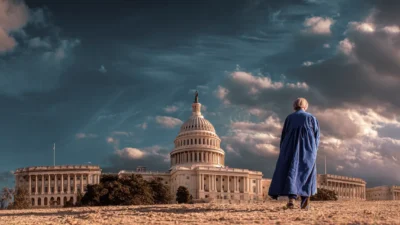
The Depository Trust & Clearing Corporation (DTCC) — the massive, invisible engine room that keeps the US stock market running — has received a No-Action Letter from the US Securities and Exchange Commission (SEC).
If you’re new to this space, a No-Action Letter might sound boring, but in the regulatory world, it’s a golden ticket. The SEC is saying, “Go ahead and try this new tech; we won’t sue you”. If you’ve been around crypto for a while, you know that:
- Not too long ago, everyone was being sued.
- Not being sued is a good feeling.
This specific ticket enables the DTCC to begin tokenizing real-world assets, such as US Treasury bills and major stock indexes. Blockchain tech is becoming the future infrastructure of the entire global economy. Let’s get after it.
Wall Street Plumbing is Getting an Upgrade
To understand the magnitude of this news, you have to understand who the DTCC is. They aren’t a bank you see on a street corner.
They are the premier post-trade market infrastructure for the global financial services industry. When you buy a stock on an app like Robinhood or E*TRADE, the DTCC is the entity in the background making sure the stock actually moves from the seller to you, and the money moves from you to the seller.
For decades, this process has relied on legacy technology. It’s safe, sure, but it can be slow and clunky compared to the instant settlement we see in crypto.
With this new approval, the DTCC’s subsidiary, The Depository Trust Company (DTC), can now use blockchain technology to “tokenize” assets. This means creating a digital version of a real-world asset that lives on a blockchain. This is a green light for a “controlled production environment.”
According to the press release, they anticipate rolling this out in the second half of 2026. While that feels like a while away, in the timeline of upgrading the entire US financial system, it’s practically tomorrow.
Real-World Assets (RWA): What’s Actually Being Tokenized?
You might have heard the term “RWA” (Real-World Assets) floating around crypto Twitter. It’s usually hype about putting real estate or gold on the blockchain. But the DTCC isn’t starting with niche assets. It’s going after the juggernauts of the financial world.
The SEC authorization applies to a specific set of highly liquid assets:
- The Russell 1000: This represents the 1,000 largest publicly traded US companies.
- ETFs (Exchange-Traded Funds): Specifically, those tracking major indices.
- US Treasury Bills, Bonds, and Notes: The bedrock of the global financial system.
By tokenizing these, the DTC effectively gives them superpowers. They retain all the same ownership rights and investor protections as the traditional versions, but they gain the flexibility of crypto.
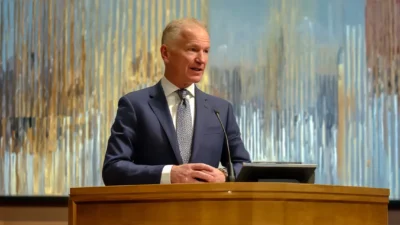
Frank La Salla, the CEO of DTCC, put it best: “Tokenizing the US securities market has the potential to yield transformational benefits such as collateral mobility, new trading modalities, 24/7 access, and programmable assets”.
Let’s translate that into plain English. “Collateral mobility” means moving value around is easier and faster. “24/7 access” means the stock market no longer has to close at 4:00 PM. And “programmable assets” means money that can automatically follow smart contract rules.
Paul Atkins Prepares the SEC for the Future of Finance
For years, the crypto industry and the SEC have had a relationship best described as hostile. And that’s he kindest way that we can possibly put it.
However, SEC Chair Paul Atkins seems ready to embrace the future. Following the announcement, Atkins took to social media to double down on his vision, stating that “US financial markets are poised to move on-chain”.
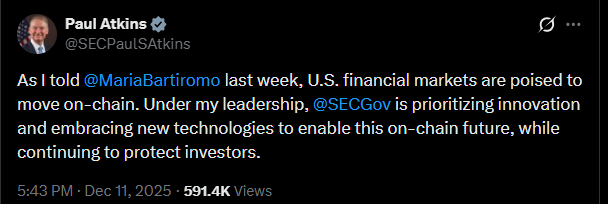
He even mentioned an “innovation exemption”. This is a regulatory concept that would allow builders and companies to experiment with blockchain technology without being crushed by rules written in the 1930s. Atkins explicitly noted that on-chain markets bring “greater predictability, transparency, and efficiency for investors”.
When the head of the SEC says he wants to remove “cumbersome regulatory requirements” to help transition markets on-chain, it reduces the fear that the government is out to ban crypto. For new users, this means the ecosystem you are entering is becoming safer and more legitimate by the day.
How This Bridges the Gap Between TradFi and Crypto
We often talk about TradFi and crypto as two separate worlds. The DTCC’s move is a giant bridge connecting them.
Under this new program, the DTC will create a “single pool of liquidity”. Investors won’t necessarily have to choose between the old and new systems. The goal is a seamless experience that combines the safety and soundness of traditional markets with the resilience of blockchain.
The DTCC has been exploring Distributed Ledger Technology (DLT) for almost a decade. They know that blockchain offers three key benefits that old databases can’t match:
- Mobility: Moving assets across borders and time zones instantly.
- Decentralization: Accessing assets more directly without jumping through a dozen hoops.
- Programmability: Using smart contracts to automate complex transactions.
By integrating these features into the US securities market, they are paving the way for a system that is cheaper, faster, and more inclusive.
The Impact on a User’s Crypto Journey
If you’re just buying your first fraction of Bitcoin or setting up your first wallet, news about “clearing houses” and “treasury bills” might seem distant. But it impacts you directly.
First, it validates your interest in this space. The biggest players in the world are betting the future on the same technology you are learning about today.
Second, better user experiences are on the way. As these massive institutions build “on-ramps” to the blockchain, the tools, wallets, and platforms will become easier to use. Friction in buying and selling digital assets will decrease.
Finally, it opens the door for new types of investments. Eventually, you might be able to hold a tokenized share of Apple or a tokenized US Treasury bond right alongside your Bitcoin in a single digital wallet, trading them 24/7.
The walls are coming down. The future of finance is digital, it’s onchain, and it’s officially endorsed by the powers that be.
Disclaimer
This article is for educational and information purposes, and should not be considered financial advice. For more information visit our disclaimer page
About the Author