
TLDR
- Kalshi is a fully regulated prediction market.
- Prediction markets were born in crypto just a couple of years ago.
- CNN has partnered with Kalshi to integrate prediction market data into the news giant’s programming — officially making prediction markets mainstream.
Kalshi and Polymarket are two of the biggest names in prediction markets. The difference? Polymarket is a DeFi blockchain-based entity on the Polygon network. Kalshi is a fully regulated market that has no ties to crypto or blockchain. But… prediction markets are the hottest narrative in finance right now, and they were born in Crypto Land. How hot has it become?
CNN has announced a partnership with Kalshi, the world’s largest federally regulated prediction market.
Why does this matter to you, the crypto-curious individual looking for the next big shift in how money and information move? It’s a perfect example of how something that was crypto-centric became mainstream in just a couple of years. So, keep in mind that what is crypto-only today could be getting used by everyone tomorrow. Let’s get after it.
The Announcement
Kalshi has established itself as the first federally regulated exchange dedicated to event contracts. In plain English? It’s a place where you can trade on real-world events the same way Wall Street trades stocks. You can buy “shares” in the outcome of an election, sports, or massive cultural moments.
According to the press release, Kalshi’s data is going to be woven directly into CNN’s programming. We aren’t just talking about a footnote on the website. We’re talking about a new, real-time ticker running during segments, giving viewers the live probabilities of events as they shift.
A Brief Overview of Prediction Markets
If you are new to this space, the concept of a “prediction markets” might sound like gambling. And for some, it definitely is. But the mechanics are a bit different — and way more useful for data nerds.
Think of it like this: If you ask 1,000 people who they think will win the Super Bowl, you’ll get a mix of answers based on who they want to win (or which mascot they think is cooler). That’s a poll.
But if you tell those same 1,000 people, “I will give you $100 if you correctly guess the winner, but you have to pay $10 to enter,” suddenly, people stop guessing with their hearts and start guessing with their brains. They look at the stats. They check injuries. They get serious because they have skin in the game.
That is the “wisdom of the crowd.” Prediction markets aggregate all that information into a single price. If a “Yes” share for a candidate costs 60 cents (and pays out $1), the market is saying there is a 60% probability of that happening.
Kalshi has taken this concept and made it a legitimate financial asset class. It’s used by hedge funds, politicos, and now, the biggest name in cable news.
The Harry Enten Factor
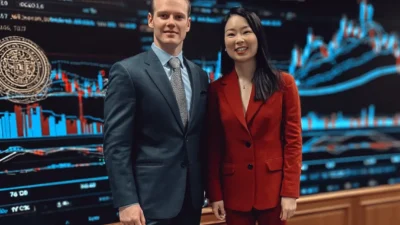
If you watch CNN, you know Harry Enten. He’s the guy usually standing in front of the magic wall, waving his arms around and explaining what the latest polls from Ohio mean for the national average. He’s the Chief Data Analyst, and he is about to get a shiny new toy.
The partnership puts Harry in charge of translating Kalshi’s market data for the audience. Instead of just relying on traditional polling — which has a lag time and a margin of error the size of a small planet — Harry can now tap into real-time markets.
This allows CNN to:
- Fact-check the narrative: If a pundit says, “This candidate is gaining momentum!” but the prediction market shows their stock tanking, the data calls their bluff immediately.
- See the future faster: Kalshi recently called the NYC Mayoral election a full eight minutes after the polls closed. The mainstream media took hours to catch up. That is the kind of speed CNN is buying into.
The Biggest Win
We talk a lot about decentralized finance and new asset classes here at Dypto Crypto. One of the biggest hurdles for new investors is safety. The crypto and prediction market space can sometimes be full of opportunity, but also full of tumbleweeds and bad actors.
This is where Kalshi stands out, and likely why CNN picked them. Kalshi is federally regulated. That is a boring phrase that means a lot for your peace of mind. It means they play by the rules, your funds are segregated, and there is oversight.
For the average person (“Main Street,” as the press release calls it), this partnership validates that prediction markets aren’t just a niche internet hobby. They are a serious tool for staying informed.
Seeing the Data in Real-Time
One of the coolest parts of this integration is the visual aspect. CNN is launching a Kalshi-powered ticker.
Imagine watching a debate. Usually, you have to wait for the post-debate polls a day later to see who “won.” With a prediction market ticker, you could theoretically watch the probabilities shift in real-time as a candidate stumbles over a question or delivers a sick burn.
The CNN production team is getting access to all of Kalshi’s real-time political, news, and cultural data to build storylines. It turns the news from a retrospective (“Here is what happened yesterday”) into a prospective (“Here is what the money thinks will happen tomorrow”) experience.
Prediction Markets Are Officially Mainstream
We are seeing a convergence of traditional media and new financial tech. It started with Bitcoin ETFs making it to Wall Street, and now we have prediction markets making it to CNN.
For those of you just dipping your toes into digital assets and new financial technologies, this is a massive green flag. It shows that the tools being built in this ecosystem are powerful enough to complement — and maybe even outperform — the legacy systems we’ve relied on for decades. The proof is in the pudding, as they say.
Disclaimer
This article is for educational and information purposes, and should not be considered financial advice. For more information visit our disclaimer page
About the Author