
TLDR
- Thomas Perfumo is Kraken’s global economist.
- In a recent blog post, he shares his outlook for the entire crypto industry in 2026.
- There’s good news. Bad news. And a lot of room for things to swing either way.
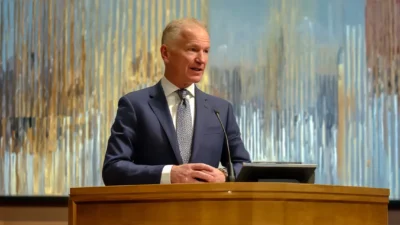
As the cryptocurrency market moves beyond the mid-decade mark, investors are looking for clarity on what comes next. Thomas Perfumo, Kraken’s Global Economist, has released a comprehensive outlook for 2026, suggesting that while Bitcoin remains the dominant force, the mechanisms driving the market are beginning to shift.
According to Perfumo, the “euphoric” phases of previous cycles are giving way to a more complex, macro-driven environment. There’s a lot to unpack with his post. So let’s break it down and get after it.
Bitcoin’s Evolving Role in a Macro World
Perfumo’s analysis claims that Bitcoin is no longer operating in a vacuum. Throughout 2025, the asset’s price action was heavily influenced by macroeconomic forces — namely mixed economic growth, sticky inflation, and geopolitical instability.
His article suggests this trend will continue into 2026. However, the market structure has matured. Instead of the wild, unbridled volatility seen in the industry’s early days, Bitcoin is now experiencing “compressed volatility ranges”, something we’ve mentioned in previous articles, albeit using different phrasing.
But the translation is that price swings are tighter, though they are still punctuated by sharp moves driven by specific narratives or news events.
Key to this new structure is the rise of institutional investment vehicles. US-listed Bitcoin ETFs (such as BlackRock’s IBIT) and corporate treasuries (like Strategy) have become massive drivers of net capital flows. In 2025 alone, these entities represented nearly $44 billion in net spot demand.
Despite these record inflows, price performance in 2025 fell short of some expectations. Perfumo attributes this to rotating supply dynamics. Long-term holders — often referred to as “HODLers” — began taking profits.
That indicates a significant transfer of assets from legacy holders to new market entrants (or into ETPs), absorbing the massive institutional demand and keeping a lid on explosive price growth.
Six Themes Shaping Crypto in 2026
Looking forward, Perfumo identifies six critical themes that will define the market landscape in 2026.
1. The Macro Liquidity Puzzle
Liquidity, the availability of capital in the financial system, remains a primary indicator for crypto assets. The outlook here is mixed.
While the US Federal Reserve is easing interest rates, the pace is slower than many anticipated in 2025. Markets currently project policy rates to drift toward the low 3% range by the end of 2026.
The Fed’s balance sheet reduction has effectively ended, but there is no clear path back to “quantitative easing” unless the economy faces a negative shock. Easier money might only arrive as a reaction to bad economic news, rather than as a proactive boost to the economy.
2. Institutional Gauges: ETFs and Corporate Treasuries
Investors should continue watching ETF flows and corporate strategies (like we do!) as major sentiment indicators. However, the signals are becoming more nuanced.
ETF inflows slowed in 2025 compared to the explosive launch year of 2024. Additionally, companies holding large Bitcoin treasuries are finding it harder to issue equity at premiums to buy more Bitcoin, a strategy (heh) that previously fueled upward price momentum.
Speculative positioning has been pretty “meh”. The market doesn’t have that hype juice needed to spark a major rally without some sort of new catalyst in play.
3. Regulatory Clarity Arrives in the US
One of the most optimistic shifts Perfumo highlights is the move from theoretical regulation to tangible policy. The US is inching toward a defined framework for digital assets.
Legislation regarding stablecoins is reshaping on-chain dollar liquidity, and the proposed CLARITY Act could finally provide oversight rules for digital commodities and exchanges.
However, this thing is moving at a snail’s pace. But if it’s passed (and right now that’s looking like a pretty big “but”), CLARITY could become a catalyst for accelerating capital into the industry and cement the country’s status as a global hub for crypto innovation.
Globally, other nations are closely watching US policy decisions. The outcome of these legislative efforts could determine where developers and capital migrate in the coming years.
4. The Mystery of Low Volatility
A strange phenomenon occurred in 2025: Bitcoin hit new all-time highs while volatility remained historically low (20-30%). In previous cycles, all-time highs were accompanied by chaotic price swings.
Perfumo questions whether this reflects a “structurally more mature market” or simply “deferred volatility”. Bitcoin’s market dominance remained high (above 60%) throughout the year, avoiding the breakdown usually seen when capital rotates into smaller, riskier assets like altcoins and DeFi projects during peak speculative frenzies.
5. Tokenization of Real-World Assets (RWAs)
One of the hottest narratives of the cycle is the tokenization of traditional financial assets. It’s also one of our favorites. The sector grew from roughly $5.6 billion to nearly $19 billion in a single year.
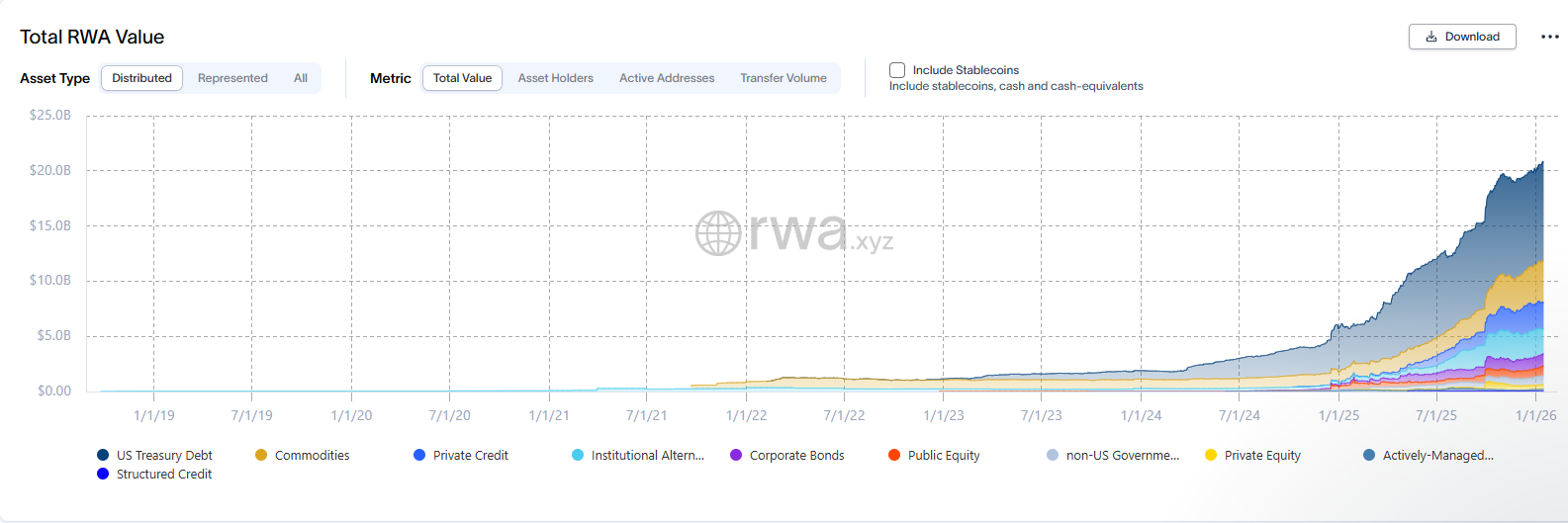
Tokenization is expanding into commodities, private credit, and public equities. As regulatory postures soften, incumbent financial institutions are exploring blockchain for distribution and settlement. The gates are starting to open, and the flood could unlock massive sources of global demand and liquidity, potentially serving as a major growth catalyst similar to how ICOs or DeFi drove previous cycles.
6. DeFi’s New Economic Model
Finally, Decentralized Finance (DeFi) may be entering a maturation phase regarding tokenomics. In previous years, governance tokens were often valueless. offering no claim on protocol revenue to avoid regulatory scrutiny.
However, Perfumo notes a shift toward “fee sharing” and sustainable cash flows, citing Uniswap’s recent proposals as a bellwether. If this trend holds, DeFi assets could reprice based on fundamental valuation frameworks rather than pure speculation.
Crypto Is Trying to Build on Its Foundation of Resilience
The post concludes that, while sentiment is currently lower than a year ago, the foundation of the crypto industry is more resilient.
Expectations have been reset, and leverage has been flushed out of the system. While macroeconomic risks remain the “elephant in the room”, the combination of regulatory progress, stablecoin liquidity, and institutional adoption suggests the industry is maturing.
For investors, 2026 looks to be a year where macroeconomics and onchain innovation intersect. The market is no longer in its infancy. While the path forward remains uneven, the groundwork is being laid for the next major expansion.
Disclaimer
This article is for educational and information purposes, and should not be considered financial advice. For more information visit our disclaimer page
About the Author