

What if your next tweet, blog post, or YouTube video could earn you Bitcoin, USDT, or even exclusive NFTs? Crypto affiliate marketing is experiencing a surge in popularity, and it is no longer exclusive to tech pros or trading experts. Whether you are a content creator or just crypto-curious, there is real money to be made by helping others discover trusted platforms.
As blockchain adoption surges worldwide in 2025, exchanges, wallets, DeFi protocols, and crypto gaming platforms are rewarding creators, influencers, and educators who help spread the word about blockchain technology. Let’s walk you through how to do crypto affiliate marketing the smart way by covering strategies, compliance tips, and a curated list of high-paying affiliate programs that are beginner-friendly and packed with perks. Let’s turn your content into crypto.
How Does Crypto Affiliate Marketing Work?
Crypto affiliate marketing is a method for individuals (affiliates) to earn money by promoting cryptocurrency-related products or services, such as exchanges, wallets, or trading platforms. Affiliates share referral links, and when someone signs up or takes action through that link, the affiliate earns a commission.
There are three main types of affiliate payment models:
- CPA (Cost per Acquisition): You earn a fixed amount for each user who completes a specific action, such as signing up and making a deposit. It is best for affiliates who want fast and predictable payouts.
- Revenue Share (RevShare): You earn a percentage of the revenue generated by your referred users over time. This model is best for long-term income and affiliates who bring high-quality, active users.
- Hybrid Model: This method combines CPA and RevShare. You get a smaller upfront payment plus ongoing revenue. It is best for affiliates who want both immediate and long-term rewards.
Crypto affiliate programs typically offer flexible payout options through:
| Method | Description |
| BTC | Bitcoin: popular for global, fast payments |
| ETH | Ethereum: widely accepted and fast |
| USDT | Tether: stablecoin pegged to USD |
| Fiat | Traditional currency via bank transfer or PayPal |
Most programs have a dashboard where you track earnings. You can request payouts manually or set automatic withdrawals once you reach a minimum threshold. The payout frequency can be weekly, bi-weekly, or monthly, depending on the program.
To join a crypto affiliate program:
- Sign up with a crypto company’s affiliate portal.
- Get your unique referral link.
- Promote it via blogs, YouTube, social media, or email.
- Earn commissions when users take qualifying actions.
How to Get Started With Crypto Affiliate Marketing: Step-by-Step Guide
To help you get started with crypto affiliate marketing, we have developed this beginner-friendly, step-by-step roadmap to help you grow your earnings exponentially.
1. Pick Your Niche & Platform
Choosing a clear niche helps you stand out in a crowded space and attract the right audience. It helps create content faster because you know what you are talking about and build trust with followers who see you as an expert. Instead of trying to cover everything in crypto, zoom in on one area and go deep.
Select a niche that aligns with your interests and your audience’s needs. These include:
| Niche | What You promote | Audience |
| Exchanges | Binance, Coinbase, Bybit | Traders and beginners |
| Wallets | Ledger, MetaMask, Trust Wallet | Investors and NFT collectors |
| DeFi | Staking platforms and yield farming tools | Crypto-savvy users |
| NFTs | Marketplaces and minting tools | Artists and collectors |
| Education | Courses, newsletters, crypto academies | Beginners and learners |
Similarly, your chosen platform should match your strengths and comfort zone. Start with one platform and master it. You can expand later:
- Blog: It is ideal for writers who enjoy SEO and creating long-form content.
- YouTube: It is for visual storytellers and educators.
- X (formerly Twitter): With X, you can provide fast updates, threads, and engagement.
- TikTok: TikTok is used for creating short, punchy videos targeting younger audiences.
- Email: It is an effective way to build a loyal subscriber base over time.
2. Build Audience
Before promoting anything, earn your audience’s trust, as people follow creators who educate, entertain, or solve problems. If you push products too early, you will risk losing credibility. Focus on helping, not selling, and the commissions will follow.
- Share Valuable Content: Create tutorials, explainers, and honest reviews to break down complex crypto topics into simple language. Use visuals, analogies, and real-world examples to make content relatable.
- Use SEO to Get Found: Target keywords like “best crypto wallet for beginners” and optimize your blog titles, meta descriptions, and image alt text on webpages. Answer questions people are actually searching for by using tools like Google Trends or AnswerThePublic.
- Engage on Social Media: Post consistently on platforms like X (formerly Twitter), TikTok, or Reddit, and join crypto communities to contribute meaningfully. Respond to comments, ask questions, and spark conversations.
- Build an Email List: Offer free resources in exchange for email signups. Send regular updates with tips, news, and affiliate offers via email to build long-term relationships and encourage repeat clicks.
Stick to a content schedule with weekly posts and daily tweets. Share your journey, wins, and mistakes as people connect with real stories more than polished pitches.
3. Research and Join Programs
Before signing up with an affiliate program, evaluate these important factors.
- Commission Type: Check if the program offers a CPA, RevShare, or Hybrid commission model. Choose based on your audience: CPA for quick conversions, RevShare for long-term value.
- Cookie Duration: Check the cookie duration, as this is how long your referral link tracks a user. Longer cookies, lasting 30–90 days, give you more chances to earn, while shorter cookies, lasting 24 hours, may miss delayed signups.
- Brand Reputation: Only promote platforms that are trusted, secure, and user-friendly. Look for programs with transparent terms, active support, positive user reviews, and regulatory compliance.
Match programs to your niche, such as going with Binance or Coinbase if your niche is exchanges. Join Ledger or Trust Wallet if your niche is wallets, and join OpenSea or Rarible for the NFT niche.
4. Create Converting Content
Before you drop affiliate links, ask your readers what they are trying to solve. Your content should educate, guide, or simplify, then naturally introduce your affiliate solution. Some high-converting content formats include.
- Product Reviews: Provide honest breakdowns of features, pros/cons, and pricing of the products. Ensure that you include screenshots, personal experiences, and relevant use cases to support your claims.
- Tutorials: Provide Step-by-step instructions with visuals, as they are great for beginners and SEO.
- Comparison Articles: Provide Side-by-side comparisons of platforms, wallets, or tools. This helps readers choose the best option for their needs.
- Educational Explainers: Break down complex topics like DeFi, staking, or gas fees to build trust and authority.
Use contextual links within helpful sentences and avoid spammy or aggressive calls to action. Ensure that you include a disclosure to maintain transparency and compliance.
5. Promote and Optimize
Once your content is live, it is time to get eyes on it and make sure those eyes convert. Here is how to promote and optimize effectively.
- Use SEO for Organic Traffic: Target keywords your audience is searching for and optimize titles, meta descriptions, headers, and image alt text. Build backlinks by guest posting or collaborating with other crypto creators.
- Leverage Email Marketing: Build a list with lead magnets, such as the “Free Crypto Starter Guide.” Send regular newsletters with valuable tips, updates, and affiliate offers, and segment your list by interest for more effective targeting.
- Tap into Social Media: Share your content on X (formerly Twitter), Reddit, TikTok, and crypto forums. Utilize hashtags, threads, and short videos to increase your reach and engage with comments and DMs to build relationships and trust.
- A/B Test Your CTAs: Try different button texts and test link placements at the top of the article, in the middle, and at the end. Use urgency, such as “Limited-time offer” or “Only 3 spots left.”
- Track and Improve: Use tools like Google Analytics or affiliate dashboards to monitor click-through rates, conversion rates, and bounce rates. Identify what is working and double down on it. Tweak the content that is not working.
- Refresh Old Content: Update outdated info, add new affiliate links, and improve formatting. Re-share your refreshed content across platforms.
6. Monitor and Track
Monitoring and tracking are essential if you want to grow your crypto affiliate income strategically. Without tracking, you are flying blind. Monitoring helps you see which content drives the most clicks and conversions, understand your audience’s behavior, and optimize your strategy for better ROI.
- Use Affiliate Dashboards: Most crypto affiliate programs offer built-in dashboards where you can view clicks, signups, and commissions. Track top-performing links and referral sources and monitor payout history and conversion rates. Check your dashboard weekly to spot trends and opportunities.
- Utilize Link Tracking Tools: Use tools like Bitly or Pretty Links to shorten and track links, UTM parameters to tag links by source, campaign, or content type, and Google Campaign URL Builder to create custom tracking URLs. These help you know exactly where your traffic is coming from.
- Web Analytics: Utilize Google Analytics or Matomo to monitor page views, bounce rates, and average time spent on site. See which blog posts or videos lead to affiliate clicks to analyze user flow and drop-off points.
Double down on high-performing content and revise or remove underperforming links or formats. Test new CTAs, headlines, or visuals to improve click-through rates and segment your audience to tailor offers more precisely.
Top 5 Crypto Affiliate Programs in 2025
Here is a curated list of the Top 5 Crypto Affiliate Programs in 2025, perfect for content creators, influencers, and crypto enthusiasts looking to monetize their platforms. These programs stand out for their high commissions, trusted platforms, and flexible payout options.
1. Binance

Binance is the world’s largest cryptocurrency exchange by trading volume, offering a robust affiliate program tailored for influencers, educators, and content creators. Its global reach and strong brand reputation make it a top choice for affiliates.
It offers high commission rates with up to 50% off trading fees for referred users, as well as flexible payout options, including BTC, USDT, or BNB. Binance also offers a generous cookie duration of 90 days to track referrals, giving you more time to earn.
It offers multi-tier earnings, allowing you to earn 10% from sub-affiliates you refer, and provides marketing support with access to banners, widgets, and analytics tools. Binance supports users in over 180 countries with multilingual resources, giving you a global reach.
Binance offers a RevShare (up to 50% of trading fees from referrals) and a sub-affiliate bonus (10% of commissions earned by your sub-affiliates) as part of its commission structure. Its payout options include USDT, BTC, and BNB.
2. Bybit
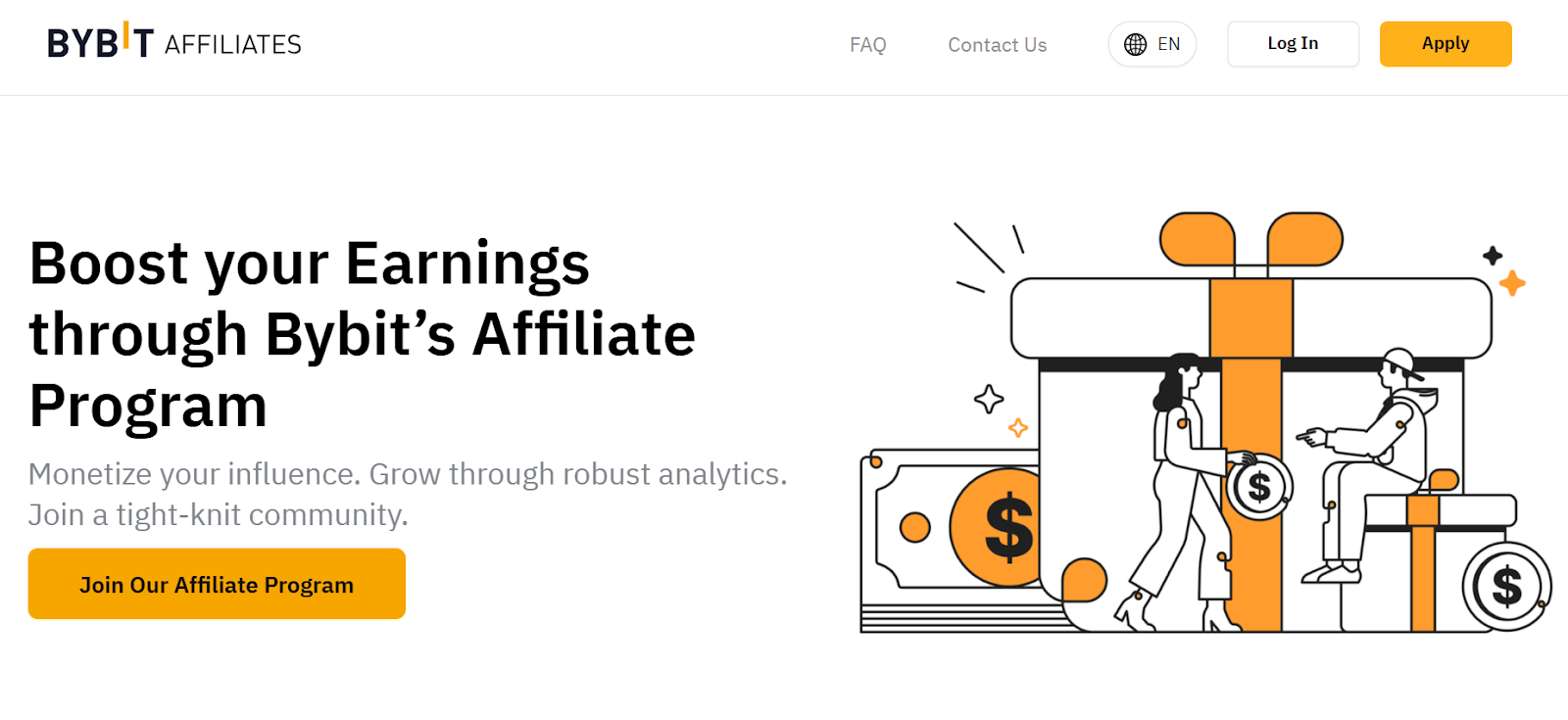
Bybit is a leading cryptocurrency derivatives exchange recognized for its user-friendly interface, deep liquidity, and robust affiliate incentives. It is especially popular among traders and influencers who specialize in technical analysis and cryptocurrency education.
It offers high commission potential with up to 50% of trading fees from your referrals. It offers flexible payouts with generous cookie durations of 30 days. You also get sub-affiliate earnings with access to Bybit’s advanced dashboard.
Bybit offers RevShare (up to 50% of trading fees from referred users) and sub-affiliate bonus (additional earnings from referred affiliates) through commissions. Its payout options include BTC, USDT, and BNB.
3. Coinbase
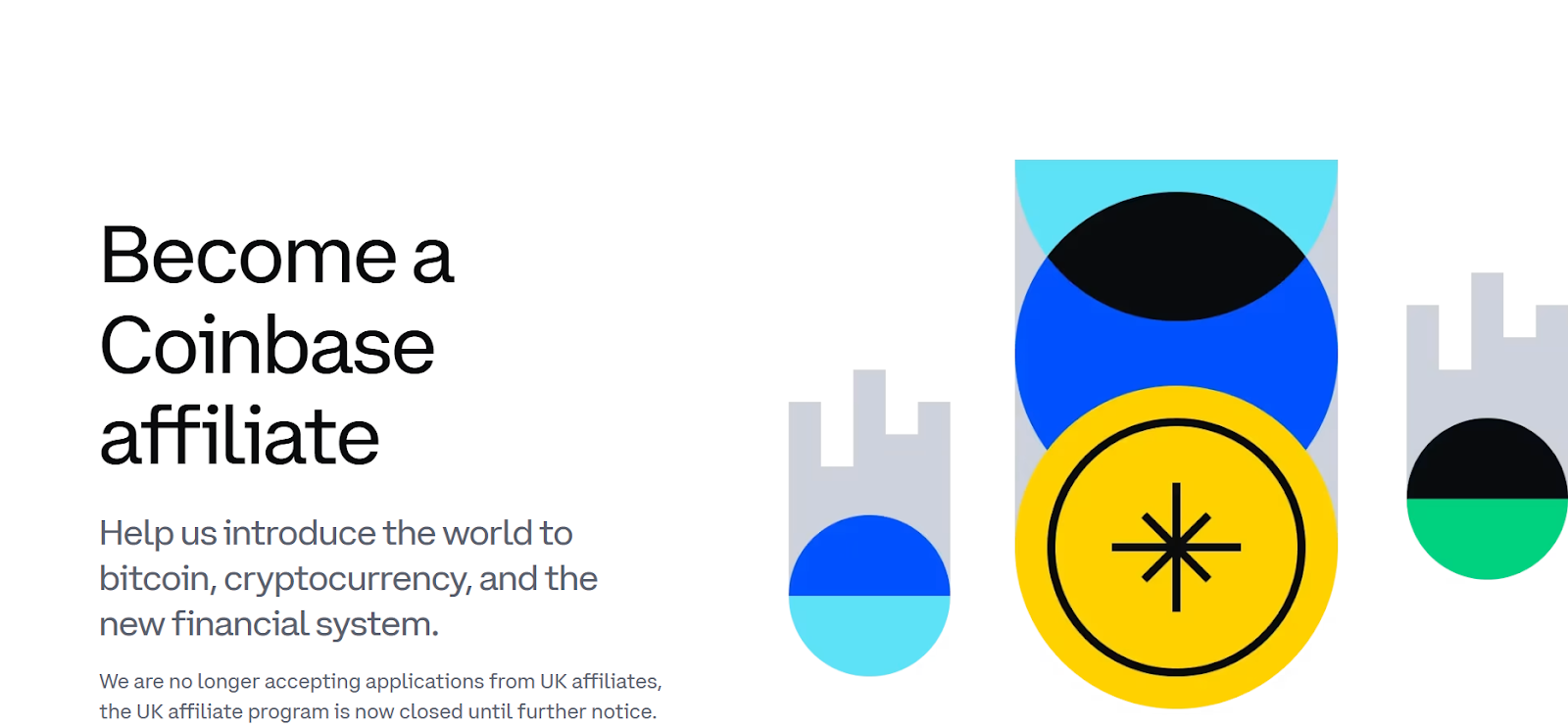
Coinbase is one of the most trusted and beginner-friendly crypto platforms globally. Its clean interface, strong regulatory standing, and brand recognition make it a great fit for affiliates who want to promote crypto to newcomers.
It offers strong brand trust and a competitive commission structure, allowing you to earn up to 50% of trading fees from referred users for the first three months. Coinbase also offers flexible payouts and user-friendly tools for performance tracking.
Coinbase utilizes a RevShare model (up to 50% of trading fees for the first 3 months) and a cookie duration (typically 30 days), providing a fair window to convert leads. Its payout options include USDT, BTC, and BNB, with payments processed every month.
4. OKX
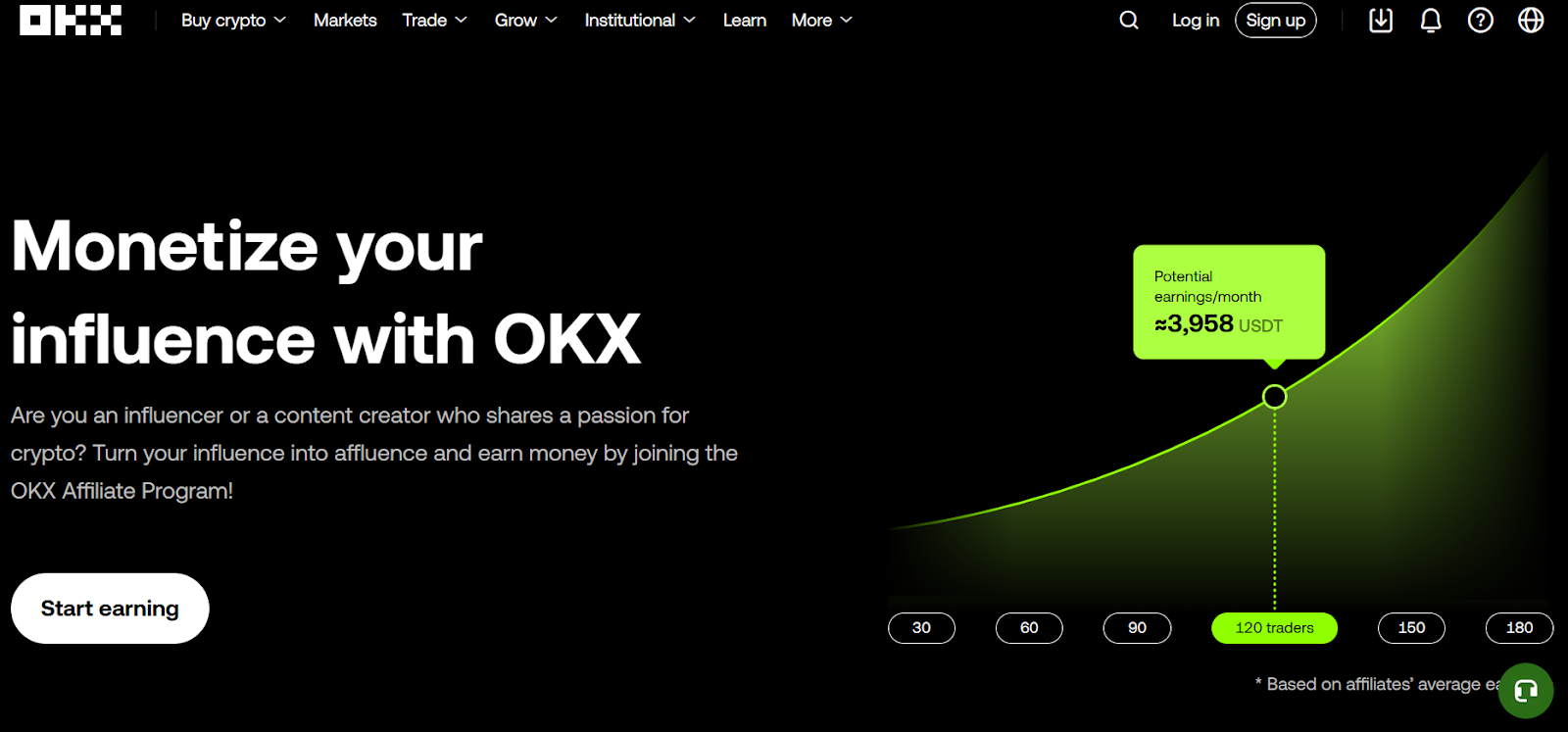
OKX is a global crypto exchange offering spot, futures, and DeFi services. Known for its advanced trading tools and wide product range, OKX’s affiliate program is designed for marketers, influencers, and educators who want to monetize crypto content with strong commissions and flexible payouts.
OKX offers a high commission rate (up to 50%), flexible payouts, a sub-affiliate program, an advanced dashboard, marketing support, and a global reach. Its commission structure includes RevShare (up to 50% of trading fees from referrals), sub-affiliate bonus (additional earnings from affiliates you recruit), and cookie duration (typically 30 days).
Its payout options include USDT, BTC, and BNB, with payments processed every month.
5. Bitget
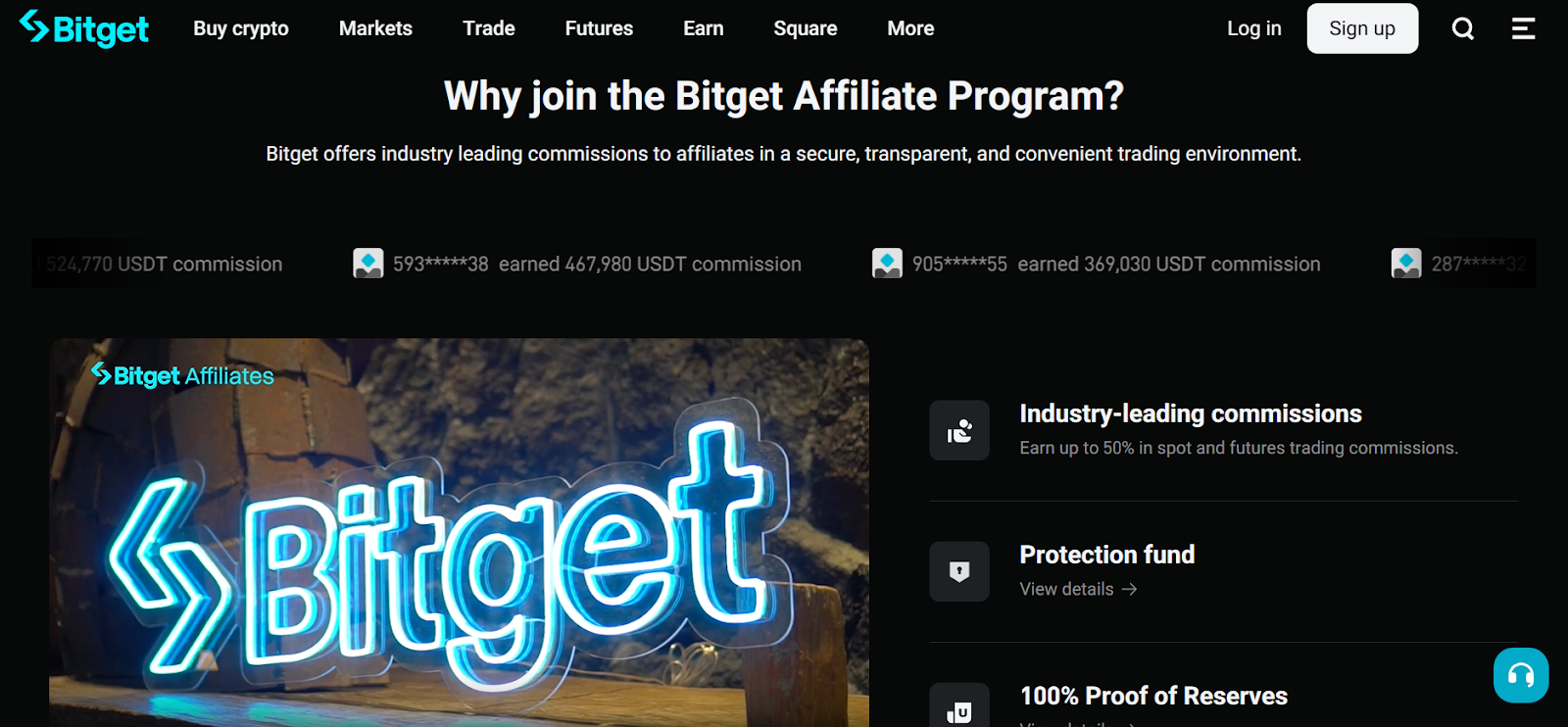
Bitget is a global crypto exchange with over 10 million users, offering spot and futures trading, copy trading, and passive income products. Its affiliate program is designed for influencers, bloggers, and community leaders who want to monetize their reach with high commissions and scalable rewards.
Bitget offers high commissions (up to 100% of spot trading and 50% of trading fees), unlimited earnings with no cap, flexible payouts, a sub-affiliate program, global reach, and a dedicated program.
Its commission structure includes spot trading (up to 100% of trading fees), future trading (40–50% of trading fees), sub-affiliate bonus (10% of sub-affiliate commissions), and cookie duration (typically 30 days). Its payout options include BNB, USDT, and BTC. Payouts are tracked and managed through Bitget’s affiliate dashboard, with monthly processing and real-time analytics.
Strategies to Maximize Revenue From Crypto Affiliate Marketing
Maximizing revenue from crypto affiliate programs is a tedious task that requires multiple, well-designed strategies. It only works once these strategies come together. Here is a tactical and beginner-friendly guide to help you maximize revenue from crypto affiliate marketing, with practical strategies and real-world examples.
1. Token-Based Incentives
Instead of or in addition to traditional commissions in BTC, USDT, or fiat, some crypto affiliate programs reward affiliates with native tokens. These tokens can be traded or staked for passive income, used to unlock platform perks, and their value appreciates over time.
Affiliates can earn tokens as a commission, as some programs pay affiliates directly in the platform’s native tokens. Bitget offers BGB tokens as part of your commission package, which can be held, traded, or used within the platform.
Affiliates can offer token bonuses to new users who sign up through their link. This boosts conversion rates and encourages users to stay active. Token bonuses work for long-term engagement because they offer:
- Sticky Value: Users who receive tokens are more likely to explore the platform and keep using it.
- Community Building: Tokens can be used to run giveaways, contests, or loyalty programs.
- Upside Potential: If the token’s value increases, both affiliates and users benefit, creating a mutually beneficial dynamic.
2. NFT Rewards
In affiliate marketing, NFTs can be used as exclusive bonuses for users who sign up or take action through your referral link. Affiliates use NFTs as perks by offering.
- Exclusive Sign-Up Bonuses: Offer a limited-edition NFT to users who register or make a deposit through your unique link.
- Unlockable Content or Access: NFTs can grant access to private Discord channels, premium content, or early product releases.
- Gamified Campaigns: Run contests or challenges where top referrers earn rare NFTs.
NFT rewards work because scarcity drives action. People love owning unique digital items, especially if they are part of a series or brand. They often showcase their NFTs on social media, which can give your campaign organic reach. NFTs can appreciate over time or unlock future benefits, keeping users invested.
3. Community Building
Crypto is complex, fast-moving, and often intimidating for newcomers. A supportive community helps build trust with your audience, creates a space for ongoing engagement, and drives repeat conversions through education and peer influence. People are more likely to click your affiliate links when they feel part of something bigger.
Use Telegram for real-time updates, polls, and group chats. Discord is ideal for creating segmented channels, hosting live chats, conducting AMAs, and running giveaways. Utilize X (formerly Twitter) to educate, entertain, and spark conversation by engaging with replies, retweets, and polls.
Communities drive conversion as members see your real-time insights and honest opinions. When others ask questions or share wins, it encourages action, and you can re-share affiliate links naturally without sounding pushy.
4. Gamification
Gamification adds a layer of fun and competition to your crypto affiliate strategy, and it is incredibly effective for boosting engagement and conversions. Gamified elements that drive results include.
- Leaderboards: Rank top-performing affiliates or referrers publicly, encouraging friendly competition and fostering a sense of pride and accomplishment.
- Badges and Achievements: Reward milestones, such as “First 10 Signups,” with badges or achievements to create a sense of progress and accomplishment.
- Tiered Rewards: Unlock higher commissions or perks as your members level up. This keeps affiliates motivated to scale their efforts.
- Referral Challenges: Promote time-bound contests with prizes for top performers to boost conversions.
Gamification is effective in affiliate marketing because it enhances motivation, increases retention, drives conversions, and fosters community engagement.
5. Data-Driven Optimization
To grow your affiliate income, you need to monitor key metrics, such as:
- Clicks: How many people are clicking your affiliate links?
- Conversions: How many of those clicks turn into signups or purchases?
- ROI: Are your efforts generating more revenue than they cost?
To measure these metrics, utilize tools such as affiliate dashboards, Google Analytics for traffic insights, and Bitly or UTM links to track link performance. Once you have data, use it to refine your strategy.
Identify the top-performing content and double down on it. Optimize your CTAs and link placements by moving them higher in the content or embedding them in buttons. Segment your audience to tailor your content for different user types.
Refresh your old content with new affiliate links and turn blog posts into YouTube videos or Twitter threads. With these data-driven optimizations, you can significantly increase your affiliate income.
Challenges and Compliance
Crypto affiliate marketing offers exciting earning potential, but it also comes with unique challenges and strict compliance requirements. Some key challenges that affiliates face include;
- High Competition: The crypto space is saturated with influencers, bloggers, and marketers. Standing out in such a saturated space requires niche targeting, high-quality content, and consistent engagement.
- Market Volatility: As crypto prices and user interest can swing wildly, campaigns that perform well during bull markets may stall during downturns.
- Ad Restrictions: Platforms such as Google, Facebook, and TikTok often restrict or ban cryptocurrency ads. For this reason, affiliates must rely more on organic content, SEO, email, and community building.
- Fragmented Global Regulations: Crypto laws vary by country, with some permitting it fully and others imposing partial or total bans. Affiliates promoting exchanges or wallets must understand regional rules to avoid penalties.
Affiliates must adhere to KYC/AML standards to ensure user safety and protect their reputation. Always disclose affiliate partnerships, as it builds trust and ensures compliance with consumer protection laws.
To stay compliant while scaling.
- Partner with regulated platforms that offer clear affiliate terms
- Use disclaimers and avoid misleading claims
- Keep up with evolving laws in your target regions
- Consult legal advisors if promoting across borders
- Build trust through honest reviews, educational content, and community engagement
Mistakes You Should Avoid
Avoiding common pitfalls is key to building a sustainable and profitable crypto affiliate business. Below is a list of mistakes to avoid at all costs in crypto affiliate marketing to prevent catastrophic results.
- Lack of Niche Focus: Trying to appeal to everyone dilutes your message, making it harder to build trust and authority. Select a niche, such as DeFi, NFTs, beginner guides, or trading strategies, and tailor your content to that specific audience.
- No Tracking or Analytics: Without tracking, you won’t know what is working or where to improve. Use affiliate dashboards, UTM links, and Google Analytics to monitor clicks, conversions, and ROI.
- Ignoring Compliance: Promoting unregulated platforms or making misleading claims can result in bans or loss of trust within the community. Partner with KYC/AML-compliant platforms, disclose affiliate relationships, and avoid “guaranteed profit” language when promoting any crypto content.
- Inconsistent Content Creation: Sporadic posting leads to low engagement and missed opportunities. To fix this issue, create a content calendar and post regularly across platforms.
- Over-Promotion: Constantly pushing links without educating or entertaining your audience can turn them off. Focus on creating helpful content, such as comparisons, tutorials, and reviews, and naturally weave affiliate links into the content.
- Not Testing or Optimizing: Sticking to one format or CTA may limit your potential. Use A/B testing to optimize headlines, CTAs, and link placements. Refresh old content with new insights.
Learn How to Make Money From Crypto With Dypto Crypto
Ready to turn your curiosity into crypto income? At Dypto-Crypto, we make it easy to dive into the world of blockchain and crypto, whether you are a total beginner or a seasoned trader.
Explore our expert-curated learning resources to master crypto fundamentals, affiliate strategies, and DeFi tools, and stay ahead with weekly insights and market updates. You can also sign up for our free weekly newsletter and start your journey toward smarter crypto earnings today.
FAQs (Frequently Asked Questions)
Q: Do you need prior crypto knowledge to start affiliate marketing?
A: No, you don’t need prior crypto knowledge to start affiliate marketing, but it helps in the long run. Start simple and learn as you go.
Q: What skills are needed to succeed in crypto affiliate marketing?
A: To succeed in crypto affiliate marketing, you need content creation skills, basic SEO and keyword research ability, knowledge about social media marketing, some analytics and tracking skills, basic crypto knowledge, and thorough compliance understanding.
Q: How much can beginners earn from crypto affiliate programs?
A: Beginners in crypto affiliate programs can earn $50-$300/month with passive links, $300-$1,500/month with targeted content, and $1,500+/month with community management in association with SEO.
Q: What are the risks of crypto affiliate marketing?
A: Risks associated with the crypto affiliate marketing include market volatility, regulatory uncertainty, ad restrictions, high competition, and regulatory compliance.
Q: Can affiliates promote multiple crypto programs at the same time?
A: Yes, affiliates can absolutely promote multiple crypto programs at the same time, and it is often a smart strategy to diversify yourself. However, you must remain transparent and disclose your affiliations when promoting multiple cryptocurrency programs.
Q. How do taxes work for crypto affiliate earnings?
A: Crypto affiliate earnings are taxable in most countries, and understanding how they are classified can help you stay compliant and avoid surprises.
Q. What’s the difference between crypto affiliate marketing and referral programs?
A: Affiliate Marketing is designed for professionals who actively promote crypto platforms through blogs, videos, social media, and SEO. It offers higher earning potential and advanced tracking tools. Referral Programs are simpler and meant for everyday users who want to invite friends and earn small bonuses or discounts.
Disclaimer
This article is for educational and information purposes, and should not be considered financial advice. For more information visit our disclaimer page
About the Author