


Crypto margin trading has become one of the strategies traders regularly use to increase exposure to the market without committing massive amounts of capital upfront. Traders can generate much higher returns by borrowing funds to increase their buying power. This powerful tool does come with some major risks, though.
If you are thinking about dipping your toes into leveraged trading or sharpening your approach to it, then you have come to the right place.
We will break down everything you need to know about crypto margin trading. We will start with the fundamentals of margin trading and then go over real-world tips for managing risk. You will also learn about the best platforms to consider for crypto margin trading in 2025.
What Is Crypto Margin Trading?
In simple terms, crypto margin trading means borrowing money from an exchange to trade bigger positions than your own capital allows. So, basically, it’s like taking out a loan to boost your buying power.
Here is how it works. You put up collateral, called initial margin. Then the exchange lends you extra funds. This allows you to open larger positions and multiple your market exposure.
Leverage is basically your collateral-to-loan ratio. With 5x leverage, every $1 you invest controls a total of $5 worth of crypto. So what that means is that $1,000 at 5x lets you open a $5,000 position. This means that if you are right, then your profits are amplified. But if you are wrong, your losses are unfortunately magnified.
In spot trading, we were buying with our own money. But in margin trading, borrowed capital and interest charges are incurred. So, that means you have to repay the loan with interest. If the market is moving hard against you, you’re risking liquidation. The exchange auto-closes your position to recover what you borrowed.
How Does Margin Trading Work?
Let’s walk through what you’ll actually need to do, and paying attention to the details here can save you a lot of headaches down the road.
Setting Up Your Exchange Account
First things first: find an exchange that actually offers margin trading. Not every platform does, and the ones that do all have their own rules about leverage limits and fees. Once you’ve picked one, you’ll go through the usual identity verification dance (KYC stuff), then flip the switch to enable margin trading in your account settings.
Putting Up Your Collateral
Now you’ll deposit some funds into your margin account. Think of this as your security deposit. It’s what backs up the money you’re about to borrow. The more you put in, the more you can borrow and trade with.
Isolated vs. Cross Margin: Pick Your Battle
Before jumping into a trade, you need to choose your margin style. With an isolated margin, only the money you assign to a specific trade is at risk. It’s like putting up walls around each position. Cross margin is riskier because your entire account balance backs all your trades. We’ll dig deeper into this choice in a bit.
Dialing In Your Leverage
Time to pick your leverage. Going with 2x to 5x? That’s the cautious route. Cranking it up to 10x or 100x? You’re playing with fire because bigger wins come with way bigger losses, too. If you’re new to this, seriously start small. Learn how this stuff actually works before you go all in.
Going Long or Short
Okay, now for the actual trading. Going “long” just means you’re buying crypto because you think the price is headed up. Going “short”? That’s basically when you borrow crypto, sell it right away, and hope you can buy it back cheaper later to pocket the difference.
Protect Yourself with Stop-Loss and Take-Profit
Here’s where smart traders separate themselves from the crowd: always set stop-loss orders. These automatically bail you out if things go south, letting you cut your losses at a level you’re okay with. Take-profit orders are the opposite. They lock in your wins when you hit your target. In crypto’s wild price swings, these tools are not just helpful, they are essential.
Paying Back and Avoiding Liquidation
When you close your trade, you pay back what you borrowed plus interest (which adds up based on how long you kept the position open). But here is the scary part: if your trade tanks too hard, the exchange will issue a “margin call,” effectively demanding you add more money. That means they will liquidate your position or forcibly close it to recover their money if your losses reach a certain level. So unfortunately, yeah, you lose what you put in!
Types of Margin Trading in Crypto
Margin trading isn’t a one-size-fits-all approach. That is why it is crucial to understand the different types and help you pick the one that matches your risk tolerance.
Isolated Margin
This is the conservative option. Your collateral gets locked to one specific position. If that trade gets liquidated, only those funds are lost. Everything else in your account stays safe.
Here’s an example. You allocate $500 to a Bitcoin position, and it tanks? You lose that $500, but your other positions remain untouched. This approach is great for testing out new strategies or trading volatile assets without risking your entire account.
Here’s the downside: you get less flexibility. Each position stands alone, so you can’t use gains from one trade to save another that’s struggling.
Cross Margin
The opposite approach here. All your account funds back all positions simultaneously. This gives you more flexibility because winning trades can offset losing ones and prevent liquidation.
One position is profitable, while the other is losing. With cross-margin, your winning trade’s gains provide extra collateral to keep the losing trade alive.
There is a major risk, however. One catastrophic trade can liquidate your entire account. It’s an “all in” approach that works best for experienced traders who actively monitor everything.
Margin Trading vs Leverage Tokens
Leverage tokens (also called leveraged ETPs) offer leveraged exposure without traditional margin trading. A 3x Bitcoin token delivers 3x Bitcoin’s daily returns automatically.
There is a key difference. There are no margin calls or liquidation risk since you’re not actually borrowing anything. The token automatically rebalances to maintain your leverage.
Here is a catch. They decay over time (especially in sideways markets), have management fees, and are pricier overall. They work better for short-term trades than long-term holds.
How Crypto Margin Trading Differs From Spot and Futures
Understanding how margin trading compares to spot trading and futures contracts really helps clarify when each approach makes sense for your situation.
Spot Trading is the most straightforward method out there. You buy crypto with your own money and actually own the asset. If you buy one Bitcoin for $60,000, you own that Bitcoin and can hold it indefinitely without worrying about interest charges, margin calls, or liquidation. Your risk is limited to the amount you invested. If Bitcoin drops to zero, you lose your $60,000, but you can’t lose more than that.
Margin Trading introduces borrowed capital into the equation. You’re still buying actual crypto assets, but you’re using leverage to control a larger position than your capital alone would allow. This amplifies both gains and losses. Unlike spot trading, you pay interest on borrowed funds, face liquidation risk if the market moves against you, and can potentially lose more than your initial investment in extreme cases.
Futures Trading involves contracts that speculate on the future price of an asset rather than owning the asset itself. Futures contracts have expiration dates, and at settlement, you’re betting whether the price went up or down from the contract price. That’s because futures typically offer even higher leverage than margin trading (sometimes 100x or more). Of course, this makes them extremely risky but popular among professional traders. Like margin trading, futures involve liquidation risk, but unlike spot or margin trading, you never actually hold the underlying cryptocurrency.
The risk hierarchy generally flows like this: spot trading (lowest risk), margin trading (medium to high risk), and futures trading (highest risk). Your choice really depends on your experience level, risk tolerance, and what you’re trying to achieve with your trading.
Benefits of Crypto Margin Trading
Look, margin trading isn’t for everyone, but it does offer real advantages if you know what you’re doing and can handle the risks.
Amplified Profit Potential
This is the big draw. Margin trading lets you multiply your gains. Picture this: a 10% price movement with 5x leverage turns into a 50% profit on your initial capital (before fees and interest are deducted). This magnification effect means skilled traders can generate some serious returns from relatively small price movements.
Ability to Short the Market
Here’s where margin trading gets interesting. You can actually profit from falling prices, not just rising ones. In a bear market or during corrections, shorting lets you borrow crypto, sell it at current prices, and buy it back cheaper later. This flexibility means you can make money in any market condition.
Hedging Opportunities
Experienced investors use margin trading to protect other positions. Say you’re holding a large amount of Bitcoin long term and expect some short-term volatility. You could open a small short position on margin to offset potential losses without actually selling your long-term holdings.
Capital Efficiency
Margin trading lets you take meaningful positions without tying up all your capital. Instead of needing $50,000 to make a substantial trade, you might only need $10,000 with 5x leverage. This efficiency allows you to diversify across multiple positions or keep capital available for other opportunities that come up.
Flexibility in Volatile Markets
Crypto markets are notoriously volatile. We’re talking about dramatic price swings happening in hours or even minutes. Margin trading gives you the tools to capitalize on these rapid movements (whether upward or downward), maximizing opportunities that spot trading might miss entirely.
Important Note: These benefits apply primarily to skilled, experienced traders who understand risk management inside and out. If you’re just starting, the risks honestly outweigh the rewards until you’ve gained sufficient trading experience.
What are the Risks?
The same leverage that amplifies profits also magnifies losses. Understanding these risks is absolutely crucial before putting real capital at stake.
Liquidation Risk
This is your worst nightmare. If losses get close to your collateral, the exchange automatically closes everything to recover what you borrowed. With 10x leverage, just a 10% dip wipes you out completely. Higher leverage means even tiny price moves can wreck you.
Market Volatility
Crypto swings like crazy. We’re talking 15% drops in an hour that actually happen. With 5x to 10x leverage, these wild moves can liquidate you before you even blink. Volatility hits way harder when you’re leveraged.
Borrowing Costs
Interest piles up daily on borrowed funds. A winning trade can turn into a loss once fees and interest eat into it, especially if you hold long. Rates vary by exchange and which coin you’re trading.
Emotional Pressure
Watching leveraged positions is stressful as hell. That stress leads to panic selling, over-leveraging to chase losses, or holding losing trades too long in the hope of a comeback. Many traders start overtrading, trying to win it back, which just digs the hole deeper.
Exchange Risk
Your money sits on a centralized exchange. Hacks, freezes, or collapses can lock you out. Even big-name platforms aren’t bulletproof against security breaches or other issues that could put your funds at risk.
Tips to Get Better Margin Trading in Crypto
Success in margin trading requires more than just understanding the mechanics. It demands discipline, strategy, and continuous learning.
Start with Low Leverage
If you’re new to margin trading, begin with 2x or 3x leverage, not 10x or 100x. Lower leverage gives you more room for error and helps you understand how margin mechanics work without risking catastrophic losses. As you gain experience and develop consistent strategies, you can gradually increase leverage if it fits your risk tolerance.
Use Stop-Loss Orders Religiously
Never enter a leveraged position without setting a stop-loss. Decide in advance how much you’re willing to lose on a trade and set an automatic stop-loss at that level. This removes emotion from the equation and prevents small losses from becoming account-destroying losses. Similarly, take-profit orders help you lock in gains before market reversals wipe them out.
Trade Strong Trends, Avoid Choppy Markets
Margin trading works best when there’s a clear directional trend. Trading in sideways, uncertain markets increases the risk of getting stopped out by normal volatility. Wait for clear setups with strong momentum and defined support or resistance levels before deploying leverage.
Only Leverage What You Can Afford to Lose
This sounds obvious, but it bears repeating. Never borrow against money you need for living expenses or can’t afford to lose entirely. Margin trading should only be attempted with genuine risk capital. The old trading wisdom “don’t invest more than you can afford to lose” is doubly important when leverage is involved.
Understand Cross-Margin and Portfolio Diversification
If using cross-margin, don’t put all your collateral behind one bet. Diversify your positions across different cryptocurrencies or strategies so that one bad trade doesn’t tank your entire account. Some traders maintain a mix of isolated positions for higher-risk trades and cross-margin for more stable, lower-leverage positions.
Monitor Your Positions Actively
Margin trading isn’t a set-it-and-forget-it strategy. Market conditions can change rapidly, requiring adjustments to positions, additional collateral, or early exits. Set price alerts, check your positions regularly, and be prepared to act quickly when needed. Many traders who get liquidated simply weren’t watching when market conditions shifted.
Learn Technical Analysis
Understanding chart patterns, support and resistance levels, volume indicators, and momentum oscillators gives you an edge in timing entries and exits. Margin trading magnifies the importance of proper entry points. Entering a position at a poor price can mean the difference between profit and liquidation.
Practice Risk-Reward Ratios
Before entering any leveraged trade, calculate your risk-reward ratio. A good rule of thumb is aiming for at least a 2:1 or 3:1 reward-to-risk ratio. If you’re risking $100 to make $150, the risk-reward might not justify the trade, especially when you factor in fees and interest.
Keep an Eye on Funding Rates and Interest
Different cryptocurrencies have different borrowing rates. Bitcoin might have a 0.02% daily rate, while an obscure altcoin might charge 0.1% or more. These costs add up quickly, especially on longer-term positions. Always factor in financing costs when calculating potential profits.
Use Demo Accounts When Available
Several exchanges offer demo or paper trading accounts where you can practice margin trading with virtual funds. Use these to test strategies, get comfortable with the interface, and understand how leverage affects your positions without risking real money.
Best Exchanges for Crypto Margin Trading
Choosing the right platform is crucial; exchange features, fees, leverage limits, and security measures vary significantly. Here are the top exchanges for crypto margin trading in 2025:
1. Binance
Binance is the world’s largest cryptocurrency exchange in terms of trading volume. It, of course, offers margin trading with up to 10x leverage on spot trading and up to 125x on futures. With over 235 million users and support for 500+ cryptocurrencies, Binance offers exceptional liquidity, competitive fees (a 0.1% base rate with BNB discounts), and both isolated and cross-margin options. The platform’s robust security measures and comprehensive trading tools make it suitable for traders at all levels.
2. Bybit
Known for its professional-grade trading interface and advanced features, Bybit offers up to 10x leverage on spot margin and 100x on derivatives. The platform supports over 1,650 cryptocurrencies and offers copy trading features, making it perfect for beginners who want to mirror experienced traders. Bybit’s clean interface, deep liquidity, and competitive fees (0.02% maker, 0.055% taker) have earned it over 20 million users worldwide.
3. OKX
OKX stands out with its sophisticated multi-currency cross-margin mode and auto-transfer features. The exchange supports crypto-margined and USDT-margined perpetual futures with up to 100x leverage. With over 50 million users and support for 300+ cryptocurrencies, OKX offers excellent liquidity and a comprehensive suite of trading tools for both spot and derivatives margin trading.
4. MEXC
For traders seeking ultra-high leverage, MEXC offers some of the most aggressive terms, up to 200x leverage on select contracts. The platform features really low fees (0% makers, 0.02% takers on many pairs) and supports thousands of cryptocurrency pairs. MEXC’s low margin requirements make it attractive for active traders, though the high leverage options require extreme caution.
5. Kraken
One of the oldest and most trusted exchanges (operating since 2011), Kraken offers up to 5x leverage on over 190 margin pairs. It’s one of the few major platforms accepting U.S. traders in most states. Kraken’s stellar security track record, regulatory compliance, and deep liquidity (over $2 billion daily volume) make it ideal for traders prioritizing safety. The platform supports margin trading denominated in USD, EUR, BTC, and other fiat currencies.
6. Bitget
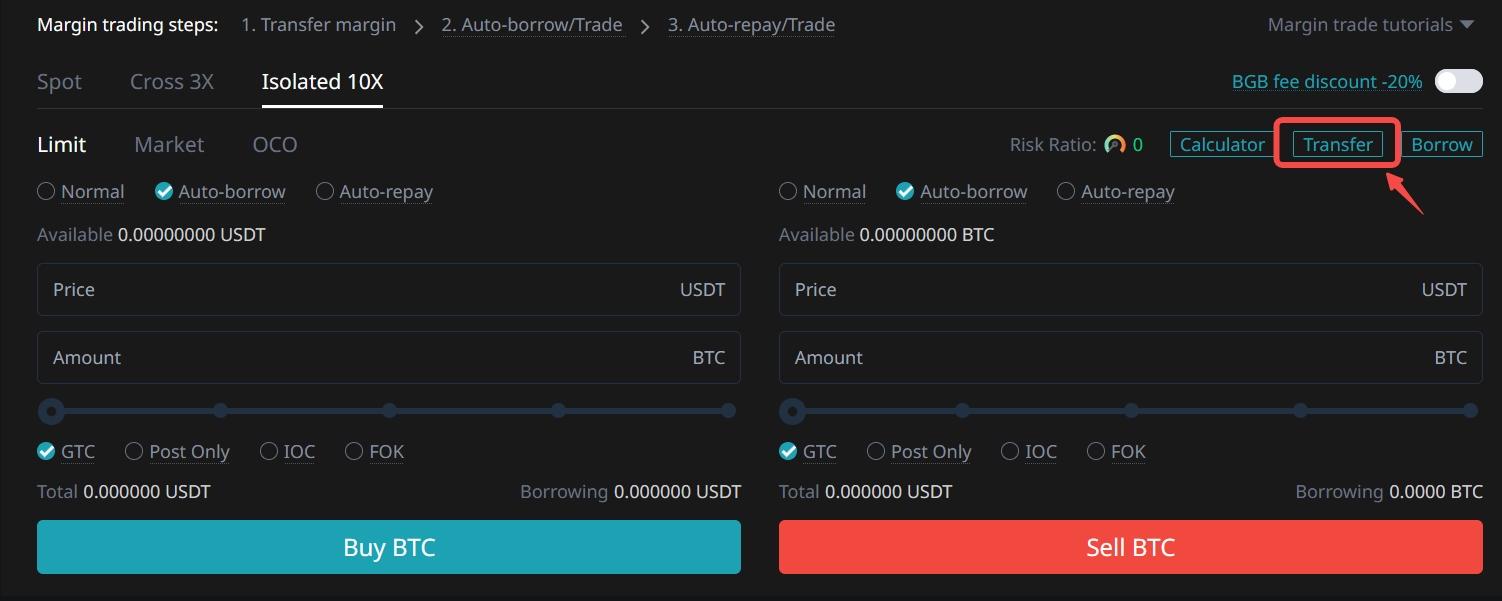
Bitget combines a user-friendly design with professional features, offering margin and copy trading. The platform offers competitive leverage options and hosts a $600 million insurance fund to enhance user protection. Bitget’s advanced API support makes it popular among algorithmic traders and high-frequency trading operations.
7. KuCoin
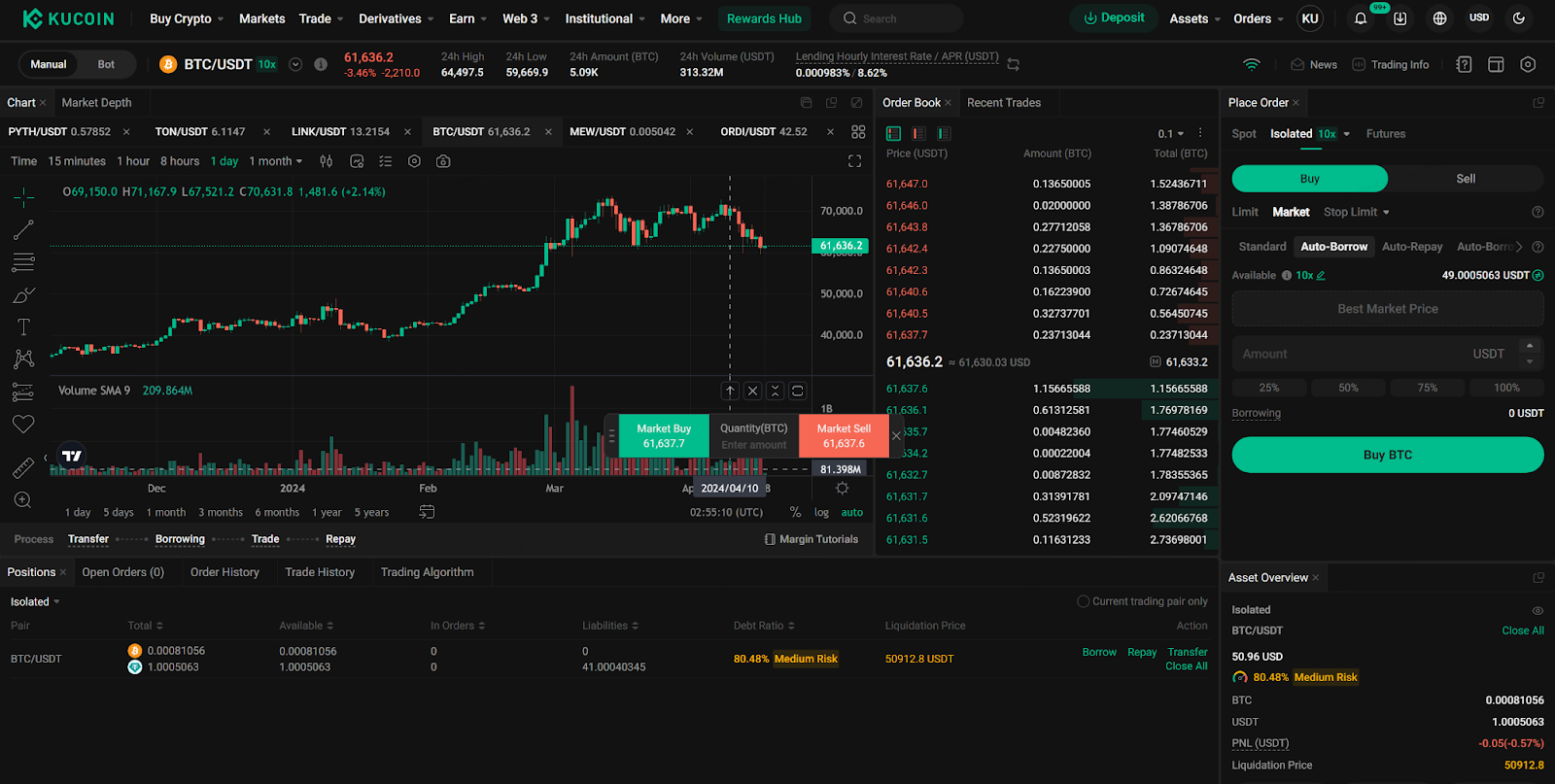
KuCoin offers ultra-low trading fees and supports over 200 margin trading pairs. The platform includes leverage tokens for traders wanting leveraged exposure without traditional margin mechanics. KCS token holders enjoy additional fee discounts, making it highly cost-efficient for frequent traders.
8. Phemex

Phemex offers generous welcome bonuses and supports leverage from 5x to 100x. Based in Singapore since 2019, the platform has built a reputation for reliability and speed. Its user-friendly interface makes it particularly accessible for beginners transitioning to margin trading.
9. dYdX
For traders preferring decentralization, dYdX operates as an open-source DeFi protocol rather than a centralized exchange. It offers margin trading without KYC requirements, giving traders more control over their funds. While the interface is more complex, dYdX provides an alternative for those uncomfortable with centralized custody.
10. BYDFi

Popular among U.S. traders, BYDFi offers up to 200x leverage with no KYC requirements. The platform offers competitive fees and straightforward access, though traders should exercise extreme caution with high leverage.
Note: Always research current regulations in your jurisdiction. Some platforms restrict access to U.S. traders or residents of certain countries due to regulatory requirements.
Final Thoughts
Crypto margin trading offers a big opportunity and a big risk. They’re two sides of the same coin. Success isn’t about chasing max returns or using the highest leverage possible. It’s about understanding the mechanics, respecting the risks, and prioritizing capital preservation above everything else.
Successful margin traders share some key traits. They start conservative, never risk what they can’t afford to lose, use stop-losses religiously, and continuously learn from their experiences. They treat leverage as a tool, not a strategy in itself, and they know that protecting capital matters way more than any single trade.
If you’re considering margin trading, make sure you understand it thoroughly before putting real money on the line. Practice with demo accounts, start with low leverage, and build solid trading fundamentals first. Pick reputable exchanges with strong security and transparent fee structures.
FAQs (Frequently Asked Questions)
Q: What is the difference between crypto margin trading and futures trading?
Margin trading: You borrow money to buy actual crypto on the spot market. You own it and pay interest. Futures trading: you’re trading contracts betting on future prices—no actual crypto ownership. Futures have expiration dates and are usually more leveraged. Both can liquidate you, but futures are more complex.
Q: Is crypto margin trading profitable?
It can be for experienced traders with good risk management. But most beginners lose money. Leverage amplifies both gains and losses. Success depends on skill, discipline, and emotional control. Stick to spot trading until you’re consistently profitable without leverage.
Q: How is interest calculated on borrowed funds in margin trading?
Daily, based on APR divided by 365. Example: borrow $10,000 at 10% APR = ~$2.74/day. Rates vary by exchange and crypto. Interest accrues while your position is open and is deducted when you close.
Q: What leverage levels are recommended for new traders?
Start at 2x-3x max. Even at 3x, a 33% move against you wipes you out. Many pros say trade without leverage for months or years first. Once consistently profitable, try 5x cautiously. Higher requires serious expertise.
Q: How does liquidation happen in crypto margin trading?
When losses nearly equal your collateral, you hit the maintenance threshold (usually 10-20% of position value). You get a margin call to add funds. Don’t add funds or market moves too fast? Exchange auto-closes your position. An isolated margin liquidates only that position; cross margin can wipe out your whole account. Happens instantly.
Disclaimer
This article is for educational and information purposes, and should not be considered financial advice. For more information visit our disclaimer page
About the Author