


Managing cryptocurrency on SEI Network requires the right tools. Whether you are staking SEI tokens, connecting to decentralized apps, or storing assets securely, your wallet choice directly impacts your experience.
This guide covers the nine most secure and user friendly SEI wallets in 2025. We have evaluated each based on security features, ease of use, SEI integration depth, and suitability for different experience levels.
What is SEI Wallet?
A SEI wallet is a digital tool for storing, managing, and transacting SEI tokens and assets on the SEI Network. These wallets handle your private keys, connect you to decentralized applications, and enable staking to earn rewards.
SEI wallets differ from general crypto wallets through native support for SEI Network’s unique features. SEI operates as a Layer 1 blockchain with a 0.38-second finality time. With SEI V2, the network supports both the Cosmos SDK architecture and Ethereum Virtual Machine (EVM) compatibility, enabling dual address systems that point to the same account.
This dual compatibility means SEI wallets handle both Cosmos addresses (starting with “sei”) and EVM addresses (starting with “0x”), managing these behind the scenes for seamless transactions.
Key functions include storing SEI tokens securely, connecting to SEI dApps, staking SEI to earn yields, managing NFTs, and transacting with sub-second speeds.
Why You Need a SEI-Compatible Wallet for Trading and Staking
Using a wallet specifically built for SEI or with verified SEI compatibility makes a significant difference in functionality.
Generic crypto wallets often lack infrastructure to support SEI’s dual Cosmos-EVM architecture. Without SEI-specific integration, you might encounter address derivation errors, inability to access certain dApps, missing staking interfaces, or transaction failures.
SEI-compatible wallets automatically manage the dual address system, letting you interact seamlessly with both Cosmos and EVM applications. When connecting to dApps, the wallet presents the correct address format without manual configuration.
Staking represents another critical advantage. SEI uses Proof of Stake where token holders delegate SEI to validators and earn rewards. Wallets built for SEI include native staking interfaces for selecting validators, delegating tokens, claiming rewards, and monitoring performance.
Security also favors SEI-specific wallets. These understand SEI’s coin type derivation paths and HD wallet structures, preventing issues from manually importing wallets between incompatible systems.
9 Best SEI Wallets: Secure, Fast, and Feature-Packed
Finding the right SEI wallet shouldn’t feel like solving a puzzle. We have tested and evaluated the most trusted SEI-compatible wallets based on security, ease of use, native integration quality, and whether they work for complete beginners or advanced DeFi traders.
Each wallet below brings something different to the table, from native Cosmos support to EVM compatibility through SEI V2, plus hardware options for maximum security:
| Wallet Name | Wallet Type | SEI Support Method | Platform Access | Best For |
| Compass Wallet | Software (Browser) | Native Integration | Browser | Best overall SEI wallet |
| Keplr Wallet | Software (Browser/Mobile) | Native Cosmos Integration | Browser, iOS, Android | Cosmos ecosystem users and advanced staking |
| MetaMask | Software (Browser/Mobile) | EVM via SEI V2 | Browser, iOS. Android | EVM users familiar with MetaMask |
| Fin Wallet | Software (Browser) | Native SEI Integration | Chrome, Firefox, Edge | First Time SEI users and NFT collectors |
| Phantom | Software (Browser/Mobile) | Cross-chain Bridging | Browser, iOS, Android | Multi-chain users bridging to SEI |
| Rabby Wallet | Software (Browser) | EVM via SEI V2 | Browser Extension | Security-focused EVM users |
| Trust Wallet | Software (Mobile) | Multi-chain Support | iOS, Android | Mobile-first users |
| Ledger | Hardware | Via Keplr Integration | Hardware Device + Browser | Maximum security |
| Trezor | Hardware | Limited Third-party Support | Hardware Device + Browser | Hardware security enthusiasts |
1. Compass Wallet
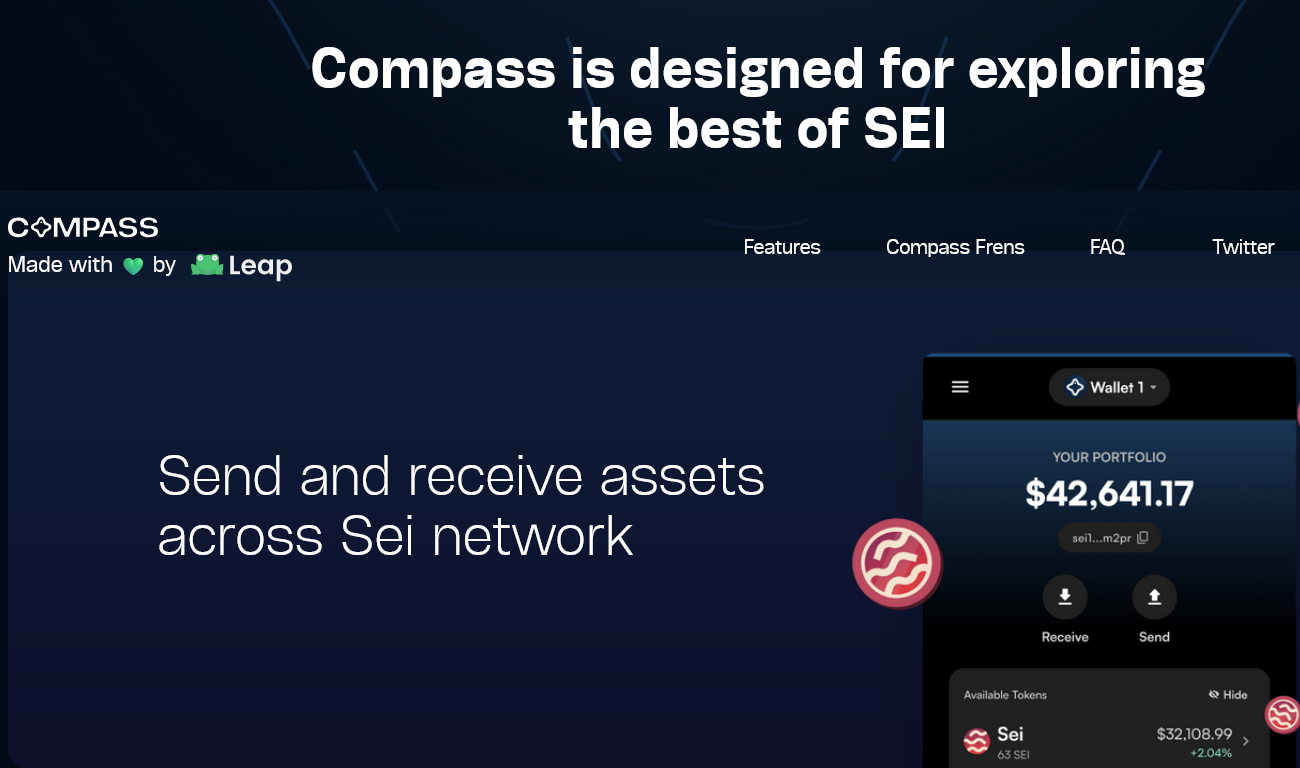
Compass Wallet delivers the most comprehensive native SEI experience. Built specifically for SEI Network by experienced Cosmos developers, Compass provides seamless integration across the ecosystem and automatically handles both Cosmos and EVM addresses.
When you connect Compass to a DEX or NFT marketplace, it presents the correct address format without requiring manual network switching, eliminating confusion when switching between dApp types.
Key Features:
- In wallet staking with validator metrics including commission rates, voting power, and uptime statistics
- NFT gallery displaying collections with full metadata and artwork rendering
- Ledger hardware wallet integration for enhanced security on substantial holdings
- Detailed portfolio overview consolidating all SEI Network tokens
- Regular updates aligned with SEI Network development
2. Keplr Wallet
Keplr is the most established wallet in the Cosmos ecosystem, with millions of users and battle-tested security. Its deep Cosmos SDK integration ensures seamless integration with SEI’s Cosmos-based architecture, and SEI has supported it since the network’s early days.
For users already managing other Cosmos chains, such as Cosmos Hub, Osmosis, or Juno, Keplr provides a unified interface across the entire ecosystem. Your SEI tokens sit alongside other Cosmos assets with a consistent user experience.
Key Features:
- Advanced staking with voting history, commission tracking, and auto-compounding capabilities on supported chains
- Multi chain portfolio management switching between SEI and dozens of Cosmos chains instantly
- Browser extension and mobile apps for flexibility
- Ledger integration for hardware security
- Two factor authentication and biometric unlocking for mobile users
3. MetaMask
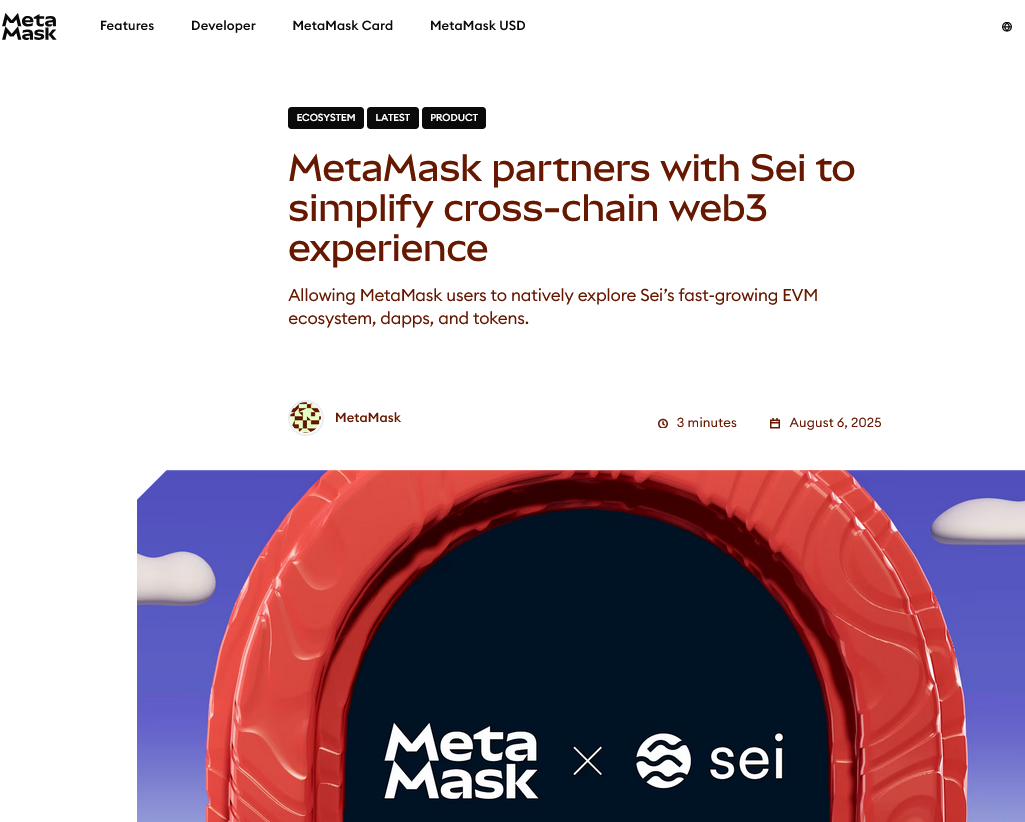
MetaMask brings its industry leading EVM wallet experience to SEI Network through SEI V2’s EVM compatibility. With over 30 million monthly active users globally, MetaMask offers familiarity and extensive third-party integration for users from Ethereum and other EVM chains.
SEI V2’s EVM compatibility means MetaMask can be used with the same setup process as any other EVM chain. If you are already comfortable with MetaMask from Ethereum, Polygon, or BSC, the learning curve for adding SEI is essentially zero.
Key Features:
- Token swapping within wallet interface finding best prices across multiple DEXs
- Multi-platform support across Chrome, Firefox, Brave, Edge, Opera browsers plus iOS and Android mobile apps
- Hardware wallet integration with Ledger and Trezor devices
- Extensive dApp compatibility with virtually every EVM application on SEI
- Custom token addition by pasting contract address
- Network switching between SEI and other EVM chains in two clicks
4. Fin Wallet
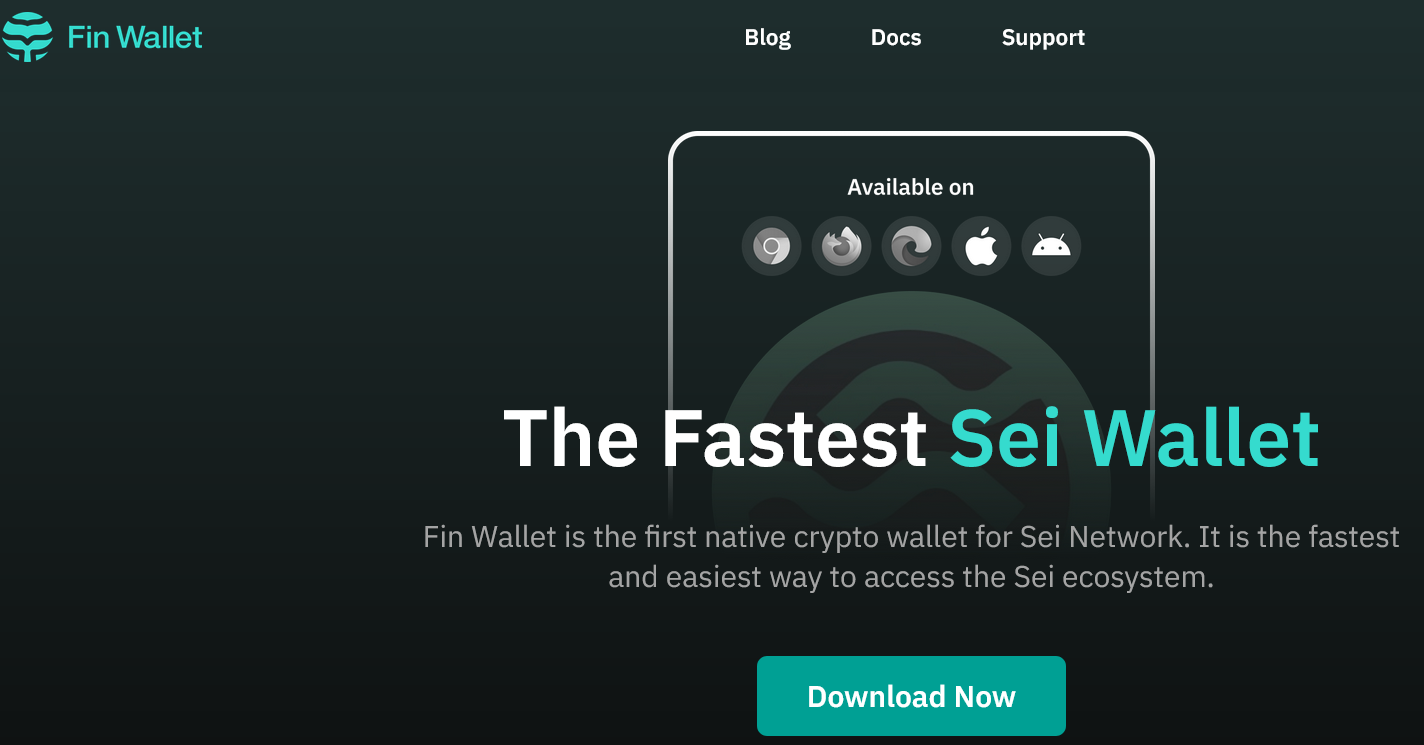
Fin Wallet is the first native wallet built specifically for SEI Network, launched in August 2023 alongside SEI’s mainnet. As a SEI-first wallet, Fin focuses exclusively on delivering the best possible SEI experience without trying to support dozens of other chains.
The development team maintains close coordination with SEI Labs, ensuring Fin stays up to date on network changes and new features, often before other multi-chain wallets implement support.
Key Features:
- NFT management with attractive gallery view and intuitive organization for viewing digital art
- Custom token support with automatic detection displaying accurate balances
- Fast wallet creation gets you started in seconds
- Clear fee estimation showing costs in both SEI tokens and approximate USD value
- DApp browser integration for exploring the SEI ecosystem
- Multi-language support including English, Indonesian, Vietnamese, French, Portuguese, Russian, Thai, Chinese, and Japanese
5. Phantom
Phantom gained fame as Solana’s most popular wallet before expanding to Ethereum, Polygon, Bitcoin, Base, and Sui. While Phantom doesn’t offer direct SEI Network storage, it serves as a bridge wallet when moving assets from other chains to SEI.
Key Features:
- Multi-chain support across six blockchains (Solana, Ethereum, Polygon, Bitcoin, Base, Sui)
- Built in swap functionality
- NFT gallery with beautiful visual presentation
- Mobile first design with polished iOS and Android apps
- Ledger hardware wallet support
6. Rabby Wallet
Rabby Wallet focuses on security with enhanced features beyond standard wallets. For SEI V2’s EVM environment, Rabby provides transaction simulation showing exactly what happens before you sign, with security alerts flagging suspicious contract interactions.
Key Features:
- Pre-transaction simulation displaying outcome before signing
- Security scoring for contracts and dApps
- Chain specific balance display
- Automatic gas token top ups
- Wallet whitelisting marking trusted addresses
7. Trust Wallet
Trust Wallet brings mobile first multi-chain functionality to SEI alongside support for over 70 blockchains. As an open-source wallet, Trust Wallet serves users prioritizing mobile access and built-in staking features for SEI delegation.
Key Features:
- Mobile native design for iOS and Android
- Built in DEX access
- DApp browser for mobile interaction with SEI applications
- NFT support with visual gallery
- Open source code transparency
- Wallet Connect integration
8. Ledger
Ledger hardware wallets are the gold standard for cryptocurrency security, offering offline private key storage. While Ledger doesn’t directly support SEI in Ledger Live, the hardware integrates with Keplr and Compass for maximum security.
Key Features:
- Offline key storage in secure element chip
- Transaction verification on device screen
- Multi currency support for 5,500+ coins and tokens
- PIN code protection and optional passphrase
- Backup and recovery through 24 word seed phrases
9. Trezor
Trezor pioneered the hardware wallet category, offering robust security. While Trezor currently lacks direct SEI support, potential future integration with MetaMask would enable SEI V2 to run in the EVM environment via this connection.
Key Features:
- Open source firmware providing transparency
- Touchscreen interface on Model T
- Passphrase supports creating hidden wallets
- BIP39 recovery seed backup
- Third party wallet integration with MetaMask and Rabby potentially enabling SEI V2 access
Factors and Considerations for Choosing the Best SEI Wallet
Selecting the right SEI wallet depends on your specific situation and priorities.
Security Requirements: For holdings under $10,000 used for regular trading, software wallets like Compass, Keplr, or MetaMask provide adequate security. For holdings above $10,000 or long-term storage, hardware wallet integration through Ledger adds protection. If exploring unaudited smart contracts, Rabby Wallet’s transaction simulation provides valuable protection.
Device Compatibility: Mobile-first users benefit from Trust Wallet or MetaMask mobile apps. Desktop users prefer Compass, Keplr, or MetaMask browser extensions. Users switching between desktop and mobile need wallets offering a consistent experience across both.
SEI Integration Depth: Cosmos wallets like Compass and Keplr provide a comprehensive SEI experience with advanced staking and governance. EVM wallets like MetaMask and Rabby excel for users on Ethereum and for those using SEI V2’s EVM environment.
Activity Level: Frequent traders benefit from hot wallets offering quick access. Long-term holders focused on staking might prefer Keplr’s advanced staking paired with Ledger hardware security.
Multi-Chain Needs: Keplr handles the Cosmos ecosystem. MetaMask works across all EVM chains. Trust Wallet supports 70+ blockchains. SEI-only users benefit from the simplicity of specialized wallets like Compass or Fin.
Wrapping Things Up
The SEI Network ecosystem offers a diverse range of wallet options to meet different user needs. Cosmos-native wallets like Compass and Keplr deliver a comprehensive SEI experience with advanced staking and full dApp compatibility. EVM options, including MetaMask and Rabby, provide familiar territory for users from Ethereum chains while utilizing SEI V2’s compatibility.
Hardware wallet integration via Ledger provides institutional-grade security for protecting significant holdings, while mobile-focused options like Trust Wallet serve users managing crypto on their phones.
Your ideal choice depends on balancing security, convenience, feature depth, and compatibility with your workflow. Most SEI users benefit from maintaining both a primary hot wallet for daily activities and hardware-secured cold storage for long-term holdings.
Ready to dive deeper into crypto education and stay up to date on SEI Network developments? Join Dypto Crypto’s newsletter for beginner-friendly guides, market insights, and exclusive content that makes learning about crypto fun and rewarding. We break down complex topics into clear, understandable explanations you can use.
Frequently Asked Questions
Can I stake SEI tokens using any wallet?
Not all wallets support SEI staking. Cosmos-native wallets like Compass, Keplr, and Fin Wallet include built-in staking interfaces where you can delegate SEI to validators and earn rewards. Trust Wallet also supports SEI staking. However, EVM wallets like MetaMask don’t include staking features, so choose a wallet with SEI or Cosmos support for staking.
Are hardware wallets compatible with the SEI Network?
Ledger hardware wallets work with SEI through integration with software wallets like Keplr and Compass. You connect your Ledger to these wallets while private keys stay secured in the device. Trezor doesn’t currently offer direct SEI support but might work through MetaMask for SEI V2’s EVM environment.
Is MetaMask compatible with SEI?
Yes, MetaMask works with SEI Network through SEI V2’s EVM compatibility. You manually add SEI Network to MetaMask using the network’s RPC details and chain ID 1329. Once configured, MetaMask can send and receive SEI tokens and interact with EVM-based dApps on SEI. However, MetaMask doesn’t support Cosmos features like staking.
Can I store other tokens in a SEI wallet?
SEI wallets can store various tokens depending on their design. Cosmos wallets like Keplr support all Cosmos SDK chains and tokens. SEI-specific wallets like Compass and Fin primarily focus on SEI Network assets. Multi-chain wallets like Trust Wallet and MetaMask support tokens across dozens of blockchains.
Do I need a SEI-specific wallet, or can I use any crypto wallet?
You need a wallet with verified SEI compatibility. Not all crypto wallets support SEI due to its dual Cosmos-EVM architecture. However, you don’t need a SEI-exclusive wallet. Cosmos wallets like Keplr, EVM wallets like MetaMask configured for SEI V2, or multi-chain wallets like Trust Wallet all work. Confirm SEI compatibility before sending funds.
Disclaimer
This article is for educational and information purposes, and should not be considered financial advice. For more information visit our disclaimer page
About the Author